



(Discover many other contents on: NOWO.ONE)
I almost skipped Aruba. Not because of safety — I just don’t do beach-resort vacations much — but Vale convinced me to take a week. I was skeptical: massive cruise crowds, American franchises on every corner, and even a WWII refinery history that sounds like bad plot material. What followed were surprising lessons about safety, supermarket culture, tiny McDonald's, and why locals say the island is “so safe they leave gold mosaics unguarded.” I’m writing this as someone who prefers camping festivals to luxury hotels, so expect an outsider’s angle — honest, practical, and with a few unrelated grocery detours.
Why I Almost Skipped Aruba — First Impressions
I’m Not a Beach Guy… So Why Was I Going?
If you know me, you know my “dream vacation” is usually a muddy festival, not a postcard beach. So when I agreed to spend a full week in Aruba, I honestly wondered if I’d made a mistake. I’d seen the photos—perfect water, perfect sand, perfect smiles—and my brain translated that into: expensive, crowded, and fake.
Travel Fatigue Makes Everything Feel Worse
I landed in a fog. We were up around 4:00 a.m., then came the overnight flights, the long waits, and the kind of airport time that stretches forever. At one point we had 5 hours in Amsterdam, and the only real achievement was a new passport stamp. By the time we finally rolled into Aruba, my first impressions weren’t neutral—they were tinted by pure exhaustion.
Dutch Roots, American Vibes (Culture Clash in 10 Minutes)
One of the first surprises: Aruba isn’t “just an island resort.” It’s a constituent country of the Kingdom of the Netherlands, with its own constitution, parliament, and flag. The capital is Oranjestad. The local currency is the Florin. People speak Papiamento, and you’ll also hear English, Spanish, and Dutch.
And yet, the tourism energy felt very U.S.-leaning. Locals told me—and I saw it everywhere—that “80% of tourism is American.” The U.S. dollar is widely accepted, and the whole south coast can feel like it’s been designed for cruise schedules and American comfort.
My First Look: Palm Beach Aruba vs. the Wild North
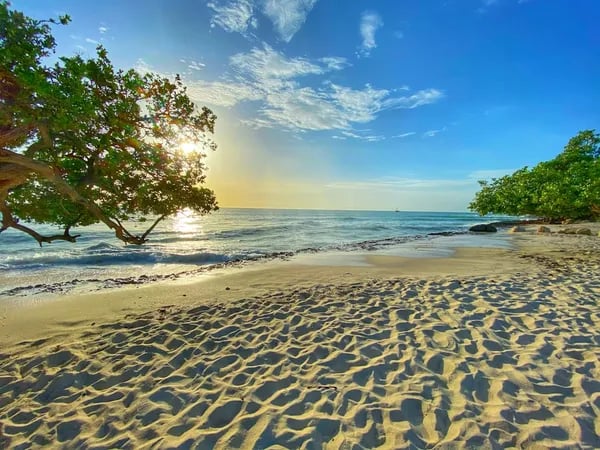
The first coastline I really noticed was the hotel strip—big blocks of resorts lined up like a wall. Around Palm Beach Aruba, the buildings are so tall and close that, at certain angles, it felt like they were stealing the sky (and yes, sometimes the sun). Then you drive north and it flips: wind, rougher water, fewer people, and a wilder mood. Aruba sits around 28°C on average, but the constant breeze changes how that heat feels on your skin.
Three Weird Details That Taught Me a Lot
Gold in public art: Someone told me, almost bragging, that the island is so safe that there are mosaics with gold pieces left unguarded—and nobody steals them.
A tiny McDonald’s: I saw a McDonald’s that felt under 10 m², like a miniature version dropped into paradise. It made the island feel oddly familiar.
The WWII refinery shadow: There’s a massive refinery story here—American-built, WWII-era, with around 3,000 workers brought in. It even shaped a grim chapter in San Nicolas, including a red-light district.
“Questo paese è così sicuro che in giro ci sono addirittur mosaici con parti in oro non sorvegliati…”
Is Aruba Safe? My Brain Switched to “Verify” Mode
Even with those “safe island” claims, I stayed skeptical. I wanted real answers: crime patterns, road rules, tap water, and how safe it feels outside resort zones. The good baseline is that an Aruba travel advisory from the U.S. State Department is Level 1: “Exercise normal precautions”. But I also wanted the small human details—supermarkets, late-night snacks, what language people actually use day to day—because that’s where safety becomes real.

Is Aruba Safe? Crime, Police & 'Very Low Crime' Reality
Is Aruba Safe for Tourists? My one-week answer
After a week on the island, my honest take is: yes, Aruba felt safe. The “very low crime” reputation isn’t just marketing. Violent crime is generally described as low by multiple travel sources, and Aruba is often listed as one of the safer Caribbean islands in 2025. The U.S. State Department also places Aruba at Level 1 with the advice to “Exercise normal precautions.”
The “gold mosaic” story (and why it matters)
One of the first things I heard was a local-style flex about safety:
“Questo paese è così sicuro che in giro ci sono addirittura mosaici con parti in oro non sorvegliati e nessuno ha mai rubato nemmeno un pezzettino.”
Translation: this country is so safe there are mosaics with gold pieces left unguarded, and nobody has ever stolen even a tiny bit. Whether every detail is literal or not, the point landed: people speak about safety with confidence, not fear. That “we don’t worry much here” vibe showed up in small moments—relaxed evenings, families out late, and staff who didn’t act like every guest needed a warning speech.
What crime actually looks like: petty theft, not violence
That said, Aruba isn’t a bubble. The most common tourist issue is petty theft—think pickpockets, purse snatching, and unattended beach bags. With a population of around 100,000, the island also gets huge waves of visitors, including mega cruise ships and busy shopping strips. More people + more distractions = more opportunity.
Keep your phone out of back pockets (especially in crowds).
Don’t leave bags on the sand while you swim—use a buddy system.
Carry only what you need; leave passports in the hotel safe.
Police presence & hotel security in tourist zones
I noticed visible patrols around the places tourists actually spend time: hotels, beaches, and shopping centers. Many resorts also have their own security teams, cameras, and clear procedures if something happens. It’s not “militarized,” but it’s present enough to be reassuring—especially at night near the main strips.
Women’s safety & solo travel: generally comfortable, still be smart
For solo travelers (including women), Aruba generally feels straightforward: people are used to tourists, and the main areas are well-lit and active. My common-sense rules still apply:
Avoid poorly lit beaches late at night.
Watch your drink in crowded bars.
Be extra cautious during big events like Carnival (roughly January–March), when crowds get dense and petty theft can spike.
The official posture matches my experience
When government travel pages say “Exercise normal precautions”, that’s exactly the lane Aruba sits in for me: relaxed, not reckless. Enjoy it—just don’t gift-wrap your valuables for the one person looking for an easy win.

Practical Safety Tips I Used — Taxis, Money & ED Card
Registered taxis: agree on fare before you get in
After a long travel day (I basically slept through my airport layover), the last thing I wanted was confusion outside arrivals. Aruba felt calm, but I still followed one rule every single time: use registered taxis and agree on fare before the door closes. In Aruba, taxis are typically not metered, so you don’t want to assume the price will “show up” later.
“Agree on fare” — practical taxi advice echoed by local guides
Ask the driver the total price before you sit down (including luggage).
If I wasn’t sure, I asked my hotel to call a cab or arrange a ride.
For tours (especially boat trips), I booked with licensed operators that clearly explained safety steps.
Money in Aruba: carry AFL, but USD works almost everywhere
For day-to-day spending, I carried a little Aruban Florin (AFL), but I also used U.S. dollars constantly. Locals told me (and I saw it in shops) that many vendors use an exchange rate that’s basically fixed, so paying in USD is usually simple and predictable. Still, having some florin helped for small purchases and tips.
One thing I didn’t expect: supermarket and convenience prices can feel high because so much is imported. That’s not a “safety” issue, but it affects your budget—and budget stress can lead to bad decisions like carrying too much cash.
Card payments: sometimes they ask for ID
In a supermarket, I had a moment where a card payment triggered an ID check. It wasn’t dramatic—just a reminder to keep my documents organized. My routine was simple: passport locked away, and I carried a photocopy plus a second ID when possible.
Keep valuables in the hotel safe.
Don’t flash expensive camera gear on crowded beaches.
Store digital copies of documents in a secure folder.
Aruba ED Card: do it before you fly
The Aruba ED Card (Embarkation/Disembarkation) is mandatory for entry. I filled it out before arrival so I wasn’t scrambling on airport Wi‑Fi. It made the border process feel smoother, and I had one less thing to worry about after landing.
“Aruba ED Card” — government entry requirement reminder
Wi‑Fi + insurance: small steps that matter
I’m careful with public networks, especially when I’m logging into banking or travel accounts. If you use random Wi‑Fi, consider a VPN (I remembered this from a sponsor note I’d seen) and avoid sensitive logins when the network looks sketchy.
Finally, I always travel with insurance that covers water sports and medical emergencies. Aruba’s emergency services are strong and built to Dutch standards, but good care can still be expensive without coverage.

Water, Beaches & Activity Safety (What I Learned at Zee Rover and Beyond)
Water activities around Palm Beach and Eagle Beach: beautiful, but don’t ignore the wind
Aruba’s coastline is the kind of place that makes you want to jump in right away. Palm Beach and Eagle Beach are the big tourist hubs, and I felt comfortable there because the vibe is organized and busy. But Aruba is also windy, and that changes the water fast. Even with an average temperature around 28°C, the ocean can go from calm to choppy in minutes, especially if you’re doing water activities like snorkeling, jet skis, or boat trips.
My rule here became simple: respect local water warnings. If flags are up, if lifeguards say “not today,” or if locals are staying out, I stay out too. Water activities can be hazardous anywhere, and Aruba is no exception—so I treated local authorities as the final word.
North vs. south coasts: the local advice I followed
A local guide told me not to swim on the rough, unpatrolled northern coast. The south side is more sheltered and tourist-friendly, and that matched what I saw on the ground. When I wanted an easy beach day, I stuck to the popular areas instead of trying to “discover” a wild swimming spot with no rescue services nearby.
Swim where it’s patrolled (or at least where other people are in the water).
Check rescue services availability before remote excursions.
Follow local authorities over apps, blogs, or your own confidence.
Choosing tour operators for water activities: what I looked for
On tours, I paid attention to the basics: life vests, clear safety briefings, and staff who looked trained. Many resorts and tour operators say they have emergency plans and staff training for guest safety—and the good ones show it in small ways, like counting heads, checking weather, and not rushing people into the water.
Ask what safety gear is included (vests, radios, first aid).
Ask what happens if conditions change mid-trip.
Bring travel insurance that covers water sports, not just “medical.”
Zee Rover: seafood by weight, and why it made me think about hygiene
At Zee Rover, I watched servers bring seafood out in buckets, and everything felt clean and well-handled. I loved that it was sold by weight—fresh, simple, and transparent. As I wrote in my notes: “I ordered 400 g of prawns and two Mahi-Mahi fillets.” The total was about $23, and it came with lime and sauces (including papaya hot sauce). Seeing the prep up close reminded me to ask about food allergies and cross-contact, even in places that look spotless.
One more practical tip: fish menus can change daily because the catch changes, so I asked what was freshest before ordering.
Flamingo island: my ethical safety “no”
I skipped the private flamingo islet experience after hearing,
“They cut flamingos’ wings so they don’t fly away.”
Even if it’s marketed as harmless, it didn’t sit right with me, so I chose other activities instead.

Roads, Rentals & Getting Around (Santa Fe vs Accent Memories)
If you’re wondering about Transportation Safety in Aruba, getting around is one of the easiest parts of the trip—especially if you’re comfortable driving. We picked up a rental and immediately had a “what did we just do?” moment.
“They gave us a huge Santa Fe — terrifyingly big for two people”
Yep. We rented an enormous Hyundai Santa Fe. It felt comically oversized for two people, but it was also super practical: high seating, lots of space for beach stuff, and it made exploring the island simple. Aruba is not huge (about 100,000 people live here), so having your own wheels can turn a “maybe later” plan into a quick sunset mission.
Road safety: decent main roads, but stay alert
In general, the major roads are in decent condition, and driving didn’t feel chaotic all the time. Still, Road safety comes down to how you handle the little surprises. My biggest tip is to familiarize yourself with local road signs and roundabout rules before you hit the busier areas.
Night driving: Be more cautious after dark, especially outside the main hotel zones where lighting can drop off.
Rural patches: You may run into occasional rough spots or uneven shoulders.
Hazards: Watch for animals near the road and for drivers who change speed or lanes without much warning.
I drove more defensively than I would at home: more following distance, slower near intersections, and extra patience at roundabouts. That approach made everything feel calmer.
Santa Fe vs. Accent memories (and why they matter)
Right in front of the car rental office, I spotted a beautiful Hyundai Accent—the same model we once destroyed in the mountains of Albania. Seeing it in Aruba gave me instant flashbacks and a weird sense of respect for rental cars.
That “Accent memory” is exactly why I don’t treat unfamiliar roads like a game. Different countries have different driving rhythms, signage, and road edges. Even if Aruba’s main roads are solid, it only takes one distracted moment to meet a curb, a pothole, or a surprise stop.
Registered taxis and fare basics
If you don’t want to drive, stick to registered taxis (or ask your hotel to arrange one). For Transportation Safety, I’d avoid hopping into unlicensed cars, especially at night.
Confirm the fare before you get in (or ask the driver to clarify the rate).
If you’re unsure, book through your hotel or a reputable stand.
In busy areas, don’t assume the price is “obvious”—just ask.
Public transport limits + cruise ship traffic surges
Public transport is limited, and timing matters. Aruba has no ferry service—you arrive by plane or cruise ship—so when cruise passengers flood the island on port days, daytime crowds and traffic near the port can spike fast. If you’re driving, plan beach runs and downtown errands earlier, or go the opposite direction when the port area gets packed.

Local Life: Food, Supermarkets & Little Surprises
Aruba food starts in the supermarket (at least for me)
I always judge a destination by its grocery aisles. It’s my fastest way to understand local life beyond the tourist areas and the postcard version of the island. Aruba surprised me because it felt like a US–Netherlands hybrid: familiar American brands everywhere, but with that Dutch-Caribbean “import island” logic in how things are stocked, priced, and labeled.
Beaches and shopping: the “why is this here?” aisle
Between beaches and shopping, I kept ducking into supermarkets and mini-marts, and I honestly felt weirdly at home in the frozen section. Then I’d turn a corner and see something that made me stop in my tracks—like those huge Arizona tea gallon tins, Fuze Tea in cartons, and even White Castle sliders sitting in a freezer like it’s the most normal thing in the world.
If you’re the kind of traveler who likes collecting “little surprises,” Aruba delivers them in bulk: Nutella Biscuits, massive jars of peanut butter, and canned items that look like they were designed by someone who lost a bet.
“The McDonald’s here is not even 10 m² — no seating, only desserts”
That tiny dessert-only McDonald’s felt like the perfect symbol of Aruba: familiar brands, but adapted in unexpected ways.
Prices: imports make Aruba food cost more
Because so much arrives by cargo ship, imported goods push your budget up fast. I saw everyday items priced in Aruban Florin (AFL), and many places also accept USD, which is convenient—but it can make you spend without noticing.
Item | Price |
|---|---|
Nutella | 9.39 AFL |
Bertolli olive oil (1L) | 16.57 AFL |
De Cecco ragù | 4.39 AFL |
Those numbers aren’t “dangerous,” but they are a reminder: Aruba is safe and easy to navigate, yet it’s not a cheap island to stock a fridge on.
A real melting pot in one shopping cart
What I loved most was the mix. Aruba has people from 90+ nationalities, and you can taste that diversity in the shelves: Arabic and Asian sections, Inca Kola, San Pellegrino, Spanish products, and labels in multiple languages. It’s one of the few places where your cart can look like three different countries at once.
Small shopping quirks that matter
Card payments can require ID. “They asked for documents to pay by card”—that surprised me, so now I always carry a physical ID when I shop.
Expect imports. A lot comes from the U.S. and Spain, which explains both the variety and the prices.
When I wanted a “real” meal
For Aruba food that feels local and straightforward, I loved the vibe at Zee Rover: fresh seafood, no overthinking. My total was about $23, and it felt like the kind of place where the island’s daily life shows up on your plate.
svgPrompt: a simple line-style map icon showing a supermarket cart near a beach umbrella, labeled “Aruba: beaches and shopping,” to visually connect grocery life with the tourist coastline.

Strange Histories, Wild Cards & My Personal Verdict
A sunny island with a shadowy backstory
Aruba surprised me most when I looked past the beaches. During WWII, an American-built refinery became one of the biggest on the planet, pulling in around 3,000 workers and reshaping the island—especially Saint Nicolas. The “vacation postcard” vibe suddenly had context: industry, migration, and a town built around keeping workers busy and “in line.”
“Saint Nicolas was basically the red-light district created for refinery workers”
It’s a strange detail to carry while you’re ordering fresh fish or watching the sunset, but it made Aruba feel more real to me. Not just a resort, but a place with layers—some quirky, some dark.
Wild card #1: the flamingo photos I didn’t take
Here’s my honest Aruba travel advice: not every “must-do” is worth it. I skipped the private flamingo-island photo ops. The islet is tiny and close to the coast, and yes, the pictures look unreal. But I kept hearing that some birds may have clipped wings, and that was enough for me to step back. I’m not here to preach—just sharing the choice I made so you can decide with your own comfort level. If an activity feels off, you don’t need to force it just because it’s trending.
Wild card #2: the smallest McDonald’s and the “manufactured” feeling
Another moment that stuck with me was spotting what might be the smallest McDonald’s I’ve ever seen. That, plus the private flamingo islands, reminded me how tourism can be built for the camera. Aruba sometimes felt like a set—clean, polished, and designed to move visitors smoothly from one photo spot to the next.
“This island felt like a Dutch-American theme park”
And yet, behind the facades are real people, real neighborhoods, and a culture that’s more than a beach bar playlist. Also, about 80% of visitors are American, and you can feel that influence in the infrastructure and service style.
So, Is Aruba Safe? My 2025 verdict
For cautious travelers, I get why Aruba is often framed as the Safest Caribbean Island. It has strong tourism infrastructure, and it’s at relatively low risk for hurricanes compared to many Caribbean destinations. I also felt genuine hospitality and ate consistently well—three simple reasons I’d recommend it even though I’m usually more of a camping-festival person than a beach-lounger.
Still, don’t confuse “low violent crime” with “no risk.” Petty theft is the most common issue for tourists, so keep normal precautions: don’t leave valuables unattended, lock your car, and be smart with phones on the beach. Water risks are real too—currents, alcohol, heat, and overconfidence don’t mix.
My final takeaway is slightly imperfect but practical: pack sunscreen, a sense of humor, a reliable VPN, and an eye for supermarket oddities. Bring travel insurance, agree taxi fares upfront, follow local safety updates, and enjoy Aruba’s beauty without switching your brain off.