
(Discover many other contents on: NOWO.ONE and NOWO Publishing)
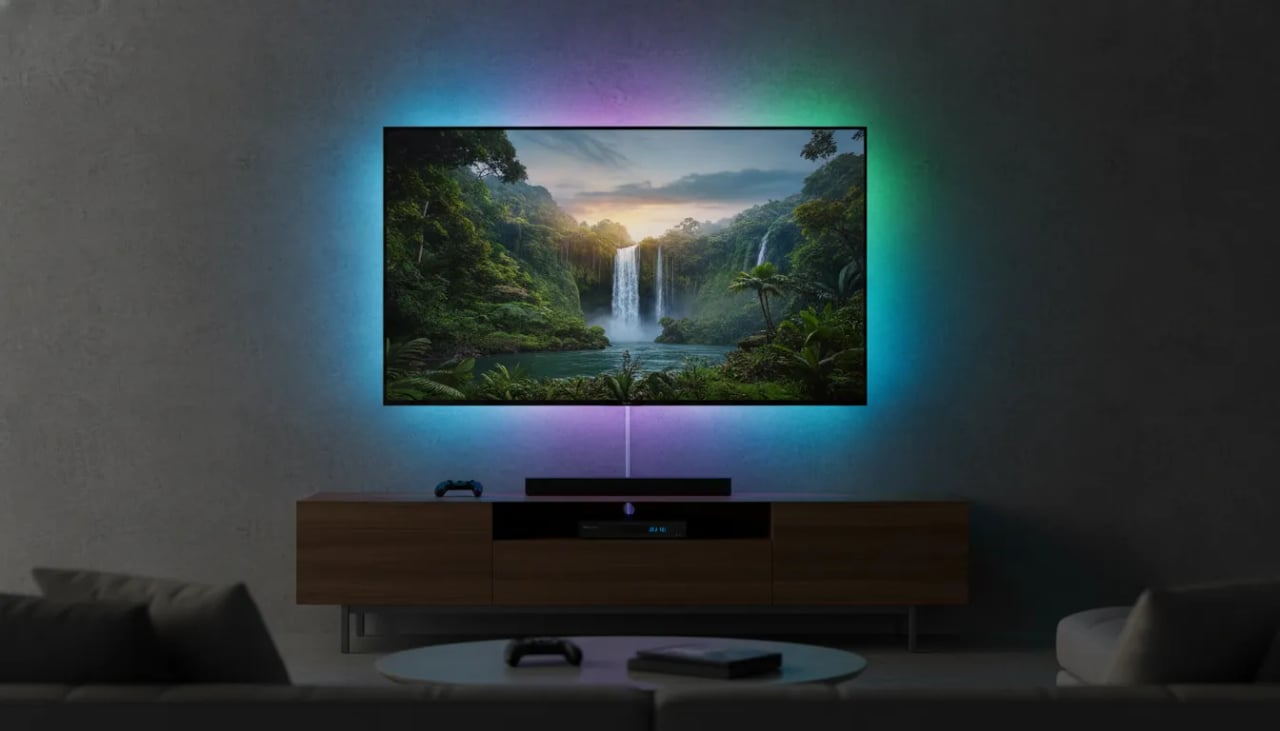
I’ll admit it: my living room used to look like a sad fluorescent cave — until I slapped LED strip lights behind the TV one rainy Saturday. That small, sticky strip transformed movie night and made my eyes stop protesting during long gaming sessions. In this post I’ll walk you through why backlighting works, how to clean and stick the strips (spoiler: microfiber cloths are heroes), and some oddball ideas I tried — like syncing colors to my pizza box (don’t ask).
Why TV Backlighting Actually Works (and why I care)
I used to think TV backlighting LED setups were just for looks. Then I added LED strip lights to the back of my TV and realized it’s one of those small upgrades that changes how long I can comfortably watch. The light isn’t on the screen—it’s a soft “bias light” behind it—and that difference matters more than I expected.
Bias lighting = less eye strain (my headaches backed off)
When a bright screen sits in a dark room, my eyes work harder to adjust between the glowing TV and the black wall around it. With an LED strip behind TV, the wall gets a gentle halo of light, so the jump isn’t as harsh. After long movie nights, I noticed fewer headaches and less “dry eye” feeling.
Sara Bennett, Lighting Designer: "Bias lighting like LED strips can dramatically reduce eye fatigue and improve color perception during long watch sessions."
Better contrast and color… without touching TV settings
What surprised me most is how backlighting changes what I think I’m seeing. The picture can feel punchier—darker scenes look deeper and colors seem richer—without changing my TV calibration at all. It’s not that the TV is brighter; it’s that the room lighting is smarter. That’s why a TV backlighting LED kit can make everyday streaming look more “premium,” especially at night.
Placement is the secret: about 1 inch from the edges
The strip itself is thin and flexible, dotted with tiny LEDs. For the most even glow, I run the LED strip behind TV in a rectangle and keep it roughly 1 inch from the TV’s outer edges. That spacing helps the light spread across the wall while keeping the LEDs out of direct view when I’m seated.
Clean the back panel first so the adhesive sticks well
Keep corners smooth (don’t kink the strip)
Test the lights before fully pressing them down
It’s also about mood (and I actually use it)
Beyond function, it sets the vibe. I’ll pick warm amber for movies, then switch to vivid cyan when I’m playing late-night shooters. Most kits make this easy—often you get the light strips, a controller, connector cables, a power supply, and a remote/app control. Brands like Lepro, Govee, Aidot, and SuperBrightLEDs all lean into these same benefits: immersive atmosphere, uniform lighting, and simple DIY setup that usually fits into a single afternoon.
Prep Work: Clean Back of TV & Measure Like a Human
Step 1: Clean back of TV (this is where installs succeed or fail)
Before I even think about where to stick LED strips, I start by making the surface friendly to glue. Dust, skin oils, and that “mystery film” on the plastic are the reason strips peel off later. I unplug the TV, tilt it forward safely, then clean back of TV with a dry microfiber cloth. If it’s extra grimy, I lightly dampen the cloth with water and let it fully dry.
Why I’m picky: 3M self-adhesive backing tape bonds best to clean, smooth surfaces. When the back is clean, the lighting stays put and you get that uniform glow that reduces eye strain and makes colors pop during movies, gaming, and everyday watching.
Mark Chen, AV Technician: "A clean surface and correct measurements cut 90% of install headaches. I always carry a microfiber cloth and a spare roll of 3M tape."
Step 2: Measure the perimeter (buy a little extra)
Next, I measure like a human: I run a tape measure around the TV’s back perimeter where the strip will sit—usually inset a couple inches from the edge to avoid hotspots on the wall. I write down the total length and then add 5–10% extra for corners, routing to the power side, and small mistakes. This is the easiest way to avoid short runs before you install LED lights.
Measure twice, cut once—and remember: strips should be cut only at the marked copper pads.
Step 3: Pick your mounting method
I choose the mounting option based on the TV’s texture and how permanent I want it:
Adhesive backing tape (peel-and-stick): fastest, cleanest, and usually enough for smooth plastic.
Mechanical fasteners (clips, zip ties, small mounts): best when the back is textured or warm, or when I want extra security.
3M Adhesion Promoter: my go-to for stubborn, textured surfaces where tape alone won’t bite.
Step 4: Gather supplies (so you don’t stop mid-install)
Microfiber cloth
Ruler or tape measure
Scissors (for cut points only)
Optional: soldering kit for custom joins
Quick reminder I keep in my head: Cut only on copper pads. That one rule saves strips—and my patience.
Step-by-Step: Install LED Strip Lights Behind TV
When I mount LED strip lights behind my TV, I’m aiming for that soft, uniform glow that reduces eye strain and makes colors look richer for movies, gaming, and everyday shows. Most kits come with a mini controller, power supply, and a wireless remote, so the setup is usually an afternoon DIY.
1) Unroll strip lights and find the cut points first
Before anything sticks, I Unroll strip lights on the floor and measure the TV’s back edge. I always locate the “cut here” copper pads (they look like small copper squares). Doing this first prevents accidental damage and helps me plan where connectors or joins will land.
Dry-fit the strip around the TV’s back to confirm length.
Only cut on the copper pads.
If I need a custom join, I can solder at the pads (more on that below).
2) Peel and stick installation: place it about 1 inch from the frame
For Peel and stick installation, I wipe the TV back with a dry cloth, then press the strip down in a rectangle about 1 inch from the frame. I press firmly as I go so the adhesive bonds well.
Start near the power/port side so cables reach easily.
Press each section for a few seconds before moving on.
Keep the LEDs facing outward for even wall wash.
3) Connect strip lights to controller and power (USB, AC, or HDMI-sync)
Next I Connect strip lights to the controller, then to power. Common connections are USB, a small AC adapter, or an HDMI-sync controller if I want the lights to match what’s on screen.
Power/Sync Option | Best For |
|---|---|
USB connection | Simple setups, fewer cables |
AC adapter | Brighter strips, steady power |
HDMI-sync controller | Color sync for movies and gaming |
4) Make loops turn corners (don’t fold)
At each corner, I Make loops turn corners instead of bending sharply. Looping prevents cracked traces and dead sections, especially on tighter TV backs.
5) Long runs: use a Voltage drop amplifier if needed
If I’m running longer lengths and notice dimming toward the end, I add a Voltage drop amplifier between max runs to keep brightness even.
Ethan Morales, Electronics Hobbyist: "I soldered two strips together for a 3-meter run — pre-tinning makes the job tidy and reliable."
If I do solder, I pre-tin the wires and touch them to the copper pads quickly. For reference, I label polarity like this: + / -.
Dialing In: Color, Brightness & Visual Lighting Effects
Once my LED strip is on the back of the TV, the real upgrade happens when I start tweaking the settings. Adjustable brightness LED strips aren’t just about looking cool—they help create a soft, even glow that can reduce eye strain and make the screen feel richer.
Dana Ruiz, Home Theater Reviewer: "The right tint and brightness can make a mediocre panel look richer — it's subtle but powerful."
Color brightness control: pick the right tone for what you’re watching
I treat Color brightness control like choosing the “mood” of the room. Most kits give you step dimming (often multiple levels) plus color and tone options, so you can quickly match the vibe.
Movies: I go warm—think amber or soft orange. It feels cozy and keeps dark scenes comfortable.
Gaming: I switch to cool or neon colors (blue, purple, teal) and bump brightness a bit for energy.
Everyday TV: Neutral white works best for me—clean, balanced, and not distracting.
Remote, app, and presets: how I switch scenes fast
Most LED TV strips come with a remote, and many include app control too. I use whichever is closer, but the app is great for saving presets. My favorite is a dim warm scene for late-night shows, so I’m not blasted by bright light right before bed.
Use case | Color | Brightness |
|---|---|---|
Late-night shows | Warm amber | Low |
Gaming | Cool/neon | Medium-high |
Daily viewing | Neutral white | Medium |
Prevent glare: aim for uniform light, not hotspots
The biggest mistake I see is running full-bright white at close viewing distance. It can cause glare and defeat the whole “easy on the eyes” benefit. I keep brightness moderate and make sure the strip is placed so the wall glow looks even. If I notice bright patches, I lower brightness or adjust where the strip sits on the back panel.
Visual lighting effects: subtle sync can feel immersive
For extra Visual lighting effects, I sometimes use gentle color shifts. Real-time color matching is the next level, but it usually requires an HDMI-sync controller (or software-based syncing on certain setups). When it’s dialed in and not too bright, the backlight reacts to the content and makes movies and games feel more immersive without pulling my attention off the screen.
Creative Uses, Quirks, and Unlikely Experiments
Beyond the screen: leftover pieces become “free” upgrades
After I put an LED strip behind TV, I almost always end up with a few extra inches. That’s when the fun starts. As Liam Foster, Tech Blogger, puts it:
Liam Foster, Tech Blogger: "Leftover LED strip sections are the best freebie — they dress up shelves and consoles instantly."
Because most kits use Flexible light strips, I’ve repurposed leftovers in spots that make the whole room feel more intentional, not just the TV wall.
Shelves: run a short section under a floating shelf for a soft glow on books and decor.
Behind speakers: a gentle backlight makes speaker stands look premium and reduces harsh contrast in a dark room.
Accent stair lights: small segments along the side of steps look cool and help with late-night snacks.
My mildly ridiculous experiment: cooking-show color sync
One night I used an app-sync feature (brands like Govee do this well) and matched the colors to a cooking show. When the chef started making chili, my lights shifted warm red and orange—suddenly my kitchen mood-matched the food. Totally unnecessary, mildly ridiculous, but honestly fun. It also reminded me why these strips are great for movies, gaming, and everyday entertainment: the bias lighting reduces eye strain and makes screen colors feel richer.
Theme nights: warm flicker for vintage films, rapid cycles for gaming
If your kit includes a remote, power supply, and connector cables, you can switch modes fast without redoing the install. I like to Stick LED strips on the back of the TV for a clean halo, then use presets depending on what I’m watching:
Vintage film night: warm white + a gentle “flicker” preset (subtle, not strobe).
Gaming marathons: faster color cycles or reactive modes for extra energy.
Everyday TV: steady neutral white at low brightness for comfort.
Wall-mounted TV quirks: power access and stronger mounting
If your TV is wall-mounted, plan cable runs before you commit. Power access is the big surprise—sometimes USB from the TV works, but not always. I also prefer lighter strips or a few mechanical fasteners (clips) so gravity and heat don’t slowly peel the adhesive.
Quick safety check (don’t skip this)
Keep strips clear of vents and any heat-generating areas on the TV.
Don’t trap cables behind tight mounts; give them breathing room.
Test placement with painter’s tape before you fully commit.
Troubleshooting & Advanced Tips (amps, soldering, and odd fixes)
When the strip dims: Voltage drop amplifier or power injection
If my TV backlight looks bright near the power end but fades as it goes around the screen, I treat it like classic voltage drop. Long runs pull more current, so the far end gets less voltage and the color can shift too. The fix I’ve used most is adding a voltage drop amplifier between the controller and the next section, right around the maximum recommended run length. Another option is a power injection point (feeding power again farther down the strip) so the lighting stays uniform and keeps that eye-strain-reducing glow.
Copper pads soldering for clean custom joins
For corners, gaps, or a cleaner cable route, I prefer copper pads soldering over forcing connectors. I always cut only on the marked cut lines, right through the copper pads, then pre-tin the pads and the wire ends so the joint forms fast without overheating the strip.
Maya Patel, Electronics Instructor: "A little soldering knowledge goes a long way — copper pads are forgiving if you follow the marks."
My quick routine: light sand if needed, add flux, touch solder to the pad, then join the wire with a short heat time. If I’m in a hurry or don’t want to solder, I use a wire splice connector made for LED strips, but I still tug-test it before mounting.
Connector problems: polarity and pressure
When a section stays off, it’s usually not “dead”—it’s reversed polarity or a loose connection at the controller or power supply. I double-check the +/− marks and make sure the connector teeth actually bite the copper. If colors are wrong or flicker, I reseat the plug and confirm the strip type matches the controller (RGB vs. single color). A simple reset can help too: power off > wait 10 seconds > power on.
Required supplies LED installation (and what fixes most issues)
Item | Why I keep it handy |
|---|---|
Microfiber cloth + isopropyl alcohol | Stops peeling and random flicker from dirty contacts |
Wire splice connector | No-solder joins for quick repairs |
Soldering iron + flux | Best for reliable custom lengths |
3M Adhesion Promoter | Helps tape stick on textured TV backs |
Adhesion fails on textured backs: odd fixes that work
If the strip won’t stay put, I clean again with alcohol and a microfiber, let it dry, then apply 3M Adhesion Promoter before re-sticking. On rough plastic, I add small mechanical fasteners (clips) to take stress off the adhesive. Once it’s secure, the adjustable brightness and tone finally look even—exactly what I want for movies, gaming, and everyday TV.