



(Discover many other contents on: NOWO.ONE)
I remember the first time I tried a magnetic window cleaner: my kitchen sash looked like a fogged mirror and I was nervous. I stayed inside, clipped the tether on, and discovered how these gadgets can save time — once you learn the quirks. In this guide I’ll walk you through what magnetic window cleaners are, how they actually work, when they shine, and when they don’t. Expect candid tips, a couple of minor tangents, and one slightly dramatic anecdote about a falling outer half (all safely recovered).
What Is a Magnetic Window Cleaner? (Quick Anatomy)
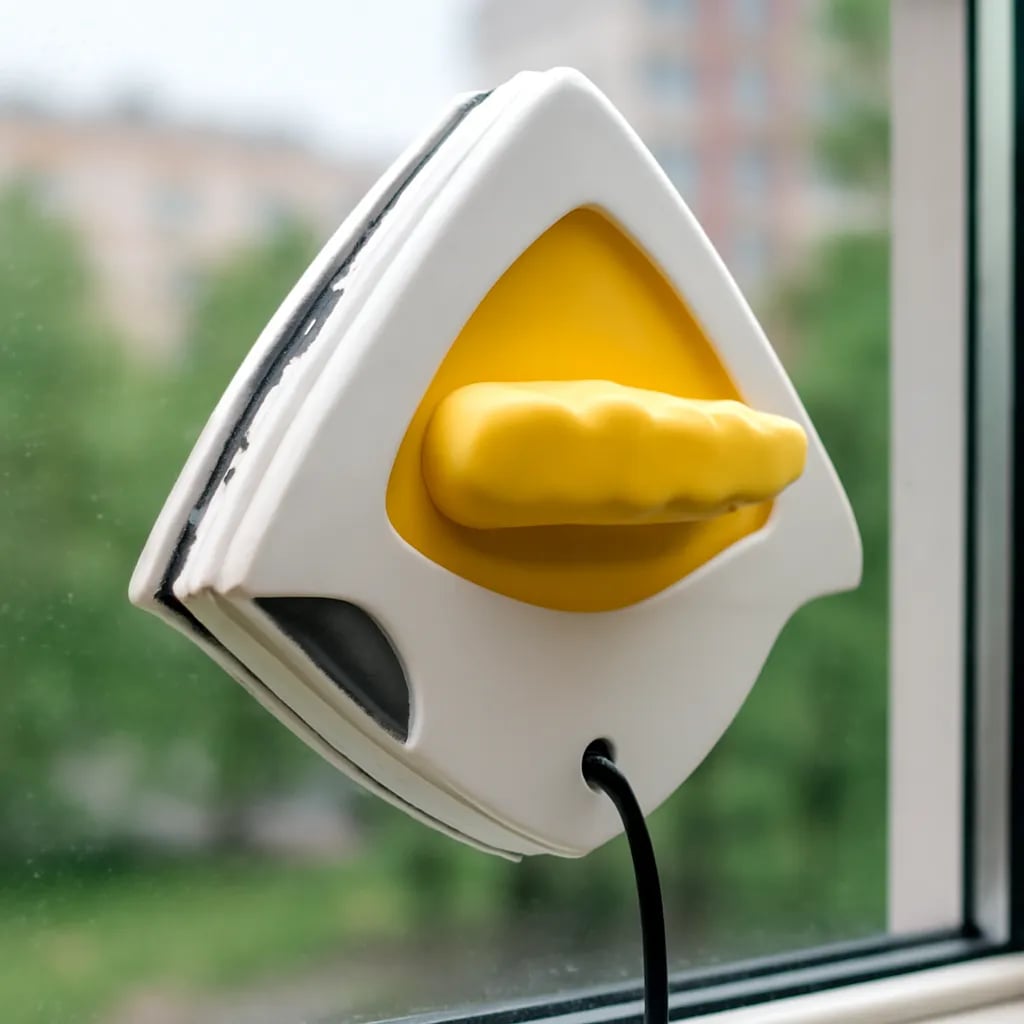
A Magnetic Window Cleaner is a simple, manual tool that helps me clean both sides of a window at the same time—from inside the room. It’s built for Dual Sided Cleaning, so I don’t need to lean out or set up a ladder for most jobs.
ElectroGuide.co.uk: “A magnetic window cleaner lets you clean both sides of a window at once without having to go outside.”
Two Magnetic Halves (Inside + Outside)
The cleaner comes in two separate halves:
Inside unit: stays in my hand and has the handle.
Outside unit: sits on the exterior glass and follows along.
They “stick” together through the glass using strong magnets, so when I move the inside piece, the outside piece mirrors the motion.
Strong Magnets (Often Neodymium/Rare Earth)
Most models use neodymium (rare earth) magnets to create enough pull for stable tracking. Magnet strength is the whole game: too weak and the halves separate; too strong and it can feel harder to control on thin glass.
Cleaning Surfaces: Microfiber Pads + Sponge + Squeegee
Each half has cleaning material that touches the glass. In many designs, I’ll see about three cleaning elements working together:
Microfiber Pads to lift dust and film
Sponges to hold water/solution
A squeegee blade (one or both sides) to reduce streaks
Safety Tether (Don’t Skip It)
A safety cord/rope usually clips to the outside half. If the magnets slip, the tether helps stop the outer piece from dropping—especially important on upper floors.
Made for Specific Glass Thickness
Magnetic cleaners aren’t universal. They’re designed for a glass thickness range (single-pane to double-glazed), and many models top out around 18 mm (varies by brand). I always check the thickness rating before buying.
Manual Handle = No Power Needed
The inside unit has a handle, and I guide it by hand—no batteries, no electricity. The outside half simply follows via magnetic force, making Dual Sided Cleaning possible in one pass.
How Magnetic Window Cleaners Work (Mechanics & Magnet Fit)
How Magnetic Work: two halves, one shared movement
A magnetic window cleaner is basically two contact faces that clamp onto the glass—one unit stays inside with a handle, and the other sits outside. When I push or pull the inside piece, the outside piece follows because the magnets inside both halves stay coupled through the pane.
Magnet fit starts with Glass Thickness
Here’s the part most people miss: these tools are engineered for specific Glass Thickness ranges. If you buy the wrong match, performance drops fast.
Fruugo: “If the magnets aren’t strong enough for your glass, the units won’t hold together well; if they’re too strong for thin glass, handling becomes harder.”
Higher-strength models can handle thicker panes (often up to 18 mm), which is useful for many double-glazed windows.
Why Neodymium Magnets matter
Most decent cleaners use Neodymium Magnets (a type of rare-earth magnet) because they deliver strong holding power in a compact size. That extra force is what helps the outside unit “track” smoothly on thicker or double-glazed glass—where weaker magnets may slip or drop.
Adjustable Magnetic Force: one tool, more window types
Some models include Adjustable Magnetic Force (often via a dial or slider). I like these because they let you tune the grip for different panes—lighter for thin single glazing, stronger for thicker double glazing—so you get control without constant decoupling.
The cleaning sequence (pads + squeegee)
The cleaning action is simple and effective when used correctly:
Wet the pads with water + a small amount of detergent
Scrub as you move the inside handle in steady lines
Squeegee to pull off dirty water and reduce streaks
Steady motion matters—fast, jerky moves or gritty patches can cause the typical failure mode: decoupling and streaks.
Safety tether: the non-negotiable backup
Even with perfect magnet fit, I always attach the safety tether. If the magnets slip mid-clean, the cord is what stops the outside half from falling.
Key Benefits: Why I Reach for One (Pros & Real Gains)
Dual Sided Cleaning = Real Time Savings
The biggest reason I grab a magnetic window cleaner is Dual Sided Cleaning. I can wipe the inside and outside glass at the same time, just by moving the handle from indoors. That cuts out the usual routine of cleaning one side, then dragging out a ladder (or trying to reach around a window frame) for the other side.
Grime Busters: "Saves time compared to traditional cleaning and removes the need for ladders."
No Ladder Needed (Especially for High Rise Windows)
If you live in a flat or have windows that sit high up, this tool is a game-changer. I don’t have to climb, balance, or lean out—so it feels far safer for High Rise Windows and awkward exterior panes. It’s also handy on big surfaces like sliding patio doors, where “outside access” can be annoying or risky.
Safety Rope Advantages I Actually Use Every Time
The outside half can slip if you move too fast or hit a dry patch. That’s why the Safety Rope Advantages matter: the tether is your backup plan, stopping the outer unit from dropping if the magnets decouple. When I’m cleaning upper floors, I treat the safety cord as non-negotiable—clip it on, shorten slack, and keep it out of the cleaning path.
No Power Required—Just Water and Elbow Grease
I like that it’s fully manual. No batteries, no charging, no extension cords. I just wet the pads with water and a small amount of gentle detergent, then work in steady passes. For quick maintenance cleans, that convenience is hard to beat.
Streak Free Finish (When the Pads + Squeegee Are Doing Their Job)
A good model combines microfiber pads with a squeegee edge, and that’s how I get a Streak Free Finish. My results improved a lot once I learned to:
Lightly dampen the microfiber (not dripping wet)
Move in smooth lines instead of jerky zigzags
Rinse or swap pads so grit doesn’t smear or scratch
It Feels Intuitive After a Few Runs
I won’t pretend it’s perfect on day one—there’s a learning curve. But after a couple of sessions, the motion becomes natural, and it turns into a fast, repeatable routine for keeping glass looking clear.
Drawbacks & When They Let You Down (Cons, Limitations)
Pros And Cons: the “easy” tool that still needs practice
I like the idea of cleaning both sides at once, but the biggest drawback is the learning curve. If I move too fast or make jerky turns, the magnets can decouple. That can mean streaks, missed spots, or the outside half sliding down (even with a tether). Slow, steady passes give the best Cleaning Performance.
Not universal: glass thickness matters (especially Double Glazed)
These cleaners aren’t one-size-fits-all. You have to match the model to your window thickness. On Thick Glass and many Double Glazed units, weaker magnets may not hold well, which is why user reports often mention “mediocre results” on thicker panes. On the flip side, magnets that are too strong for thin glass can feel hard to control—there’s a real trade-off between grip strength and maneuverability.
Single-pane: usually easier to match and control
Double glazed: needs the right rating or it slips and streaks
Triple glazing: often requires special high-strength models
Corners and edges are awkward
Because the two halves are bulky, I struggle most at the edges. Tight corners, small panes, and frames can block the pads and squeegee, so I still end up touching up with a cloth.
Scratch risk if grit gets trapped
This is the downside I take most seriously. If dust or sand gets under the pad, strong magnets can drag it across the glass.
“Very strong magnets sliding across the glass with grit can scratch or leave marks.”
I always pre-rinse dirty windows and clean the pads often to reduce this risk.
Quality varies a lot (cheap vs premium)
Build quality matters. Cheaper models may have weaker magnets, thin pads, or poor squeegee edges—so they fall off more easily and leave lines behind. Better units usually track smoother and seal better against the glass.
Safety limits and “don’t do this” situations
A tether helps, but misuse is still risky. I never lean out a window to “help” the outside half—this defeats the whole point. Also avoid glass with metal strips or certain coatings that can interfere with magnetic grip.
Choosing the Right Model (Features to Prioritize)
In my Ultimate Guide Choosing process, I’ve learned one thing fast: magnetic window cleaners aren’t “one size fits all.” The right pick depends on your Glass Thickness, magnet strength, and the parts that actually touch the glass.
1) Match the Model to Glass Thickness (mm Specs Matter)
Before I buy anything, I check my window type (single-pane vs double glazed) and then look for the thickness range in millimeters on the product page. If the magnets are too weak, the halves won’t stay coupled; too strong on thin glass, and it can feel hard to control.
Window type | What I look for |
|---|---|
Single-pane | Lower strength or Adjustable Force range for thin glass |
Double glazed | High-strength models rated up to 18 mm |
2) Prioritize Neodymium Magnets (Especially for Double Glazing)
For thicker windows, I look for models that clearly state Neodymium Magnets. Many high-strength options are designed for double-glazed glass and can work up to around 18 mm when the specs match your pane.
3) Consider Adjustable Force for Easier Handling
If you have different windows around the house, an Adjustable Force model can be a lifesaver. I like being able to reduce pull on thinner panes (less “sticking” and fewer jerky moves) and increase it for thicker glass.
4) Choose Microfiber Cleaning Pads + a Real Squeegee Blade
For a streak free finish, I prioritize removable Microfiber Cleaning Pads (easy to wash, less risk of dragging grit) and a firm squeegee blade to pull water off cleanly. Replaceable pads are a big plus—worn pads just smear dirt and can scratch.
5) Safety Rope/Tether: Non-Negotiable
I won’t use a model without a solid safety rope. If the magnets decouple, that tether is what stops the outside unit from dropping—especially on upper floors.
6) Build Quality + Clear Specs from Trusted Listings
I pay attention to magnet alignment, handle comfort, and pad fit. Brands and reviewers like Great Magtech, Grime Busters, and ElectroGuide often spell out thickness ranges and safety details—exactly what I want before buying.
Great Magtech (Xiamen) Electric Co.,Ltd: “They’re simple devices — once you know how to move them correctly, cleaning is straightforward.”
How to Use Them Well: Practical Tips & Safety
Safety Tips: Start with the Safety Rope
Before I even wet the glass, I attach the Safety Rope (or tether) to the outside unit and anchor it to something solid inside. Then I give it a quick tug test. If the magnets slip, that rope is what stops the outer half from dropping.
Grime Busters: "Use a safety string or tether every time — it’s your last line of defense if magnets slip."
Steady Motion = Better Control + Streak Free Finish
The biggest trick I’ve learned is to move slow and steady. Jerky motions can make the halves decouple and can also leave lines behind. I guide the inside handle in smooth passes, letting the outside piece follow naturally. For a Streak Free Finish, I overlap each pass slightly and don’t rush the squeegee edge.
Prep the Pads: Light Water + Gentle Detergent
I lightly wet the Cleaning Pads with water and a small drop of gentle detergent. “Lightly” matters—too much soap creates suds, and suds turn into streaks. If the window is very dusty, I do a quick pre-rinse (spray bottle works) so I’m not dragging grit across the glass.
Maintain Your Cleaning Pads (Scratch Prevention)
Dirty pads don’t clean—they smear. Worse, trapped grit can scratch. I rinse pads often during the job and replace them when they look worn or won’t rinse clean.
Rinse pads after every few windows (or sooner if you see grit).
Air-dry fully to avoid musty smells.
Swap in fresh pads when edges fray or the surface feels rough.
Safety Tips You Shouldn’t Skip
Never lean out of a window while using it—this defeats the whole safety advantage.
Keep fingers clear when snapping halves together; strong magnets can pinch.
Store away from sensitive electronics and magnetic items (cards, drives).
My Simple Routine (Quick Checklist)
Pre-rinse heavy dirt → damp pads + mild detergent → test magnetic hold → steady overlapping passes → rinse/clean pads as needed
Real Use Cases & When Not to Bother
I’ve found a magnetic window cleaner shines when the job is regular maintenance, not a full “restore this neglected glass” mission. Used the right way, it lets me clean both sides at once—especially when the outside is Hard To Reach.
Where a Magnetic Cleaner Works Best (and Feels Like Magic)
Grime Busters: "Best for standard single-pane windows and apartments where outside access is difficult."
Single-pane windows: This is where I get the smoothest glide and the most reliable magnetic hold.
High Rise Windows / flats: If I can’t safely access the exterior, this tool saves time and reduces ladder risk.
Sliding patio doors and big glass panes: Large, open surfaces are easier to “track” in straight lines, so I get fewer streaks.
Routine upkeep for homeowners, renters, and property managers: Great for monthly or seasonal cleans, especially on buildings with limited outside access.
Double Glazed Reality Check: Choose the Best Magnetic Cleaner for Thickness
Double Glazed windows can work well, but only if the model is designed for that thickness. I’ve seen (and read) plenty of mixed results on thicker panes—often because the magnets simply aren’t strong enough, or the tool feels clumsy. If you’re shopping, match the cleaner to your glass range first, then practice slow, steady passes.
When Not to Bother (or When to Pre-Clean First)
Heavily soiled glass: If there’s gritty buildup, I pre-rinse or wipe first. Otherwise the pads can smear dirt and risk scratches.
Triple glazing / very thick glass: I avoid it unless I have a high-strength model built for thick glass—standard units may decouple.
Windows with grids/muntins: The bulky halves catch and stop, making movement awkward and results patchy.
Awkward shapes or deep exterior frames: At that point, professional exterior cleaning is usually the smarter option.
For maintenance crews, I see these as a quick, repeatable tool for “good enough, often,” rather than a one-time deep clean.
My Take, Wild Cards & Closing Thoughts
My Take on Ease Of Use and where it fits
My personal verdict is simple: I reach for a magnetic window cleaner for routine maintenance on hard-to-reach panes, but I still reserve ladders (or a pro) for windows that are really filthy, oddly shaped, or packed with tricky edges. For my regular Window Cleaning Routine, it’s a time-saver and it keeps me from doing anything risky just to wipe the outside glass. The Ease Of Use is real, but it shows up after a little practice—my first try looked like I was playing a slow-motion arcade game on my living room window.
“They’re simple devices — once you know how to move them correctly, cleaning is straightforward.”
That quote matches my experience: after a few runs on a low window, the motion becomes intuitive and the streaks drop fast.
Wild Card #1: the Adjustable Force dream feature
Here’s my wishlist idea: imagine the Best Magnetic Cleaner that can auto-sense glass thickness, apply Adjustable Force on the fly, and even “map” window edges so it slows down near corners. Not on the market (yet!), but it would solve the biggest headache—using the wrong strength for your glass and fighting the tool instead of cleaning with it.
Wild Card #2: it feels like guiding a ghostly twin
When it’s working, it honestly feels like you’re steering a ghostly twin outside your house. You move the inside half, and the outside half follows like it’s attached by invisible rails. It’s oddly satisfying—until you get overconfident and jerk it too fast.
My practical compromise (and final nudge)
If you want the best ROI, I’d buy a mid-tier model with replaceable microfiber pads and a tether, then practice on a low window before going higher. If you have double-glazed or thick glass, prioritize models that mention neodymium magnets or Adjustable Force, plus quality pads for cleaner passes. And my last word: safety first—the rope isn’t optional in my book. Try it once; if it clicks, it becomes a staple in your cleaning routine.