


(Discover many other contents on: NOWO.ONE and NOWO Publishing)
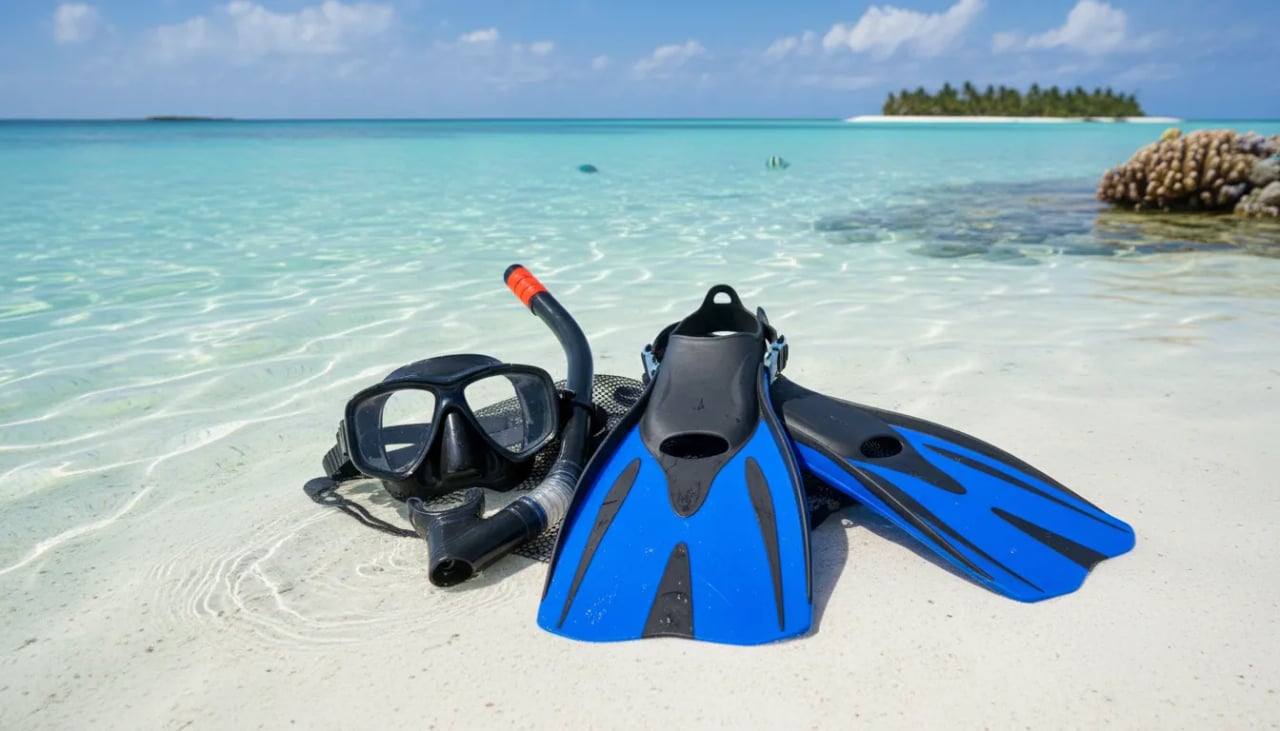
I still remember the first time I floated over a coral garden and felt like an uninvited guest—awed, light, a little clumsy. That day taught me two things: a good mask changes everything, and the right snorkel kit makes you want to stay in the water longer. In this short guide I’ll walk you through a snorkeling kit I trust: an ergonomic silicone mask with tempered glass, a dry snorkel with purge valve and splash guard, and lightweight flexible fins. Expect practical tips, a few personal anecdotes (yes, I once lost a fin to a curious reef fish), and some brand-aware buying notes.
1) Gear Breakdown — Mask, Snorkel, Fins (Up Close)
Mask: Silicone Mask + Tempered Glass for Clear Views
The heart of my kit is the Silicone Mask. The skirt is soft and ergonomic, so it sits comfortably on my face without feeling tight. That shape matters because a good seal is what turns a decent mask into a Leak Proof Mask. I also like that the strap adjusts quickly, which helps me fine-tune the fit after I’m already in the water.
The lens is Tempered Glass (scratch-resistant), and that’s a big deal for visibility. I notice less distortion and a cleaner view of reefs and seabeds compared to cheaper plastic lenses. Tempered glass also feels more confidence-inspiring when I’m packing and traveling.
Anti-fog is still a must. Here’s what I do:
Pre-treat the lens with an anti-fog solution before the trip.
Use the classic saliva trick in a pinch: rub, rinse lightly, and don’t touch the inside again.
Keep the strap comfortable on long swims—my simple upgrade is a Cressi Strap Cover to reduce hair pulling and pressure points.
Snorkel: Dry Snorkel Comfort with Splash Guard + Purge Valve
My snorkel is a Dry Snorkel (or at least semi-dry) style with a splash guard at the top. That little shield helps reduce water getting in when small waves slap over the tube. It doesn’t make you “waterproof,” but it cuts down on annoying mouthfuls.
The feature I won’t skip is the Purge Valve (there’s 1 on this snorkel). If water does sneak in, I can clear it with a quick exhale instead of doing a full, awkward blast-clear. The tube also has a flexible section, and paired with an ergonomic mouthpiece, it sits naturally without making my jaw tired.
Liam Hart, Marine Gear Specialist: "A tempered glass lens and a proper purge valve turn a frustrating outing into a relaxed one—small upgrades with big payoff."
Fins: Lightweight Fins for Smooth, Effortless Movement
The fins in this kit are Lightweight Fins with a flexible blade, which is exactly what I want for relaxed snorkeling. They give me smooth propulsion without feeling like I’m doing a workout. For most snorkelers (especially travelers), lighter fins are easier to pack, easier to kick, and less tiring over long sessions.
Fit style matters, so I think about it like this:
Full-foot fins: great for warm water, simple to slip on, often best for travel.
Open Heel Fins: adjustable and comfy with booties, helpful for rocky entries and mixed conditions.
Component (3) | Key Features |
|---|---|
Mask | Ergonomic silicone skirt, scratch-resistant Tempered Glass, adjustable strap for a Leak Proof Mask |
Snorkel | Splash guard (1), Purge Valve (1), flexible tube (1) |
Fins | Lightweight, flexible blade for smooth movement; full-foot or Open Heel Fins options |
Most kits like this usually land in the $60–$216 range, and for me the comfort + visibility upgrades (silicone fit, tempered glass, and a purge valve) are what make it worth it—especially in saltwater, where durable, resistant materials really matter.
2) Who It's For — Fit, Travel, and Skill Levels
Beginner Friendly: comfort first, so you actually relax
If you’re new to snorkeling, this kit is Beginner Friendly in the ways that matter most: it helps you feel calm in the water. The mask has a secure seal and tempered glass for clear viewing, and the snorkel’s splash guard plus purge valve makes breathing feel less “fussy” when a wave hits. That alone can reduce the intimidation factor for first-timers.
The biggest win is the Adjustable Strap on the mask. I can fine-tune the tension without over-tightening (which is usually what causes headaches and leaks). Add in the anti-fog-friendly design and saltwater-resistant build, and it feels like a kit made for learning—comfort, fit, and ease-of-use over raw speed.
Comfortable Fit: choosing the right fin style for your feet
Fit is where most snorkeling trips go wrong, so I pay attention here. Many travel-focused sets include Open Heel Fins, which I like because they handle “real life” better—different foot shapes, swelling after a long beach day, or wearing thin dive booties for rocky entries. Full-foot fins can feel great too, but they’re less forgiving if the sizing isn’t perfect.
Open Heel Fins: better for variable fits and booties; easier to share between family members.
Full-foot fins: simple and comfy in warm water, but sizing needs to be spot-on.
Travel Fins: packable gear that still feels smooth in the water
I travel a lot, so I appreciate when a kit is light and flexible. Travel Fins are popular for a reason: they pack easier and feel less tiring for casual reef swims. The trade-off is that many travel designs sacrifice some power for packability—totally fine for lagoons, coves, and relaxed snorkeling.
Dr. Maya Collins, Marine Recreation Researcher: "Travel-friendly gear often wins for casual snorkelers—light and forgiving beats heavy and powerful for most trips."
If you want a reference point, the Cressi Palau Premium (about $60–$80) is a common “travel fin” benchmark. For airport carry, I toss my kit in a mesh bag so it drains fast and doesn’t trap sand in my suitcase.
Use a mesh bag for quick drying and easy carry-on packing.
Rinse with fresh water after saltwater days to protect seals and straps.
Experienced snorkelers: when you may want more propulsion
This kit works for experienced snorkelers too—especially for reef cruising and short swims. But if you regularly cover long distances or deal with current, you might prefer a stiffer paddle fin for stronger propulsion. The Tusa Solla (MSRP $149) and ScubaPro Go Sport (MSRP $216) are good examples of fins people step up to when they want more drive.
For value, I’ve found many solid sets land in the $60–$100 range (like the Aqua Lung Zephyr, roughly $60–$100), balancing comfort features with travel-ready design.
3) Field Notes — Testing, Care, and Real Moments
Real Moment: The Day a Fish “Borrowed” My Fin Strap
On one of my first reef swims, I surfaced laughing because a curious fish stole a fin strap. It didn’t get far, but I learned a practical lesson fast: secure straps and check buckles before entry. Now I do a quick pre-water check—mask seal, snorkel clip, fin straps—because small issues feel big once you’re floating over coral.
Comfort Wins: Leak Proof Mask + Anti Fog in Real Water
This kit’s ergonomic, Leak Proof Mask is what makes me stay out longer. I press the mask lightly to my face and inhale through my nose—if it “sticks” without the strap, I know the seal is good. Then I tighten just enough to hold it in place (over-tightening can actually cause leaks).
For Anti Fog, I keep it simple: rinse the lens, apply a tiny drop of defog (or baby shampoo), rub, then lightly rinse. I avoid touching the inside of the tempered glass once it’s treated. Clear vision matters when you’re scanning for rocks, boats, and your buddy.
Liam Hart, Marine Gear Specialist: “Treat your mask like eyeglasses—small scratches ruin visibility; tempered glass resists that the most.”
Snorkel Control: Purge Valve + Splash Guard Tips
The snorkel’s splash guard helps on choppy days, but the real hero is the purge valve. If a little water sneaks in, I exhale sharply to clear it instead of lifting my head and breaking rhythm. I practiced this in shallow water first, and it made me calmer in deeper spots.
Fins, Foot Pocket Fit, and Why “Forgiving” Gear Is Better
These lightweight, flexible fins feel smooth—not overpowered. In real-world snorkeling, I’d rather have control than speed. A comfortable Foot Pocket reduces rubbing and helps me keep a relaxed kick. If you’re using open-heel fins, I strongly recommend dive booties for comfort and fewer blisters.
My go-to technique is gentle flutter kicks for buoyancy control and less reef contact. It’s safer for the environment and for me—no accidental fin taps on coral.
Care Routine: Saltwater Resistant Doesn’t Mean “No Maintenance”
Even when gear is Saltwater Resistant, I treat care like part of the kit. Proper care extends the life of silicone skirts and tempered lenses.
Rinse everything with fresh water after each use (mask, snorkel, fins).
Dry the mask upside down so the skirt doesn’t warp.
Store in a Mesh Bag for airflow—my favorite example is the Stahlsac BVI Mesh Bag because it’s durable and drains fast.
Travel Notes: Mesh Bag Logistics + Value Kit Reality Check
For travel, a Mesh Bag and packable fins make life easier: wet gear can breathe, and sand doesn’t get trapped. I’ve also tried value options like the Decathlon SNK500—great for the price, but I’ve seen common complaints about mask scratches. That’s why I’m careful about where I set my mask down (never lens-first on a boat deck).
Safety + Respect: Distance, No Touching, Controlled Propulsion
I keep a respectful distance from coral, avoid touching marine life, and choose gear that minimizes accidental contact. Lightweight fins plus controlled kicks help me glide over reefs without turning my swim into a cleanup problem for the ocean.
4) Wild Cards — Odd Comparisons and Hypotheticals
What if my snorkel had a GoPro mount?
I’ve daydreamed about turning my Snorkel Gear into a mini film studio: a GoPro mounted right on my purge-valve snorkel. In theory, it sounds perfect—hands free, steady view, instant “look what I saw” footage. In real life, that extra weight up top can mess with balance. A snorkel with a purge valve and splash guard already has a bit going on, and adding a camera can make it feel like the tube wants to twist when I turn my head. If I ever try it, I’d keep the camera small, tighten the mask strap a touch, and accept that comfort matters more than content.
A good Snorkeling Kit is like shoes that disappear
My favorite Snorkeling Kit reminds me of a well-fitting pair of shoes. When the mask seals cleanly and the fins move naturally, I stop thinking about gear and start noticing the reef. That’s why I love a mask with an ergonomic fit and tempered glass—wide, clear, and tough. If you want a specific example, the Cressi Calibro is known for wide vision, and that “open view” feeling is exactly what makes a snorkel session feel effortless.
Dr. Maya Collins, Marine Recreation Researcher: "Think about the trip: quick reef snorkel or long lagoon crossing? Your fins decide the mood of the day."
Propulsion Fins vs Travel Fins: the 5km reef loop thought experiment
If I’m doing a long 5km reef loop, I start thinking about Propulsion Fins (or stiffer Paddle Fins) because they can give more speed per kick. The tradeoff is bulk and leg fatigue if they’re too stiff for my style. For casual swims and flights, Travel Fins win because they pack smaller—roughly 30–50% less pack volume than full-size propulsion fins in my experience—and they’re easier to live with on a busy trip. Either way, I want flexible, lightweight fins that feel smooth, not fighty.
Quick price/gear mash-up: match the brand to the trip goal
When I’m planning a budget beach week, I lean toward travel-friendly Cressi options like the Cressi Palau Premium (about $60–$80) and call it a win. If I’m chasing performance days, I look at fins like the Tusa Solla ($149) or the ScubaPro Go Sport ($216). And when I’m in “treat myself” mode, I’ll even browse higher-end names like Aqua Lung and Tusa—I’ve seen people rave about systems like the Aqualung Axiom I3 for comfort-focused diving setups, even if my own snorkeling stays simpler. For pure fin power, the Cressi Aquawing Max is another model I keep on my radar for stronger kicks.
I’ll end with a small confession: I once packed my fins at the very bottom of my bag, then had to unpack everything on a windy dock at sunrise. Annoying—but the moment I slipped on my mask, the water turned glassy, and the seabed lit up, I forgot the hassle. That’s the real goal: choose Snorkel Gear that fits your outing, packs smart, and lets you explore coral reefs, hidden coves, and quiet lagoons without thinking twice.