

(Discover many other contents on: NOWO.ONE and NOWO Publishing)
I first stumbled onto The Girl from the East while idly scrolling through late-night YouTube uploads; a glitchy teaser stopped me mid-scroll. That February evening — February 6, 2026 — I listened to Pt. 1 twice in a row. The music felt like a postcard from a place I didn't know I wanted to visit: synthetic, spacious, and quietly insistent. In this piece I unpack what Otto Murdrum did with this release, why the IBIS label matters here, and why the instrumental Dance Ambient chemistry is worth a closer listen.
1) Quick Overview: The Girl from the East, Release Date & Label
The Girl from the East — Otto Murdrum Pt. 1 as a clear series start
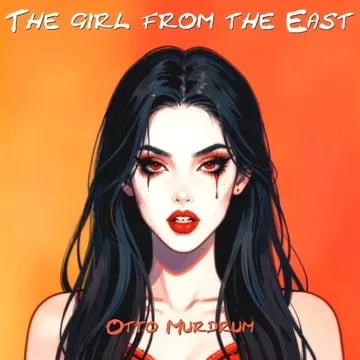
The Girl from the East — Otto Murdrum Pt. 1 (2026) is an electronic music album by Swiss artist Otto Murdrum . When I look at the naming, “Pt. 1” reads like an intentional opening chapter, not a one-off release. In the wider project, other parts are referenced too— Pt. 2 , Pt. 3 , Pt. 7 , Pt. 10 , and Pt. 13 —which helps frame this album as one piece of a longer, multipart idea built around modern synthetic sound.
The Girl from the East crystallizes a moment — part postcard, part club pulse. — Otto Murdrum
Release Date: February 6, 2026
The official Release Date for The Girl from the East is February 6 , 2026 . This date is consistent across the main release info and the track uploads shared online (including YouTube postings appearing on the same day). For anyone cataloging the project, the primary date to use is:
Release Date: February 6, 2026
IBIS Label credit (© IBIS)
The album is released under the IBIS Label , with copyright credited as © IBIS . To me, that label credit matters because it signals a curated, niche electronic context rather than a random self-upload—useful for press kits, metadata, and playlist placement where label fields are often checked.
Genres, format, and Swiss origin
Genre tags place the record in Electronic > Dance > Ambient , which suggests flexible listening: rhythmic enough for movement, but also spacious and reflective. The tracks are entirely instrumental (shown as “Instrumental” in lyrics/metadata). The project is rooted in Switzerland , placing Otto Murdrum within the Swiss electronic scene, with Simone Beretta credited as assistant sound engineer.
2) Sound Palette & Composition: Instrumental Textures (Dance Ambient)
Dance Ambient inside an Electronic Genre frame
The Girl from the East — Otto Murdrum Pt. 1 (2026) sits in that useful middle zone where Dance Ambient can be both physical and calm. Because it’s tagged across the Electronic Genre , Dance, and Ambient on platforms like Artistcamp, Anghami, and YouTube, I listen for arrangements that move between pulse and space rather than staying in one mode.
An Instrumental album that tells its story with texture
This is an Instrumental album , so the “voice” is really the sound design: melody, rhythm, and the way reverb and delay shape distance. Otto Murdrum’s approach makes sense to me when I think about the Swiss scene’s reputation for precision—clean edges, controlled low end, and careful stereo placement. Simone Beretta’s assistant engineering credit also hints at a studio-minded focus on detail.
I wanted the instruments to speak in place of words — the spaces between notes are the narrative. — Otto Murdrum
What I hear in the instrumental textures
I expect synthetic bass that stays tight for club translation, plus airy reverb beds that keep the tracks floating. The leads often feel modular in spirit—slightly unstable, like they’re being nudged by slow automation. In my head, the drum bus is compressed for clarity, while the ambient tails are allowed to bloom long after the hits land.
Beats: steady, mix-ready kicks and hats (often around 90–125 BPM in Dance Ambient contexts)
Pads: wide, foggy layers that soften transitions
Leads: bright, synthetic lines with gentle pitch drift
Pt. 1 as a palette primer (Composer Otto metadata)
The Pt. 1 label makes me treat this as a first statement of a larger system—something that could evolve across Pt. 2, Pt. 3, Pt. 7, Pt. 10, or Pt. 13. I’ve even seen “ Composer Otto ” in metadata variations, which fits the idea of Murdrum building a consistent, creditable sonic language.
My strongest listening moment is how the transitions feel like walking from a neon street into fog—still moving, but suddenly surrounded by air. It works for late-night mixes, background writing, or warm-up DJ sets where you want motion without pressure.

3) Production Notes: Simone Beretta, Mixing & Swiss Roots
Simone Beretta and the collaborative sessions
When I look at the credits for The Girl from the East , I like that Simone Beretta is named as assistant sound engineer . It shifts the story away from a lone creator and toward a real working room, where tasks get shared and details get checked. Assistant engineers often handle session prep, editing, and routing, and they help keep long days moving without losing focus.
Working on The Girl from the East, my job was to make space where the low end could breathe. — Simone Beretta
Mixing choices: dance punch with ambient air
Otto Murdrum frames this project as electronic, dance, and ambient, and I hear that blend in the way the tracks feel both tight and wide. The production seems to favor spatial clarity: clean low end, controlled transients, and reverbs that add depth without washing out the rhythm. That balance matters on an instrumental album, because the mix has to carry the emotion that vocals usually provide.
I also picture Beretta doing the practical work—labeling takes, cleaning edits, and maybe setting up room mics—while Murdrum shapes synth patches and drum textures. Even if parts were done remotely, the credit suggests more than one set of ears guided the final sound.
IBIS Label metadata and Switzerland Country roots
IBIS Label is tied to the release and shows up in platform notes and metadata (© IBIS). To me, that points to a label role beyond branding: distribution, correct credits, and consistent identifiers across places like YouTube and Artistcamp. For a project titled Otto Murdrum Pt. 1 (2026) , that kind of structure helps the music travel cleanly.
Release date: February 6, 2026
Origin: Switzerland Country (Swiss music scene)
Platforms noted: Artistcamp, Anghami, YouTube, Supraphonline
4) Release Strategy & Platforms: Where to Hear Pt. 1
Artistcamp Page: track list, promo text, and press-ready details
If I want the cleanest “official hub” for The Girl from the East , I start with the Artistcamp Page . It’s where the project reads like a proper release: the track listings are visible, and the promotion text is already written in a way that’s easy to quote in press notes. I also like that it frames this as Otto Murdrum Pt. 1 , which fits the larger-series feel of the title.
Anghami Play: quick access for regional listeners
For streaming, Anghami Play is a straightforward option, with individual songs available as separate pages. One example I’ve seen referenced is an Anghami song ID: 1257876365 . This kind of listing helps discoverability in markets where Anghami is a daily-use app, and it supports the album’s instrumental Electronic/Dance/Ambient positioning.
Putting the tracks on Artistcamp and Anghami helped reach niche listeners across regions. — Otto Murdrum
YouTube Provided: IBIS distribution and the Release Date metadata
On YouTube, the tracks appear as YouTube Provided uploads, with provider tags showing they were delivered by IBIS . The metadata also displays the Release Date as 2026-02-06 , matching the album’s official launch. I’ve also noticed channel activity and discussion timing that looks very recent (for example, “20 hours ago” style markers), which lines up with how distributor-fed audio uploads often roll out around release week.
Supraphonline cross-promo: a listening path beyond Pt. 1
Supraphonline lists related Otto Murdrum titles, including Travel Brochure . I treat that as a useful cross-promo pointer: if someone likes the synthetic, suggestive tone of The Girl from the East , that adjacent listing gives them a next step without leaving the ecosystem.
Artistcamp : promo text + track list visibility
Anghami : song-level streaming (e.g.,
1257876365)YouTube : IBIS-provided uploads with
2026-02-06metadataSupraphonline : related catalog discovery (e.g., Travel Brochure )

5) The Larger Project: Why Pt. 1 Feels Like a Teaser
The Girl from the East — Otto Murdrum Pt. 1 (2026) doesn’t hide what it is: an opening chapter. The “ Pt. 1 ” label feels like a flag planted in the ground, telling me this is a series built to grow. Since the album is fully instrumental and moves between Electronic, Dance, and Ambient, it already sounds like a test space for modern, synthetic moods—rooted in the Swiss scene and released via the IBIS label on February 6, 2026.
Pt. 1 as a style statement (and a promise)
When I see a numbered title, I expect follow-ups. In this project, sources point to Pt. 2 , Pt. 3 , Pt. 7 , and even later entries like Pt. 10 and Pt. 13. That range makes me think the numbering is not strict storytelling. I suspect it works more like themed chapters—snapshots of the same world from different angles.
“Titling it Pt. 1 was a promise to myself: to leave room for questions and answers later.” — Otto Murdrum
Why the serial release pattern matters
I’ve noticed a staggered, serialized pattern on platforms like YouTube and Artistcamp, where separate parts appear across different dates. That approach has a clear advantage: it keeps listeners returning to the artist page, and it helps electronic releases stay visible in playlists and feeds.
Marketing momentum: each new part refreshes attention without needing a full new “era.”
Creative flexibility: later parts can expand, remix, or subvert what Pt. 1 sets up.
Motifs that can be reworked in Pt. 2, Pt. 3, and Pt. 7
Even with assistant sound engineering credited to Simone Beretta, the production feels intentionally open-ended. I can imagine motifs introduced here—rhythmic pulses, airy pads, or a specific synth tone—being reshaped later. Hearing Pt. 1 felt like seeing the first brushstroke on a larger canvas.
6) Context & Comparisons: Travel Brochure , Rebeat, and the Swiss Scene
Why Travel Brochure is my go-to comparison
When I look for context around The Girl from the East , I keep coming back to Travel Brochure , which is listed as a similar Otto Murdrum album (via Supraphonline). It helps me hear what stays consistent in his approach: clean instrumental writing, steady electronic pacing, and a balance between movement and space. Even though The Girl from the East is framed as “Pt. 1,” it doesn’t feel like a reset—it feels like a continuation with tighter focus.
Rebeat Label references and what they signal
I also pay attention to how Swiss electronic artists show up on international platforms. In Beatport’s ecosystem, the Rebeat Label (often seen in label listings and IDs) is a useful industry reference point. Otto Murdrum released this album on IBIS , but seeing Rebeat in the wider Beatport context reminds me that distribution and discovery often run through connected label networks, not just one imprint. That matters for Latest Releases , where listeners browse by label, genre tags, and related artists.
The Swiss electronic aesthetic: minimal, clear, controlled
To my ears, the Swiss electronic scene often leans toward minimalism and clarity, and this record fits that lineage. The tracks stay poised, with careful sound choices and few wasted layers. Simone Beretta’s role as assistant sound engineer also hints at a production process that values detail and clean translation across systems.
There’s a quiet Swiss discipline in the arrangements that keeps the songs poised. — Music Producer Anna Keller
Where it sits: local restraint, global club texture
Instrumental Electronic > Dance > Ambient framing keeps it flexible for playlists and DJ sets.
Recurring motifs link back to Travel Brochure without copying it.
Artistcamp/Anghami-style promotion plus Beatport-style browsing helps Swiss artists reach global listeners.

7) Listening Guide: How I Listen to Pt. 1 (Practical Tips)
Start with high-quality playback (Artistcamp Page first)
For The Girl from the East (released February 6, 2026), I begin on the Artistcamp Page or Anghami because the files usually sound cleaner than YouTube previews. YouTube is still useful on release day for quick access, but I treat it like a trailer for this Dance Ambient world.
Late-night headphones: hear the space
My first full run is late at night on headphones. That’s where I catch the long ambient tails, small delays, and subtle stereo movement that can get lost on speakers. This matters with Otto Murdrum ’s instrumental approach and the careful production (Simone Beretta is credited as assistant sound engineer).
I usually listen with headphones first, then test in a small room to check translation. — DJ and Curator Marco Steiner
DJ use: build with stems, pads, and tempo
If I’m prepping a set, I check the Artistcamp metadata for track timings and any stems (if listed). When drum stems are available, I’ll sample short hits and layer the ambient pads under peak moments for glue.
Estimated BPM range: 90–125 BPM for flexible mixing
Tip: keep pads low, let the kick own the center
Commute, workout, background work
On commutes or steady workouts, the Dance side keeps momentum without demanding full attention. For creative work, I lower volume and let the ambient textures sit behind writing or editing.
Home system check: reverb width + low end
On speakers, I listen in a small room and manage the low end: moderate sub, clear kick, and controlled reverb width. This helps the “space” read without turning to blur.
Mini-set idea + timestamp notes
Pt. 1 → Travel Brochure → a rework for continuity
Cross-check Pt. 1 → Pt. 2 → Pt. 3 for longer journeys
I keep a timestamp log for motifs I want to revisit or remix, like: 03:18 – rising pad + metallic tick .
8) Promotion Text, Pre-order Signals & Press Notes
Promotion Text (Artistcamp) I can reuse for press
When I need Promotion Text for The Girl from the East , I start with Artistcamp because it includes both the album description and the full track listing. That combo is useful for press quotes, short bios, and quick one-liners for social posts. I also treat the Artistcamp track listing as the “master list” so titles stay consistent across platforms.
Pre-Order signals (SEO + fan intent)
Pre-Order is a high-intent keyword, so I look for clear availability signals on Artistcamp first, then confirm via any IBIS Label announcements. If a pre-order exists, I keep the wording simple and direct (format, price, and what fans get immediately). If it doesn’t, I avoid guessing and only publish what is confirmed.
Press notes: label + release metadata
For accuracy, I copy label credit verbatim in press materials and provider notes. The label line should appear exactly as:
© IBIS
YouTube provider notes often confirm publishing credits and the exact Release Date , and both YouTube and Anghami metadata align on February 6, 2026 . Keeping this consistent prevents mismatches when blogs, playlists, and distributors pull data automatically.
When we prepared the release, keeping metadata consistent was our small but crucial obsession. — Simone Beretta
Platform checklist (what I verify)
Artistcamp : Promotion Text + track listing (best for press-ready copy)
YouTube : provider notes for Release Date and credits
Anghami : track listing and possible regional visibility (if analytics are available)
Quick press asset table
Item | What I publish |
|---|---|
Album | The Girl from the East — Otto Murdrum Pt. 1 (2026) |
Release Date | February 6, 2026 |
Label | © IBIS |
Notes | Instrumental electronic/dance/ambient; assistant sound engineer: Simone Beretta |

9) Wild Cards: Hypotheticals, Quotes, and Analogies
Hypothetical: The Girl from the East as a late-night travel brochure
I like to imagine The Girl from the East as a travel brochure you find at a quiet gate in a late-night airport—clean design, few words, and a lot of space to project your own story. Because it’s an Instrumental album , I don’t get told what to feel. I get suggested moods: moving walkways, soft neon, and that calm pressure of going somewhere.
Analogy: Pt. 1 as a train station announcement
Pt. 1 works for me like a train station announcement: brief, clear, and full of direction without giving away the whole trip. It hints at a larger route (Pt. 2, Pt. 3), which makes the multipart structure feel serial—perfect for ongoing listener games and follow-ups after the February 6, 2026 release.
Quote bank for headers and social posts (Promotion Text)
“Treat the album like a small travel brochure — places, moods, and little instructions for feeling.” — Otto Murdrum
If I’m building Promotion Text for socials, I’d pair that line with short production credits like: “Assistant sound engineer: Simone Beretta (IBIS, Swiss scene).” It gives a human face to the technical side.
Fan map: where does the music take you?
I’d invite listeners to submit a location the tracks evoke, then pin responses on a shared map.
Prompt: “Name a place Otto Murdrum takes you in The Girl from the East .”
Track: streams, submissions, shares.
Remix contest idea (if stems drop)
Timeline: 4–8 weeks post-release.
Submit on Artistcamp ; promote via YouTube, Anghami, and social.
Tag entries:
#TheGirlFromTheEast#Pt1Remix
Surprising tie-in: minimalist fashion lookbooks
The ambient edges of The Girl from the East, Pt. 1 can score minimalist fashion videos—slow cuts, clean shapes, and synthetic light that matches the album’s modern Swiss-rooted feel.
10) Conclusion: What Pt. 1 Promises (and My Final Take)
The Girl from the East, Otto Murdrum, and why Pt. 1 matters
The Girl from the East by Otto Murdrum doesn’t feel like a full stop. It feels like a door opening. As Pt. 1 , it works as an invitation—into a wider series plan, into modern synthetic sound, and into a Swiss angle on electronic music that values mood as much as motion.
Release Date and IBIS Label credibility
The facts are clear and easy to verify: the Release Date is February 6, 2026 , and it arrived via the IBIS Label (© IBIS). That kind of clean release framing gives the project a grounded, industry-ready feel, even while the music stays open-ended and exploratory.
Instrumental Electronic / Dance / Ambient: club or late-night
Because it’s fully instrumental , the album can shift roles depending on where I place it. The Electronic and Dance side supports movement and pulse, while the Ambient side leaves space for reflection. I can imagine it working in a small club set, but it also fits a quiet room when I want sound without words.
Production notes and what I expect next
Credits matter here. With Simone Beretta listed as assistant sound engineer, I hear a careful hand in the mix and texture choices. That attention makes me think future parts— Pt. 2 , Pt. 3 , even the long arc toward Pt. 7 , Pt. 10 , and Pt. 13 —will revisit motifs introduced now, then stretch them into new shapes.
Pt. 1 felt like a warm-up — deliberate but open-ended, and that’s the promise. — Otto Murdrum
My next steps are simple: I’ll keep streaming it on Artistcamp and Anghami , check YouTube and Supraphonline for updates, and follow IBIS for any pre-order news. If a remix contest or fan map shows up, I’m in. For listening, my ritual is dim lights, headphones, one late-night run-through. What do you want Pt. 2 to expand—rhythm, space, or something stranger?