



(Discover many other contents on: NOWO.ONEand NOWO Publishing)
I still remember the first winter I brought my tabby, Miso, indoors for good. She stared at the window like the world had shrunk to a postage stamp. That tiny, baffled look forced me to learn fast: indoor cats need toys—not as luxuries, but as lifelines. In this post I’ll walk you through the why, the what, and the how of keeping indoor cats mentally stimulated and physically fit, using examples that actually worked for Miso (and my neighbor’s thieving fluffball).
Why Toys Matter for Indoor Cats (Unexpectedly Vital)
When my cat moved indoors full-time, I assumed a cozy bed and a sunny window would be enough. I was wrong. Indoor Cats still carry the same Natural Instincts as outdoor hunters—stalk, chase, pounce, grab. Toys aren’t “extras.” They’re daily Cat Enrichment that keeps a home-only life healthy and interesting.
"Play helps cats satisfy their hunting instincts and prevent behavioral issues." — Dr. John Bradshaw
Toys Feed Natural Instincts (Even in a Living Room)
Cats are wired to hunt in short bursts. Without an outlet, that energy doesn’t disappear—it just shows up at 2 a.m. or in places you don’t want it. Wand toys, rolling balls, and tunnels mimic prey movement and let your cat practice the full “hunt cycle” safely.
One of my favorite “play environment” items is the Purrfect Feline 4 Way Cat Tunnel . It turns a plain floor into a mini hunting zone for ambushes, chasing, and quick retreats.
Mental Stimulation Prevents Boredom Behaviors
Research-backed enrichment matters because indoor cats can get bored fast. When they don’t get enough Mental Stimulation , you may see boredom-driven behaviors like:
Scratching furniture or door frames
Over-grooming or licking patches of fur
Hyperactivity bursts, then long apathy
Puzzle toys and “thinking” games keep the brain working and may help reduce behavior issues and cognitive decline over time. I also like simple independent options, like the Set of 7 Catnip Play Cushions , because they invite solo play when I’m busy.
Movement Lowers Obesity Risk and Builds Agility
Indoor life can be sedentary, and that raises the risk of weight gain. Toys that encourage jumping, running, and grabbing support muscle tone, coordination, and healthier weight. Even a short daily session makes a difference— 10–15 minutes of active play is often more effective than one long weekend session.
Play Reduces Stress in Noisy or Monotonous Homes
Vacuum cleaners, visitors, construction noise, or just the same routine every day can stress cats out. Play gives them a positive way to release tension and feel “in control” of their space. For best results, I rotate toys every few days— rotating reduces habituation , so the “new” toy feeling comes back without buying more.
It Strengthens Your Bond (Quietly, but Powerfully)
Interactive play teaches trust: you become the fun, predictable part of their day. Over time, that shared routine can make handling, grooming, and everyday life calmer for both of you.
Interactive Toys That Light Up Their Minds (and Muscles)
When my cat is stuck indoors, I can almost see the “hunter mode” switch on. That’s why Interactive Toys are my go-to: they don’t just burn energy—they give my cat a job to do. As the Purina Research Team puts it:
"Interactive toys mimic prey and encourage both mental stimulation and physical exercise." — Purina Research Team
Wand Toys: My Favorite Way to Mimic Prey
Wand Toys and teaser sticks are perfect for guided play because I control the “prey.” I like the Cat Toys Teaser Kitty Stick Interactive Bell Ball for quick sessions—its bell and bouncing movement make my cat stalk, pounce, and grab like a real hunt.
I keep play realistic: slow crawl, sudden dart, then a pause. That stop-and-go pattern triggers instincts and keeps my cat thinking, not just flailing.
Safety note for wand play
I always supervise string and wand toys. If my cat chews the string, I put it away right after the session to reduce ingestion risks.
Electronic Interactive Toys for Unpredictable Movement
On busy days, I lean on an Interactive Electronic Cat Toy with Wand . The unpredictable motion is the magic—it feels less “human-controlled” and more like prey trying to escape. My cat ends up sprinting, twisting, and jumping, which supports muscle tone, coordination, and healthy weight.
Puzzle Feeders : Problem Solving at Mealtime
Puzzle Feeders and treat dispensers are my favorite “two-in-one” tool: mental work plus food. They encourage Problem Solving (pawing, nudging, rotating) and they slow eating, which can improve digestion by preventing fast gulping.
I try to use a puzzle feeder at least once daily , even if it’s just part of breakfast. It turns a boring bowl into enrichment.
My Simple Indoor Play Routine (10–15 Minutes)
Daily interactive session: 10–15 minutes with wand toys or an electronic wand.
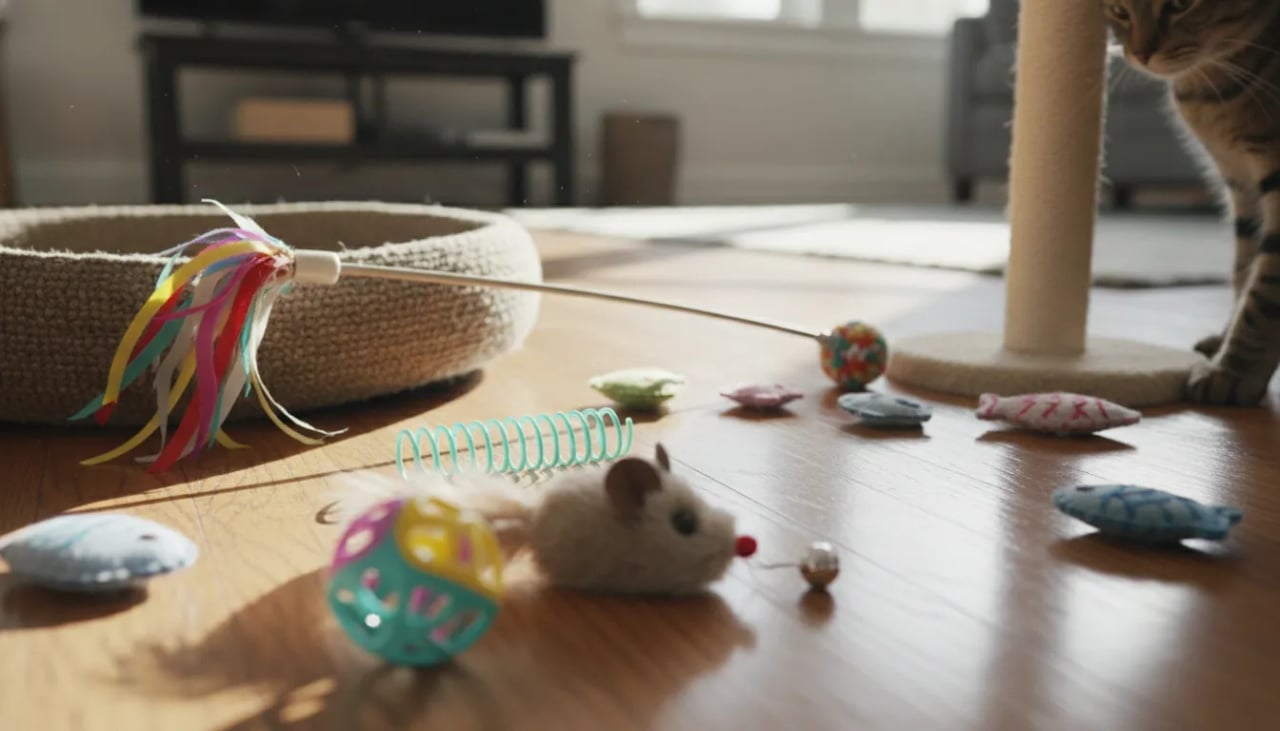
Independent option: leave a track toy, teaser ball, or tunnel-style toy out for solo play.
Rotate toys: I swap options every few days to keep novelty high.
This balance keeps my cat calmer, more curious, and less likely to “invent” entertainment like scratching the couch.
Movement & Solo Play: Tracks, Balls, and Catnip
When I’m trying to keep my Indoor Cats active without turning every play session into a full-time job, I lean on toys that create movement on their own. The goal is simple: spark that “hunt, chase, pounce” feeling and let my cat burn energy in short bursts throughout the day.
Track Toys & Rolling Balls for Quick Chase Sessions
Track Toys and rolling balls are my go-to for spontaneous play. A ball that darts across the floor or circles a track triggers instant pursuit—perfect for cats that get bored fast. The Cat Pet Rolling Ball Toy is a great example because it encourages stalking, chasing, and those sudden sprints that help with weight control and coordination.
Best for: high-energy cats, bored cats, and cats that “zoom” at night
Tip: rotate ball toys every few days so they feel new again
Tunnels Add Hide, Chase, and Ambush
A tunnel changes the whole game by adding places to hide and surprise “prey.” The Purrfect Feline 4 Way Cat Tunnel gives my cat options: dash through, crouch inside, or wait at an opening to ambush. That variety keeps solo play interesting and reduces stress in cats that need a safe space to retreat.
Catnip Toys (Plus Silver Vine and Valerian) for Kicking Play
Soft Catnip Toys are perfect for “kick and bite” play—especially for cats that love wrestling. The Yeowww Banana Singles Cat Toy and the Set of 7 Catnip Play Cushions are easy to toss on the floor and let my cat take over. If your cat seems unimpressed, don’t assume they’re “lazy”—catnip response varies by cat (it’s linked to genetic sensitivity). For sensitive cats, toys filled with silver vine or valerian can also trigger playfulness.
"Catnip and interactive solo toys can keep a cat engaged for long periods—use them wisely." — Claire Bessant, Feline Behavior Specialist
Automated Toys for When I’m Busy
Automated Toys are a lifesaver when I’m working or out of the house, especially in single-cat homes where there’s no built-in playmate. I still supervise new toys at first, but once I know they’re safe, automated movement helps prevent boredom and unwanted behaviors.
Product | Solo-play strength |
|---|---|
Cat Pet Rolling Ball Toy | Chase bursts and stalking practice |
Yeowww Banana Singles Cat Toy | Kicking, biting, and wrestling |
Set of 7 Catnip Play Cushions | Rotation variety for repeat interest |
Purrfect Feline 4 Way Cat Tunnel | Hide-and-ambush enrichment |
Smart & Automated Options (When Life Gets Busy)
When my schedule gets packed, I still want my Indoor Cats to have healthy outlets for energy and curiosity. That’s where Automated Toys and track-style toys shine. Research and real-life experience both point to the same win: these toys support self-entertainment when I’m out briefly or stuck on a call, helping prevent boredom that can lead to scratching or restless behavior.
Automated Toys for Solo Stimulation
The Electric Self-Entertaining Cat Toy is my go-to when I need something that runs without constant supervision. It keeps movement unpredictable enough to spark hunting instincts, which means my cat can chase, pounce, and “catch” in a safe indoor setup. This kind of solo activity supports both mental stimulation and physical health—especially for cats who need more daily movement.
Smart Movement That Triggers Chase & Pursuit
If your cat gets bored easily, the Cheerble Wicked Mouse Smart Toy is designed to move in surprising ways, which helps sustain engagement. That unpredictability matters because it mimics real prey behavior and encourages chase/pursuit instead of a quick sniff-and-ignore. It’s a solid option for busy days, short absences, or when I’m rotating toys to keep things fresh.
Product | Best Use Case | Safety Check |
|---|---|---|
Cheerble Wicked Mouse Smart Toy | When owners are busy or out briefly | Check battery compartment + small parts |
Automated Toys Aren’t a Replacement for Interactive Play
“Automated toys are great assistants—but nothing replaces a short, interactive session with a human.” — Dr. Sarah Ellis, Feline Veterinary Behaviorist
I treat automation as a supplement. Even a few short Play Sessions each day (think 10–15 minutes) builds confidence, reduces stress, and strengthens our bond through Interactive Play .
Practical Tips (So Automation Helps, Not Hurts)
Rotate automated playtimes so the toy stays “new” and exciting.
Choose quiet motors if your cat is skittish; loud buzzing can scare sensitive cats.
Monitor battery levels and sudden noise changes that might startle them.
Do a quick safety scan: avoid toys with small detachable parts or loose battery doors.
Practical Play Tips, Rotation, and DIY Hacks
Daily Playtime: Keep Play Sessions Short and Consistent
I get the best results when I treat Daily Playtime like a quick routine, not a big event. Research and real-life experience line up here: 10–15 minute Play Sessions each day usually beat a long, random “marathon” once in a while. These short bursts help my cat burn energy, stay lean, and keep their brain working—especially important for indoor cats and seniors.
"Short, consistent play sessions are the secret to a happier indoor cat—and a happier human." — Dr. Mikel Delgado, Feline Behaviorist
Rotate Toys Every Few Days to Prevent “Bored Toy Syndrome”
Indoor cats habituate fast, so I Rotate Toys to keep novelty high. My simple system: I hide half the toys, then swap in one “new” item every few days. Even familiar toys feel exciting again after a short break.
Day-to-day: Leave out 3–5 toys max.
Every few days: Put 1–2 away and replace them with different textures (soft kicker, crinkle, rolling ball).
Weekly: Change the environment too—move a tunnel, shift a box, or relocate a puzzle feeder.
Balance Independent Play and Guided Hunting
I like to alternate between self-play toys (rolling balls, catnip kickers, tunnels) and guided wand or teaser play. The guided sessions let me mimic prey: slow creep, quick dart, then a “catch.” That pattern satisfies hunting instincts and strengthens our bond.
Tip: I end with a win—let my cat grab the toy—then offer a small treat to complete the “hunt.”
DIY Toys: Cheap, Safe, and Surprisingly Effective
When my cat ignores store-bought toys, DIY Toys often save the day. I keep it simple and supervise anything that can tear.
Crumpled paper “prey”: Roll paper into a loose ball for batting and chasing.
Cardboard tunnel: Cut doorways in a box and connect two boxes with a slit-open shipping tube.
Treat-dispensing bottle puzzle: Poke a few holes in a clean plastic bottle, add dry treats, and let your cat roll it.
DIY rule: If it can shred, supervise—and remove strings, staples, and small plastic bits.
Read the Clues and Re-Introduce Toys Slowly
If my cat walks away, I don’t force it. I try a different sound (crinkle vs. silent), texture (plush vs. rubber), or movement. Sometimes I “relaunch” a toy by placing it near a favorite nap spot, then using slow-motion wiggles to rebuild interest.
Wild Card: Analogies, Scenarios & A Little Confession
Toys in the Feline World = a gym membership + a puzzle class
When I think about toys for Indoor Cats , I stop seeing them as “extras” and start seeing them as a routine. In the Feline World , a wand toy is basically cardio, a tunnel is agility training, and a puzzle feeder is that brainy class you swear you’ll take more often. That’s why Cat Enrichment matters: it burns energy, prevents boredom, and gives your cat a safe way to act out those hunting instincts without turning your couch into a scratching post.
And the mental side isn’t just a nice bonus. Purina’s mental stimulation advice lines up with what many vets say: small daily challenges keep cats engaged. Research also suggests mental challenges can help combat cognitive decline in senior cats and support overall well-being—one more reason Environmental Enrichment isn’t only for “high-energy kittens.”
What if every apartment had a cat enrichment corner?
I daydream about this all the time. Imagine every living room came with a tiny “cat zone,” like a built-in reading nook… but for stalking, pouncing, and problem-solving. If I designed mine, it’d look like a mini jungle gym: a cat tree by the window, a 4-way tunnel, a track toy, and one smart mover like the Cheerble Wicked Mouse for those moments when I’m answering emails and my cat is giving me the “entertain me” stare. (Side note: I would absolutely overdo it and then pretend it was “for the cat,” not my interior design hobby.)
This kind of dedicated space makes enrichment feel automatic. It also helps reduce boredom and behavior problems, which a 2014 PMC article on enrichment supports: when the environment is more interesting, cats have more appropriate outlets for their energy and curiosity.
Confession: Miso humbled my shopping cart
I once bought Miso a pricey electronic toy, convinced it would be the answer. She watched it for five seconds, blinked slowly like I’d offended her ancestors, and walked away. Ten minutes later, she was obsessed with a free paper ball I accidentally dropped on the floor. That was my reminder that every cat is an individual, and trial-and-error is normal. One Fur All and other cat-focused brands talk about this too: novelty matters, but preference matters more.
"Environmental enrichment keeps your feline friend happier and healthier." — Dr. Sarah Ellis, Veterinary Behaviorist
So yes, the practical tips in this guide are backed by real voices and real research—but your cat gets the final vote. Keep experimenting, rotate options, and build a home that feels like an adventure, even indoors.
TL;DR: Toys are essential for indoor cats: they provide mental stimulation, exercise, stress relief, and stronger bonds. Rotate toys, do short 10–15 minute sessions daily, and mix interactive with automated options.