
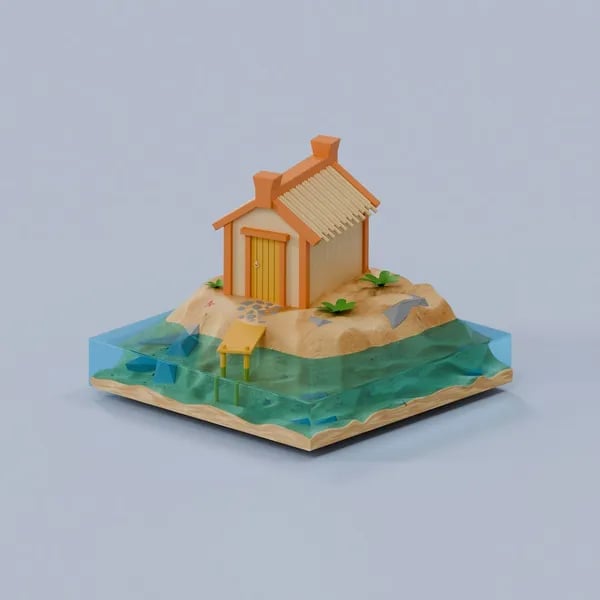



The writer remembers the small thrill of seeing a childhood toy rendered into something digital and tactile. On October 10, 2024, a new tool— Tripo AI —appeared on the scene, promising to translate photos and text into detailed 3D models. This piece approaches Tripo AI like a curious studio mate: part eccentric, part genius, and fully capable of shifting how creators prototype, print, and populate virtual worlds.
First Encounter: What Tripo AI Actually Is
Tripo AI and the new face of 3D model generation
At first glance, Tripo AI feels like a shortcut to a dream many creators have carried for years: turning an idea into a solid object, or a real photo into a digital world. It is software built for 3D model generation , producing detailed, high-resolution 3D models from either images or text descriptions . Instead of starting with a blank canvas in complex 3D tools, a creator can begin with what they already have—a picture, a sketch, or a few clear words—and let the system shape the first version of the model.
How Tripo AI creates 3D models from images and text
What makes Tripo AI stand out is the way it studies visual detail. When it works from photos, it can analyze the nuances of shape , shadow , and texture to form a model that looks more like a real object and less like a rough block-out. When it works from text, it aims to translate description into form—helping creators move from “what if” to “here it is” without waiting for a long manual build.
In simple terms, Tripo AI tries to do the heavy lifting of the first draft. The creator still guides the vision, chooses what matters, and refines the result. The tool supports imagination; it does not replace it.
Core strengths creators notice right away
Detail awareness: It focuses on shapes, shadows, and textures to support high-resolution results.
Flexible inputs: It can transform both images and text into 3D models, depending on what the creator has.
Faster starting point: It helps creators move quickly from reference to a usable model draft.
Immediate use cases: from print beds to virtual worlds
Early adopters are likely to be hands-on builders and world-makers—people who need assets they can test, iterate, and ship. Tripo AI fits naturally into practical workflows such as:
3D printing : Creating objects that can be refined and prepared for printing.
Virtual reality: Building props, environments, and interactive elements for immersive scenes.
Gaming: Generating models that can become characters, items, or set pieces.
A discovery moment that sparked fast attention
Tripo AI surfaced publicly on October 10, 2024 , and interest climbed with surprising speed. It now shows a search volume of 33.1K and a growth rate of +3233% , a signal that many creators are actively looking for easier ways to turn references into 3D form.
For many, Tripo AI is not a replacement for craft—it is a door that opens faster, so the craft can begin sooner.

Under the Hood: How It Crafts 3D from Photos and Prompts
Tripo AI turns everyday visuals and simple words into high-resolution 3D assets by following a clear path: image/text input → analysis → AI 3D reconstruction→ 3D output . Since its discovery on October 10, 2024 , interest has surged—its 33.1K search volume and +3233% growth hint at how strongly creators want faster ways to build worlds for 3D printing, virtual reality, and gaming.
From Photos and Prompts to AI 3D Reconstruction
At a high level, Tripo AI studies what a human artist would look for first: the nuances of shapes , the way shadows describe depth , and how textures wrap around surfaces . With photos, it uses lighting cues and edges to infer form. With text, it uses descriptive signals—materials, style, proportions—to guide the build. This is why text-to-3D models can feel surprisingly “direct”: the prompt becomes a creative blueprint, not just a label.
Input : one or more images, a text prompt, or both
Analysis : shapes, shadows, and texture patterns are interpreted
Reconstruction : geometry and surface detail are generated
Output : a usable model for editing, printing, or real-time use
What “High-Resolution 3D” Really Means
In practice, high-resolution 3D is not only about “more detail.” It usually implies:
Finer surface detail (small grooves, seams, and edges read clearly)
Cleaner meshes (fewer messy artifacts, better silhouette)
Better texture mapping (textures align more naturally across the model)
For readers familiar with 3D workflows, results may still benefit from common pipeline steps like retopology , UV mapping , and texture baking , especially when the asset must run smoothly in a game engine.
Input Quality Is the Hidden Superpower
Output fidelity often rises or falls with input quality. Lighting, resolution, and prompt clarity matter. One creator tried scanning a grainy vintage toy photo and got a soft, uneven result. After re-shooting the toy in daylight—sharp focus, even lighting—and adding a clearer prompt (“small plastic robot, glossy red paint, silver joints, worn edges”), Tripo AI produced a near-perfect model with stronger forms and cleaner textures. When inputs are optimized, Tripo AI can reduce manual modeling time in a very real way.
Dual-Input Workflows: Where the Magic Gets Sharper
Combining images with text often boosts fidelity: the photo anchors reality, while the prompt corrects intent. It is a practical way to steer AI 3D reconstruction toward the exact look needed for a scene.
“The image shows what it is. The prompt says what it should become.”
A Synthwave Aside: Layering Details Like Sound
Tripo AI can be imagined as a synthwave producer—stacking visual “tracks” the way music layers bass, pads, and neon leads. Shadows become rhythm, textures become melody, and the final mesh becomes a retro-futuristic instrument ready for indie electronic worlds.

Practical Uses: From 3D Prints to Virtual Worlds
Tripo AI turns images or text into high-resolution 3D models by reading shapes, shadows, and textures. Since it was discovered on October 10th, 2024, interest has surged to 33.1K searches with +3233% growth—because it fits real production needs across both physical and digital pipelines. Early adopters are often makers, small studios, and indie developers who need speed, strong placeholders, and fast iteration.
3D Printing Models: Fast Prototypes from Real Photos
For 3D printing models , Tripo AI shines as a quick prototyping tool. A designer can photograph a handmade lamp, generate a 3D model, then print a scaled version to test balance, base size, and silhouette before committing to final materials. On a Prusa-style printer, even a rough print can reveal what a screen cannot: weak joints, thin walls, and awkward proportions.
These outputs are valuable for prototyping, then refined for production with simple cleanup.
Virtual Reality Assets for VR & AR Scenes
In VR and AR, teams need lots of believable objects. Tripo AI can help create virtual reality assets quickly from photos—ideal for blocking out immersive spaces. One practical idea: populate a retro arcade level by photographing real machines, then generating models to fill the room with authentic shapes and decals. Even if the first pass is not perfect, it gives creators a strong starting point for lighting tests, scale checks, and user flow.
Game Asset Creation for Indie Builds
For game asset creation , Tripo AI can generate base meshes, props, and set dressing that would otherwise take weeks. An indie developer can build a playable demo faster by generating dozens of objects, then polishing only what players will see up close. One story often repeated in small teams: an indie dev used Tripo AI to populate a vertical slice in weeks, then replaced only a few hero assets later.
A writer’s friend once dropped a Tripo-generated crate into a Unity scene as a placeholder prop—and after a quick texture pass, it quietly became the final art.
Workflow Notes: Export, Cleanup, and Engine Import
Export formats: common outputs include
.OBJ,.FBX, and.GLB/.GLTFfor easy sharing.Post-processing: Tripo AI’s outputs often require cleanup for production use—try decimation for performance, then retopology for clean animation-ready topology.
Unity / Unreal Engine tips: check scale on import, regenerate colliders, and review material slots before building prefabs.
Experiment Small to Learn the Tool’s Limits
Creators are encouraged to run small tests first, especially on reflective surfaces , thin structures , and fine textural detail . Those quick trials help teams decide what can ship as-is, what needs artist time, and where Tripo AI saves the most effort.

Market Momentum: Why Everyone Is Searching for Tripo AI
The market signal around Tripo AI is hard to ignore, and the clearest proof is in the numbers. Tripo AI was discovered on October 10th, 2024 , and it now shows a search volume of 33.1K with a stunning +3233% growth . Those metrics do not guarantee long-term success, but they do reveal something real: rapid curiosity, fast sharing, and a growing sense that this tool might matter.
Hard Numbers That Explain the Buzz (Search Volume +3233%)
When a tool jumps this quickly, people are not only browsing—they are actively looking for examples, workflows, and results. The timing matters too. Anchoring the story to October 10th, 2024 makes the momentum feel measurable, not vague. In practical terms, a 33.1K search volume paired with +3233% growth suggests early-stage demand that is still forming, which is often when communities move fastest.
Metric | Value |
|---|---|
Discovery date | October 10, 2024 |
Search volume | 33.1K |
Growth | +3233% |
Why the Spike? Democratized 3D and Faster Prototyping
One likely driver is access. AI 3D reconstruction used to feel locked behind complex software and steep learning curves. Tripo AI changes the expectation by turning photos and text into detailed 3D models, reading shapes, shadows, and textures to produce high-resolution outputs. That promise speaks to creators who want speed: faster prototyping for game assets, quick mockups for product ideas, and models ready for VR scenes or 3D printing.
Another driver is the current hype cycle around AI creativity. When people see a short demo clip—an image becoming a 3D object in minutes—they often search the tool name immediately. That behavior alone can push search volume upward, especially when social posts link to galleries of results.
Competitive Context: A Practical Niche Even With Alternatives
Competitors exist, but a surge like this suggests Tripo AI is filling a practical niche: making 3D creation feel simple enough for beginners while still useful for serious pipelines. The market is not only chasing novelty; it is chasing time saved and repeatable results .
What Creators Should Do While Interest Is Peaking
Watch adoption signals : track community posts, model quality trends, and common use cases.
Run small pilots : test one object category (shoes, props, furniture) and measure consistency.
Document learnings : publish demos, tutorials, and prompt-to-model experiments to help shape best practices.
Stay realistic : high search volume shows interest, not guaranteed product-market fit.
Rapid search growth often means the community is still writing the rulebook—and early creators get to help define it.

Limitations, Ethics, and Where It Trips Up
Tripo AI has moved fast since it was discovered on October 10, 2024 , reaching 33.1K searches and +3233% growth . That momentum makes it tempting to treat AI 3D reconstruction as instant production. Yet real-world work shows there are practical and ethical limits to immediate, uncurated use—especially when models are headed for 3D printing, VR, or gaming .
3D reconstruction limitations: where detail still breaks
Tripo AI can read shapes, shadows, and textures, but some objects still confuse the system. These are common 3D reconstruction limitations that can lead to warped geometry or missing parts:
Thin structures like wires, chains, hair, and plant stems
Transparent materials like glass, clear plastic, and water
Reflective surfaces like chrome, mirrors, and glossy cars
Occlusion when key angles are hidden in the photo
In practice, creators often use Tripo AI for ideation and rapid iteration, then rebuild or refine the final asset by hand.
Ethical AI in 3D: copyright, likeness, and IP care
Ethical AI is not only about how a model is generated—it is also about what is being converted. Turning protected images into 3D assets can create risk, even if the output looks “new.” Recreating copyrighted sculptures , branded objects , or a recognizable person’s face can raise copyright, trademark, or likeness concerns.
If a creator would not legally sell the photo, they should not assume they can legally sell the 3D model made from it.
Because the available source info does not provide pricing, licensing terms, or dataset transparency, licensing and transparency remain open questions. That uncertainty makes careful stewardship even more important.
Pipeline reality: cleanup is still part of AI 3D reconstruction
Even strong outputs may need standard production steps before they are usable in games, VR, or print:
Mesh cleanup (holes, non-manifold edges, noisy surfaces)
Retopology for animation-ready or real-time assets
UV and texture corrections (seams, stretching, color mismatch)
Creators should validate outputs before commercial use, especially when accuracy and ownership both matter.
Workflow safeguards that keep creativity human-centered
Credit original sources for any reference images used
Maintain version control so edits and origins are traceable
Confirm legal use before publishing or selling assets
Tripo AI can amplify imagination, but it works best when guided by a human who checks quality, respects rights, and chooses responsible use.

Playful Futures: Imagining Tripo AI in a Synthwave Studio
Synthwave visuals born from one studio photo
In a small room lit by LEDs, a synthwave musician finishes a track built on retro electronic sounds, layered synth melodies, and an upbeat tempo. Instead of booking a long design session, they open Tripo AI and drop in a single studio photo: a keyboard, a drum pad, a worn chair, and a glowing monitor. With a moodful line of text, the scene becomes a starting point for Synthwave visuals —neon edges, glossy reflections, and bold shapes that feel like 1980s album art.
Tripo AI is designed to generate detailed 3D models from images or text descriptions. It reads shapes, shadows, and textures, then builds high-resolution 3D that can move from concept to real use in gaming, virtual reality, or even 3D printing. Discovered on Oct 10, 2024, it now carries a search volume of 33.1K and growth of +3233%, a signal that creators are hungry for faster ways to build worlds.
AI 3D for musicians: layering like a producer
In this studio story, the musician treats Tripo AI like a co-producer. A producer stacks synths, adds echoes, and shapes the mix until it feels alive. Tripo AI stacks visual detail in a similar way—first the main form, then surface texture, then lighting cues that suggest depth. The result is AI 3D for musicians : assets that match the track’s catchy hooks, rhythmic geometry, and retro mood, ready for cover art, stage visuals, or a looping VR listening room.
This is where cross-disciplinary work shines. A musician can hand the 3D model to a visual artist, or a 3D creator can build a short animation that reacts to the beat. Fast experiments make it easy to see what the tool does well and where it struggles, without losing the playful energy that drives good synthwave.
Creative prompts and a wild card test
To learn quickly, the musician runs playful prompt experiments. They try a strange mashup— “80s arcade vending machine meets sea-shell” —and expects a curved shell body with coin slots, neon decals, and wet-looking highlights. If the model gets messy, that weakness is useful feedback: simplify the prompt, change the photo angle, or focus on one material at a time.
They also keep a short prompt set for rapid prototyping: “neon cassette player” , “retro robot lamp” , and “vinyl alien bust” . Each one becomes a quick demo asset, like drafting a chorus before producing the full song.
A small community challenge to close the loop
The future feels most exciting when it is shared. Readers can start a simple challenge: everyone uses the same studio photo or the same creative prompts , then posts results, notes what worked, and swaps remix ideas. These community challenges can speed up learning and reveal surprising use cases, turning Tripo AI into a bridge between sound and shape. In that playful loop—prompt, prototype, share, refine—the synthwave studio becomes a tiny lab for tomorrow’s 3D worlds.