



(Discover many other contents on: NOWO.ONE and NOWO Publishing)
I still remember the first time my tabby, Miso, commandeered the top of a bookshelf and refused to come down for hours—content, vigilant, and utterly pleased with life. That little stubborn occupation taught me something obvious but underappreciated: cats crave height. In this post I’ll share why cat perches aren’t a luxury but a lifeline for indoor felines, mixing practical tips, a few surprising facts, and a couple of personal fails (yes, I once bolted a perch the wrong way).
1) The Instinct: Why Cats Love Height
When I talk about cat perches, I’m really talking about instinct. Domestic cats may live on couches and carpets, but their brains still run on old rules: stay safe, watch everything, and keep control. That’s why seeking elevation is one of those high-frequency behaviors that signals a core need for safety and surveillance. Height gives a cat a clear vantage point and a sense of “this is my vertical territory.”
Height = Safety, Control, and a Better View
From a high spot, my cat can observe without being disturbed. She can track movement, listen for strange sounds, and decide when to engage. In the wild, that same behavior helps cats scan for threats and watch for prey. At home, it’s still “cat behavior” in action—just aimed at the mail carrier, the dog, or a noisy hallway.
Dr. Emily Turner, Feline Behaviorist: "Vertical space lets cats manage stress by offering control over their environment."
This is why high perches for cats often calm a tense household. When a cat can choose distance, they don’t have to defend it. That choice alone can lower stress and reduce the feeling of being cornered.
Miso’s Bookshelf Stakeout (My “Aha” Moment)
Miso taught me this the hard way. When we had visitors, she didn’t hide under the bed—she climbed the bookshelf and did a quiet “stakeout” from above. She looked relaxed up there, blinking slowly, like she finally had the upper hand. That was my clue: she didn’t just want a place to sit; she wanted a place to feel safe.
How Perches Copy Wild Behavior
A good perch isn’t just furniture. It supports natural climbing and balance, and it gives cats a place to rest where they feel protected. Elevated sleeping can be especially soothing in homes with other pets or busy people, because it creates a clear “cat-only” zone.
Observe prey/interest: watching birds, toys, or household activity
Scan territory: monitoring doors, windows, and shared pathways
Avoid threats: stepping away from conflict without a chase
Practical Takeaway: Let Your Cat Pick the Map
My favorite feline behavior tips start with simple observation. Notice where your cat naturally climbs—fridge tops, shelves, window ledges. Those “chosen” spots are your best clues for perch placement and for adding more vertical space. This matters even more in multi-pet homes, where first impressions in shared spaces can shape later conflict or friendly behavior (see feline social behavior research, PubMed ID: 31623526).
2) Stress, Sleep, and the Psychological Perch
Sleeping High Up to Reduce Cat Stress
I’ve learned that when my cat can choose sleeping high up, her whole body looks softer—looser shoulders, slower blinks, deeper naps. Height gives cats a sense of safety and control, like they can watch the room without being bothered. That feeling of “I can see you, but you can’t reach me” is a simple way to reduce cat stress, especially when life at home gets loud or busy.
Dr. Samuel Ortiz, Veterinary Behaviorist: "A quiet, elevated bed can be as important to a stressed cat as a safe den is to a wild one."
Busy Homes, Multi-Pet Homes, and Private Vertical Zones
If you share your space with kids, guests, dogs, or another cat, a perch becomes more than a cute accessory—it becomes a private vertical zone. Cats don’t always want to “fight it out” for floor space. They want a place of their own. When they can retreat to a protected sleeping spot above the action, I see less tension, fewer stare-downs, and more calm lounging. That’s real cat perch safety: not just sturdy hardware, but a location that helps your cat feel protected.
My Real-Life Reminder: The Renovation Week
When my neighbor started a noisy renovation, our cat clung to the highest window perch for days. She barely used her usual floor bed. The perch wasn’t magic—it was simply the quietest, most controlled viewpoint she had. That week made me appreciate how much indoor cat enrichment can be about emotional comfort, not just play.
Action Steps: Make an Elevated Bed Feel Like “Home”
Pick quiet height: Identify elevated corners away from heavy foot-traffic (hallways, doorways, and the kitchen rush zone).
Choose a window when possible: A perch near a window adds gentle indoor cat enrichment—birds, light, and movement—without forcing interaction.
Add cozy bedding: Use a soft blanket or a washable pad to create a true elevated bed for longer, deeper rest.
Use familiar scent: Rub a clean cloth on your cat’s cheeks and place it on the perch, or add a worn T-shirt that smells like you.
Check cat perch safety: No wobble, no slippery surface, and enough space for a full curl-up stretch.
When I set up perches this way, I’m not just decorating—I’m actively helping reduce cat stress through protected sleeping and better daily relaxation.
3) Physical Benefits: Climbing, Balance, and Muscle Health
When I think about cat tree benefits, I don’t start with cute photos—I start with movement. A good perch turns “lounging” into gentle activity. Cats are built for short bursts, and height gives them a reason to do those bursts again and again. That’s why supporting cat climbing instincts isn’t optional in my home; it’s part of keeping my cat’s body working the way nature intended.
How perches turn climbing into daily exercise
Every hop to a higher shelf is a mini workout. The repeated climbing and stepping up engages the core, shoulders, and back legs, and it also trains balance. I notice that when my cat has a vertical route, she chooses more activity on her own—no chasing toys required. This kind of indoor climbing is especially helpful when outdoor time isn’t safe or possible.
Dr. Nina Patel, Feline Physiotherapist: "Vertical play keeps joints supple and encourages the micro-exercises cats need indoors."
A quick story: confidence comes back with height
After I added a cat tree for my older rescue, something changed within a week. He started testing small jumps again—first to the lowest platform, then to the next. That steady, self-paced climbing seemed to rebuild his confidence. It wasn’t dramatic or fast, but it was consistent, and I could see better control in how he landed and turned.
Design tips for multi-level cat furniture that supports movement
The best multi-level cat furniture doesn’t force one big leap. It invites frequent, safe activity through smart spacing and grip.
Staggered platforms so your cat can climb in small steps, not one risky jump.
Textured surfaces (sisal, carpet, or grippy fabric) to help paws “stick” during climbing.
Rest spots between levels so climbing becomes a loop: up, pause, down, repeat.
Senior-friendly heights: lower routes with wider landings to protect joints and support muscle health.
Safety first: stability beats height for elderly cats
I love tall setups, but I’m careful: a wobbly perch can turn climbing into a fall risk. For older cats, I prioritize a wide base, wall anchoring when possible, and non-slip tops. If your cat is elderly or unsteady, choose stability over maximum height—your goal is safe activity that protects balance and muscle health, not a vertical challenge course.
4) Choosing and Placing the Right Perch (Practical Guide)
When I shop for a perch, I remind myself that vertical space for cats isn’t a luxury—it’s how I make my home feel safe and natural for them. The goal isn’t just “cute furniture.” It’s comfort, confidence, and movement.
Jessica Malone, Cat Furniture Designer: "The right perch is more about location and stability than how flashy it looks."
My quick checklist for cat perch safety
Stability: No wobble, no tipping. If it shifts when I press down, it’s a no.
Height: High enough to feel secure, but reachable for your cat’s body and age.
Material: Grippy fabric or carpet helps; slick surfaces can cause slips.
Location: Calm, low-traffic spots get used more than busy pathways.
Easy cleaning: Removable covers or wipeable surfaces save my sanity.
Funny fail: I once bought a cheap, wobbly perch that turned into a cat-powered swing. My cat loved it for about two minutes—then refused to step on it again. Lesson learned: stability is the foundation of trust.
Placement rules that actually work
Near a window: A window-facing shelf perch gives daily “cat TV” and keeps boredom down.
Away from doorways: I avoid entrances and hallways—surprise foot traffic ruins the safe feeling.
Offer multiple levels: In multi-cat homes, I stack options (low, mid, high) so nobody has to compete.
Caveat: For seniors or cats with mobility issues, I choose lower platforms and tighter step spacing. A tall cat tree is only the best perch for indoor cat if they can climb it comfortably.
Budget options vs. splurges (what I’d buy again)
Type | Best for | Trade-offs |
|---|---|---|
Budget: shelf perch | Small spaces, window setups | Needs solid mounting; limited lounging room |
Mid-range: wall-mounted systems | Custom vertical space for cats | Planning and drilling required |
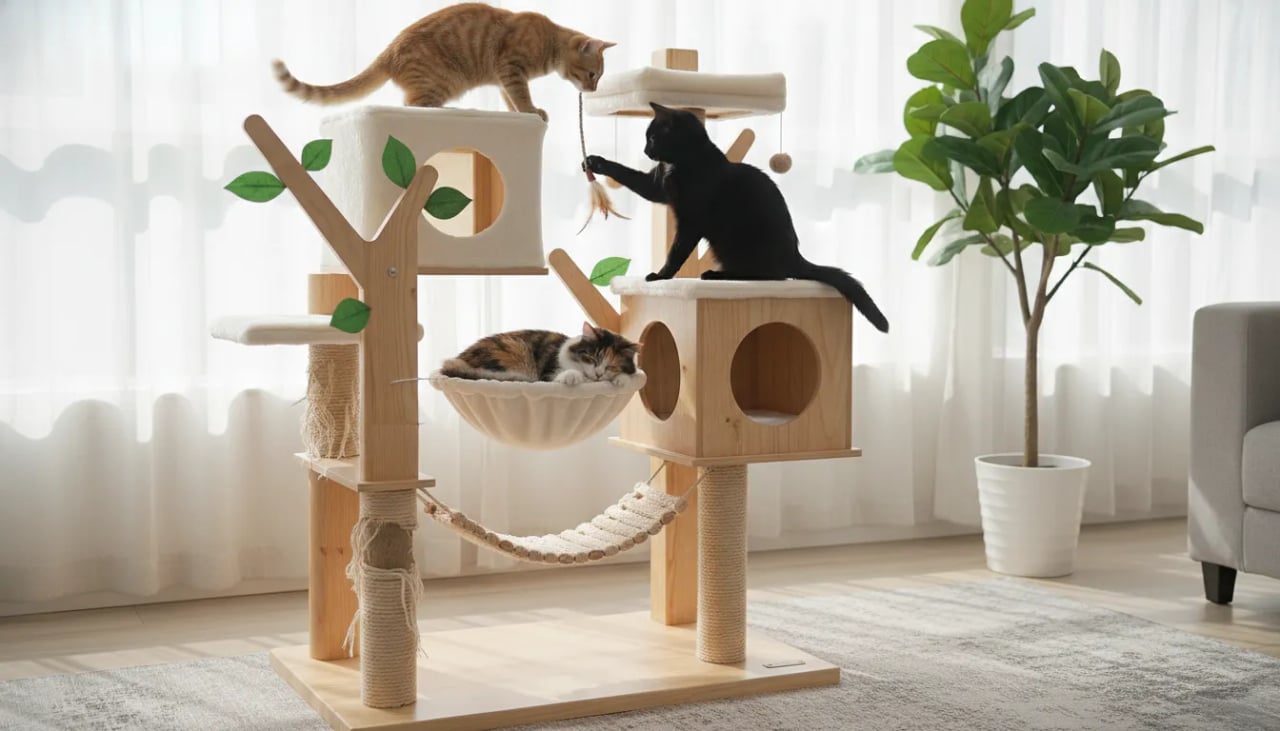
Premium: full cat tree | All-in-one climbing + naps | Takes floor space; must be heavy and stable |
SEO tip I use when I’m shopping: I search phrases like best perch for indoor cat plus my need (“window,” “senior,” “multi-cat”) to find more specific, better-fitting options.
5) Social Dynamics: Perches in Multi-Cat Households
In a multi-cat home, the biggest fights aren’t always about food. A lot of tension comes from space—who gets to be where, and who has to move. That’s why I think perches matter so much for social harmony. Height gives cats a safe “watchtower” where they can rest, observe, and feel in control without being bothered. In shared homes with other pets or people, that sense of safety can lower stress fast.
Vertical territory lowers pressure on shared space
When I added more high spots, I noticed something simple: my cats stopped trying to “own” the same hallway and couch. Perches create vertical territory—extra real estate that doesn’t compete with floor space. Instead of blocking each other’s paths, they can separate by height. That separation often reduces territorial standoffs, especially when one cat is more confident than the other.
Dr. Claire Nguyen, Animal Behaviorist: "Vertical options multiply social choices for cats, often lowering friction in shared homes."
My real-life change: less growling after adding high spots
Before, our two cats would growl when one tried to pass the other in a tight area. After I installed an extra window perch and a taller cat tree, the growling dropped. One cat started choosing the higher perch instead of guarding the doorway. It wasn’t magic—it was just giving them more ways to share the same room without feeling trapped.
Set up multi-level cat furniture with choice and escape routes
If you want calmer group dynamics, I’ve found it helps to think in layers. Cats don’t just need “a perch.” They need options at different heights so they can move away without a chase.
Provide multiple perches in key rooms (not just one “best” spot).
Include low, mid, and high levels so timid cats aren’t forced to climb too far.
Create escape routes: at least two ways up/down so a cat can leave without crossing another cat.
Try rotating perch locations to break up dominance patterns around a single window or doorway.
How I monitor social change: affiliative behavior vs. conflict frequency
Research discussions often point to tracking affiliative behavior (friendly signals like relaxed co-resting, slow blinks, gentle sniffing) alongside conflict frequency (growling, swatting, blocking, chasing). I watch for changes over 2–4 weeks after adding or moving perches, since cats may need time to “agree” on the new map of the home.
6) Wild Card: Creative Perch Ideas & Thought Experiments
If cats ran architecture firms, I’m convinced every apartment would come with rooftop beds, hallway “lookout ledges,” and a window lounge in every room. Height isn’t a luxury to them—it’s comfort. When my cat gets up high, I can almost see the stress drop off her shoulders. That’s why I treat perches as feline enrichment, not decoration. 🐾
Vertical Space Ideas I’d Build If My Cat Was the Boss
When I’m brainstorming vertical space ideas, I try to think like a small predator who wants safety, control, and a good nap spot. Here are a few hands-on options that feel “wild,” but work in real homes:
Floating shelves as a sky-walk: stagger two or three shelves so your cat can climb, pause, and watch the room.
Repurposed furniture tower: an old bookcase laid on its side becomes a climbing lane; add a folded towel on top for a bed.
Window hammock hacks: place a sturdy chair or small table under a window perch so it becomes a step-up, not a leap.
If you like tutorials, a simple DIY cat perch can be as basic as a shelf plus a non-slip mat. I’ve even used a cut-to-size yoga mat and double-sided tape as a quick grip layer. Think action-first, fancy later.
A Tiny Historical Tangent: Cats as Elevated Guardians
Ancient cultures often showed cats in positions of importance—watching, guarding, and sitting above the everyday scene. I love that idea: the cat as a calm sentinel. It matches what I see at home. From a perch, my cat isn’t “hiding.” She’s supervising.
Marco Silva, Cat-Enrichment Blogger: "A little creativity goes a long way—cats appreciate thoughtful vertical choices more than flashy gear."
My 7-Day Perch Experiment (Try It With Me)
To wrap up this guide, I want you to run a tiny A/B test. Pick two perch locations. Try Spot A for 7 days, then Spot B for 7 days (rotate every 7–14 days if you want to keep exploring). Each day, jot down: time spent on the perch, any “panic moments” (startles, hiding), and friendly behaviors (slow blinks, cuddles, relaxed stretching). You’ll learn what your cat values most—and you’ll be building a home that fits their nature.
In the end, cat perches are not just an accessory, but a fundamental element in making a home environment more suitable for a cat’s natural needs. If you try the experiment, share what changed in the comments—I want to hear which perch became your cat’s favorite “rooftop bed.”