

(Discover many other contents on: NOWO.ONE and NOWO Publishing)
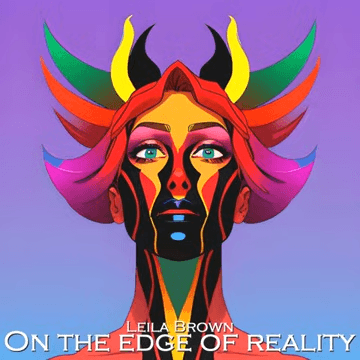
I still remember the first time I pressed play on 'On the Edge of Reality, Pt. 1'—a late-night listen that made my apartment feel suddenly larger. It was released on 2026-02-02 under ℗ IBIS and credited to composer Leila Brown (instrumental), with Simone Beretta listed as assistant engineer. In this post I walk through my reactions, the piece’s texture, the production credits, and why a short instrumental can feel like an entire world.
1) First Listen & Personal Snapshot
Late-night first play of On the Edge of Reality (Instrumental 2026 release)
I first pressed play on Leila Brown ’s On the Edge of Reality, Pt. 1 late at night, when the house was quiet but not silent. The fridge clicked on, a car passed far away, and my own breathing felt louder than usual. The opening gestures didn’t fight those sounds; they seemed to reframe them. Instead of “background noise,” everything around me started to feel like part of the track’s space, as if the music was holding the room open and letting ordinary details float through.
Immediate impressions: space, restraint, and an unclear horizon
My first impression was spaciousness . There’s room between events, and that room matters. The piece feels careful and restrained, like it’s choosing what not to say. Because it’s an Instrumental 2026 release , I wasn’t waiting for a lyric to explain the mood. Instead, I listened for direction in texture and pacing. What I heard was an ambiguous horizon: the music suggests movement, but it doesn’t tell me where I’m headed. That uncertainty became the point, and it kept me alert in a calm way.
A pause mid-track: scribbling a doorway metaphor
Halfway through, I paused the track and grabbed a notebook. I wrote a quick line about doorways—how some thresholds feel normal until you stand in them long enough. I don’t usually stop music to write, but this one made me want to pin down the feeling before it slipped away. The metaphor matched a quote I later found from Leila Brown, and it felt like my late-night note had landed close to her intent.
Leila Brown: “I wanted the piece to feel like standing just beyond a familiar doorway—close enough to touch, far enough to wonder.”
Why the release details matter to me
I pay attention to credits because they shape how I listen. Seeing Composer: Leila Brown centers the work as a single guiding voice, even when the sound world feels wide and open. The small line Assistant Engineer: Simone Beretta also stands out; it hints at collaborative care behind the scenes, the kind that helps an understated piece stay clear and balanced. The label mark ℗ IBIS and the release date 2026-02-02 anchor it in time, too—useful context when a track like On the Edge of Reality feels intentionally untethered.
Detail | Credit |
|---|---|
Track | On the Edge of Reality, Pt. 1 |
Release date | 2026-02-02 |
Label | ℗ IBIS |
Composer | Leila Brown |
Assistant Engineer | Simone Beretta |
Lyricist | Instrumental |
2) Musical Elements: Texture, Form, and Unexpected Turns
Texture in this Contemporary Music moment
Because On the Edge of Reality, Pt. 1 is credited as instrumental (Lyricist: Instrumental), I listen for sound design more than story. What I hear first is a thin, bright line that feels like a bowed string or processed violin harmonics, hovering above a soft electronic bed. Under it, there are slow, grainy pads that swell and fade like breath. The mix suggests electro-acoustic touches: a faint hiss, a filtered pulse, and occasional metallic taps that could be prepared piano or sampled percussion. The layers never fully lock into a “band” sound; they sit beside each other, like different rooms connected by a hallway.
Form: “Pt. 1” as a frame for New Music
The title matters. In New Music , “Pt. 1” often signals an episodic composition, and I feel that here. The piece behaves like a fragment that still stands on its own: it introduces a few core materials, tests them, then leaves the door open. I notice a recurring motif—two or three notes that rise, pause, and fall back—returning in slightly changed colors. Instead of a verse-chorus shape, the form feels like short movements stitched together:
a suspended opening with sustained tones
a middle section where the pulse becomes clearer
a final stretch that thins out, as if the track is stepping back from the edge
That “stepping back” is the unexpected turn for me: just when I expect a bigger climax, the music chooses restraint.
Dynamics, space, and the Instrumental 2026 release listening test
This Instrumental 2026 release rewards patience and good playback. On headphones, I catch low-level details: tiny clicks at the start of notes, the tail of reverb, and a quiet sub layer that feels more like pressure than pitch. Silence is used as structure, not emptiness—small gaps that reset my ear and make the next entrance feel sharper. In a car stereo, the deeper tones become more physical, but some of the delicate top-end texture blends into the road noise. In a room with speakers, the space between layers feels wider, like the track is built in depth rather than volume.
“Contemporary works live and breathe between notation and risk—listeners reward the patience.” — Leila Josefowicz
My take: thresholds and emotional ambiguity
Even without words, I sense themes of thresholds and suspended motion. The music keeps leaning forward without fully arriving, which leaves me in a state of alert calm. The emotion is hard to label—neither warm nor cold, neither hopeful nor bleak. That ambiguity feels intentional, like the piece is asking me to stay on the edge and listen to the architecture itself: timbre, spacing, and the quiet decisions that shape the form.
3) Production Notes & Credits I Triangulate
What the credits tell me (and what they don’t)
When I look at the release info for On the Edge of Reality, Pt. 1 , the credit list is short, but it still gives me a solid frame. The Music Composer is Leila Brown , the track is marked Instrumental for lyricist, and the release date is 2026-02-02 . I also see Assistant Engineer: Simone Beretta , plus ℗ IBIS , which points to ownership of the sound recording under IBIS Records .
Notably, there’s no producer credit and no mastering credit listed here. That’s common on some release pages, and I treat it as an imperfection worth naming, not a mystery to “solve.” As a listener, I often end up inferring missing roles from what I hear: how controlled the dynamics feel, how consistent the stereo image stays, and how the textures sit in the same “room.”
Why small credits matter: Simone Beretta and the studio signal
An assistant engineer credit might look minor, but to me it signals a studio process rather than a purely DIY export. Assistant engineering can include mic placement support, session setup, editing, file management, and the practical work that keeps a recording moving. Seeing Simone Beretta attached suggests hands-on shaping happened somewhere along the chain, even if the page doesn’t list every step.
Simone Beretta: “Capturing the silence between notes was our focus—sometimes restraint speaks louder than layers.”
That line matches what I hear: the track feels built around restraint, with space treated like an instrument. Even without a full personnel list, the assistant engineer credit helps me imagine deliberate choices about what not to fill.
℗ IBIS Records: ownership and context
The ℗ IBIS mark matters because it tells me who controls the recording as a released object. With IBIS Records tied to the phonogram copyright, I read it as label or production ownership—an anchor point when other credits are missing. It doesn’t explain the whole workflow, but it does place the track inside a formal release structure.
How production choices shape that “threshold” feeling
Whether explicitly credited or not, production choices create the track’s spatial and textural identity. The suspended feeling I get—like standing at the edge of a room—often comes from a few practical moves: careful reverb length, controlled high-end, and edits that keep transients soft. Even subtle automation can make a phrase feel like it’s approaching and receding.
My four-bar replay test
I often loop a four-bar phrase and listen for what the production reveals. I’m not hunting for secrets; I’m checking consistency. On each repeat, I notice:
how the tail of the reverb fades (clean vs. cloudy),
whether the center image stays stable,
tiny edits that smooth entrances,
and how silence is “held,” not just left empty.
Credit | What I take from it |
|---|---|
Composer: Leila Brown | Single creative voice guiding structure and tone |
Assistant Engineer: Simone Beretta | Evidence of session-level support and shaping |
℗ IBIS (IBIS Records) | Recording ownership and formal release context |
Released: 2026-02-02 | Timestamp for the version I’m hearing |
4) Context: Living Composers, Contemporary Scenes, and Where This Fits
Placing Leila Brown among Living Composers
When I look at On the Edge of Reality, Pt. 1 (released 2026-02-02 on IBIS), I hear it as a clear marker of a living voice working in today’s field. The credits are simple and direct—Composer: Leila Brown; Lyricist: Instrumental; Assistant Engineer: Simone Berettaundefined—and that simplicity matters. In Contemporary Music , a short instrumental track can still carry a full artistic identity, even without a big program note or a long album arc.
Leila Brown: "I write with listeners in mind but hope the work finds its own life in other performers' hands."
That line fits how many Living Composers build momentum now: not only through their own recordings, but through the way performers, ensembles, and presenters adopt the work.
New Music ecosystems: networks, directories, and discovery
Discovery in New Music is often organized through directories and networks that help presenters find people to commission and program. One example is Music by Black Composers , which maintains a living-composers directory (often cited as listing 374 living Black composers ). I think of tools like that as practical infrastructure: they support research, they shorten the path from curiosity to contact, and they make it easier for a piece like Brown’s to be placed in a festival theme, an ensemble season, or an academic archive.
Commissioning support: directories help ensembles locate Living Composers for new projects.
Programming visibility: curated lists guide presenters toward Contemporary Music beyond the usual names.
Long-term access: archives and catalogs keep short releases from disappearing.
Short instrumental releases as portals to larger work
In Contemporary Music scenes, I keep seeing multipart titles and episodic releases: “Pt. 1” signals a door left open. A short instrumental piece can function like a calling card—something an ensemble can test in rehearsal, a curator can slot into a mixed bill, or a soloist can use as a modern encore. It also travels well online, where attention is limited but curiosity is high.
This is where recognition pathways matter too. Premieres, festival features, and prizes can shape a composer’s career trajectory, even when the work itself is brief. I’m not saying every track is chasing an award, but the ecosystem is real: a strong first impression can lead to a premiere invitation, and a premiere can lead to the kind of recognition people associate with major prizes (the Avery Fisher Prize is one well-known example of how prestige can amplify a musician’s platform).
Where it fits among modern advocates and performer-composers
Many prominent soloists and ensembles today act as advocates: they commission, premiere, and record new work as part of their identity. In that context, On the Edge of Reality, Pt. 1 feels ready to be picked up—small enough to circulate, specific enough to be remembered, and open enough to “find its own life” in other performers’ hands.
5) Listening Guide, Use Cases, and Practical Notes
How I like to listen to this Instrumental 2026 release
For On the Edge of Reality, Pt. 1 , I get the most from a few simple setups. First is a headphone critical listen, where I can track small shifts in tone and space without room noise. Second is late-night ambient playback at low volume, letting the piece sit in the background while still shaping the mood. Third is a quiet studio session, where I can pause and replay sections like I would when studying a cue.
Use cases: radio, film, and installations (IBIS Records context)
Because it’s instrumental, I naturally think about practical placements beyond personal listening. Instrumental tracks often move easily between contexts like radio beds, film underscore, and gallery sound installations. That flexibility feels aligned with the clean credit line and the ℗ IBIS Records presentation.
Radio featurette: a short bed under voiceover, especially for arts or tech segments.
Short film underscore: a scene transition, dream sequence, or tension build without lyrics competing with dialogue.
Gallery sound installation: looped or layered in a room where visitors come and go.
Marco Rossi (IBIS A&R): "Short, focused instrumentals can open more doors than people assume—placement possibilities multiply."
Part numbering and missing runtime: what I check
The title includes Pt. 1 , and I treat that as an invitation, not a conclusion. It suggests a larger set of ideas, or at least a continuing thread. One practical note: the source snippet does not list a runtime. That’s common with brief metadata, so I rely on streaming app details or distributor pages for full timing when I’m logging notes or pitching a placement.
The release date is clear: 2026-02-02 . I use dates like this to anchor editorial opportunities—playlist submissions, blog features, and radio scheduling—because timing matters when curators look for fresh material.
My small habit: timestamp texture changes
When I revisit multipart projects, my memory can blur. So I keep a simple listening log. I note timestamps where textures change and write one short line about what each shift conjures (image, place, or feeling). I format it like this:
00:00–??:?? — opening texture: _______
??:?? — shift: _______
??:?? — new layer: _______
Credits that hint at capture quality (Music Composer notes)
The credits highlight Music Composer Leila Brown and Assistant Engineer Simone Beretta , with ℗ IBIS. Even without gear details, an assistant engineer credit can hint at studio-grade capture, which is helpful if I’m considering broadcast use or sync licensing where clean audio matters.
Metadata item | What I do with it |
|---|---|
Released on: 2026-02-02 | Schedule pitches and editorial mentions around the date |
Runtime: not provided | Confirm length on streaming/distributor pages |
Credits: Leila Brown; Simone Beretta; ℗ IBIS | Use in citations and placement notes |
6) Wild Cards: Thought Experiments & Tangents
On the Edge of Reality as a one-minute film score
When I see On the Edge of Reality, Pt. 1 , my mind jumps to images. I keep imagining it scored to a one-minute film about liminal spaces: a hallway with flickering lights, an empty elevator that opens on the wrong floor, a parking garage at dawn. The sound would not “explain” the scene. It would make the scene feel slightly off, like reality is still loading. That’s why the “Pt. 1” label matters to me. It invites speculation. If this is only the first chapter, I can picture future parts expanding the world, or even bringing in new hands through small collaborations.
A breath-pause analogy I can’t shake
I also keep coming back to a simple body feeling. I liken the piece to the pause between inhaling and exhaling—a musical hiccup that resets expectation. It’s not a big dramatic stop. It’s a tiny suspension where you notice your own attention. In that pause, I hear why Leila Brown stands out among Living Composers who work in soundscape form: she seems comfortable letting the listener do part of the work, filling in the edges.
Leila Brown: “If a listener wants to repurpose this soundscape for a film, I’d be thrilled to see the dialogue between image and silence.”
The small credits that make me curious
Here’s my tangent, and it’s a habit I’ve learned to trust: I follow the credits. The source details are minimal but telling—Composer: Leila Brown; Assistant Engineer: Simone Beretta ; ℗ IBIS ; Released on 2026-02-02. That assistant engineer line is the kind of “small” credit that can become a big thread later. In experimental music, the person helping shape levels, texture, and space can end up being a future co-creator, a connector, or the start of a new network. If “Pt. 1” leads to more parts, I wonder if those parts will keep the same team, or if the circle will widen.
My next step: chasing the tiny production details
To close this post, I want to turn my curiosity into action. I’m going to try to contact IBIS or Simone Beretta for behind-the-scenes notes (I don’t have contact info from the release data, so it may take some digging). I love the tiny production details—the choices that don’t show up in the title but shape the whole listening experience. If I learn anything, I’ll update this review of On the Edge of Reality and see whether “Pt. 1” is a doorway to a larger series, or the first sign of new collaborations around Leila Brown.