



(Discover many other contents on: NOWO.ONE and NOWO Publishing)
I still remember the first night I asked my speaker to dim the lights and it actually obeyed — an oddly satisfying moment that felt like magic and a minor life upgrade. Since then I've cobbled together thermostats, a video doorbell, and a few overly chatty voice assistants. This post is my honest, slightly messy guide to how home automation really works, why energy efficiency and security mattered to me (and my electric bill), and the weird little conveniences I now refuse to live without.
1) What I Mean by Smart Home Automation (Quick Overview)
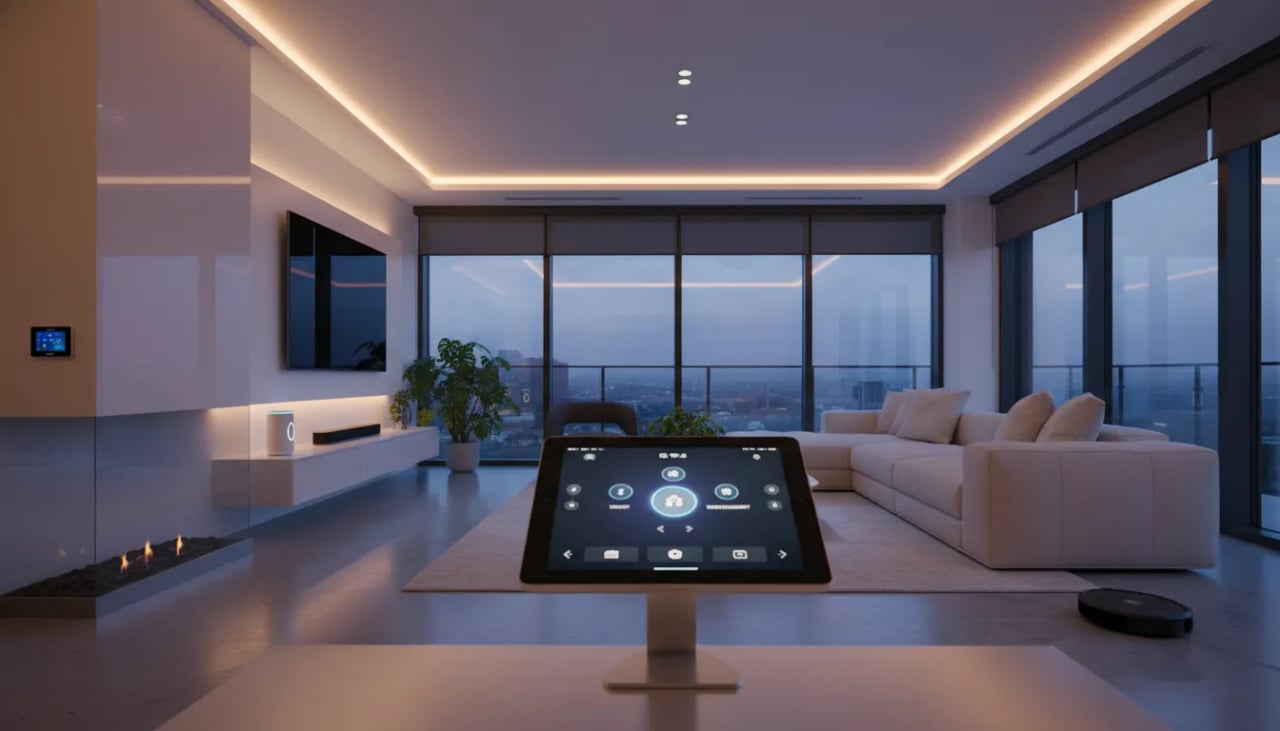
When I say Smart Home Automation, I’m not talking about turning my house into a sci‑fi lab. I mean the simple, practical idea of bringing comfort and technology together so I can control (and sometimes automate) the basics—lights, heating, security, appliances, and media—from one place.
Smart Home Automation = Central Control That Actually Helps
For me, good Home Automation Systems do two things: they make daily tasks easier, and they help me keep an eye on what’s happening at home. Most smart homes today connect the big three—lighting, climate, and security—because those are the areas where convenience and monitoring matter most.
In 2026, the “baseline” features I see in a lot of real homes look like this:
Video doorbells for quick checks and safer deliveries
Learning thermostats (or smart thermostats) to reduce wasted heating/cooling
Smart Lighting for schedules, scenes, and “did I leave that on?” moments
Remote security monitoring through an app
Sensors, Apps, and Voice Assistants: The Control Points
The magic isn’t one gadget—it’s the way devices work together. Sensors can notice motion, doors opening, or temperature changes. Apps let me check status and make changes when I’m not home. And Voice Assistants are the fast, hands-free option when I’m cooking or carrying groceries (even if I still misname my rooms to the assistant and wonder why “Office Lamp” won’t turn on in the “Study”).
Dr. Elena Martinez, Smart Home Researcher: "Smart Home Automation brings disparate devices into a single, usable experience—when done right, it vanishes into the background of daily life."
Everyday Wins I Actually Use
I’m not chasing perfection—just small wins that add up:
Scheduled lighting: my smart lighting system turns on softly at sunset.
Remote locking: I can lock the door from my phone if I forget.
Automated heating: the thermostat adjusts when I’m away, then warms up before I’m back.
My favorite example is my “movie night” scene. One command dims the lights, turns on the TV, and cues the soundbar—no fumbling for three remotes and no getting up mid‑show. That’s what I mean by smart: not flashy, just smoother living.
2) Energy Efficiency Wins: Thermostats, Lighting, and Savings
For me, home automation is really about Energy Efficiency without giving up comfort. Once I started using sensors, a simple app, and voice control, I could manage heating and lights from one place—and that made my home feel more connected and a lot less wasteful.
I began with Smart Thermostats (think Nest or Ecobee) because heating is where my bills used to spike. These thermostats learn my routine, adjust when I’m away, and stop heating an empty house “just in case.” That’s the kind of quiet automation that adds up.
Mark Wilson, Home Energy Consultant: "Smart Thermostats are often the fastest way to see measurable Energy Savings while making the house more comfortable."
What surprised me most is the financial side: many smart thermostats are reported to deliver 80–90% ROI and can pay back in about two years. In other words, they’re not just gadgets—they’re tools that can return real value.
Room Level Control: heat only where I actually live
The next upgrade was Room Level Control. With room sensors (Ecobee) or room-based systems like Tado, I can keep the living room cozy in the evening while letting the guest room stay cooler. This kind of room-based control increases personalization and reduces wasted energy because the system reacts to where people are, not just the time of day.
My personal win: after I zoned heating by room, my winter bill fell noticeably. I didn’t change my comfort level—I just stopped paying to heat spaces no one was using.
Smart lighting: schedules, presence, and less standby waste
Lighting is another easy Energy Savings win. I use schedules for predictable routines (like dimming at night) and presence sensors for spaces like hallways and bathrooms. The lights turn off automatically, which cuts down on “oops, I forgot” moments and reduces standby consumption across the system.
Schedules for daily patterns (wake, work, sleep)
Presence sensors for quick in-and-out rooms
Scenes to avoid over-lighting (one tap, not five switches)
2026 trend: storage that responds to live grid prices
I’m also watching home energy storage like Tesla Powerwall. The idea is simple: store energy when it’s cheaper or cleaner, then use it when prices rise. That grid-responsive management pairs well with automation because the same app-and-sensor mindset can balance comfort and cost.
Practical tip
Start with a learning thermostat first, then add room sensors later. That step-by-step approach gave me quick savings without making setup feel overwhelming.
3) Home Security: Cameras, Doorbells, and Presence Detection
Security Cameras and a Smart Doorbell for real-time awareness
When I think about Home Security, I start with visibility. Security Cameras and a Smart Doorbell give me real-time video, two-way talk, and remote alerts—so I can check what’s happening without running to the window. This is where home automation feels truly “intelligent”: sensors, apps, and voice assistants work together to make my home more secure and connected, while also supporting daily comfort.
For practical setup, I place cameras where they answer a question: “Who’s at the door?” “Is the garage closed?” “Did a package arrive?” I also keep notifications useful, not noisy, so I don’t start ignoring them.
Presence Detection: fewer false alarms, better automation
Basic motion alerts are helpful, but Presence Detection is what makes my Home Security Systems feel reliable. “True presence” tech can tell the difference between a person and random movement, which reduces false alerts and makes automations smarter. For example, I can set my system to switch modes based on whether someone is actually home, not just whether something moved.
One false alarm taught me this the hard way. A curtain moved near a camera at night, and my phone lit up like a slot machine. After that, I tuned motion sensitivity and used geofenced modes so the system behaves differently when I’m home versus away.
Matter standard compatibility (2026 baseline)
In 2026, the Matter standard is pushing a big wave of compatible security gear. The baseline now often includes video doorbells, and more cameras and doorbells “play nicely together” across platforms. That means fewer isolated apps and more consistent control inside one smart home setup.
Sofia Nguyen, Security Systems Analyst: "Interoperability via Matter is a game-changer—security devices finally stop acting like isolated islands."
My practical checklist (settings that actually help)
Review motion sensitivity and set activity zones (ignore busy streets or swaying trees).
Adjust notification windows (for me: fewer alerts during the day, stricter at night).
Use remote locking if your door lock supports it, and confirm auto-lock timing.
Connect modes to presence: “Away” arms cameras; “Home” reduces indoor alerts.
Privacy: cloud vs local options
Cloud intelligence can improve detection, but I always check data retention, who can access clips, and whether local storage is available. A secure home should also respect the people living in it.
4) Everyday Convenience & Personalization (Scenes, Voice, and Routines)
For me, the real value of home automation isn’t flashy gadgets—it’s Enhanced Convenience. When lights, heating, security, and media are connected in one place (app or voice), my home feels calmer and easier to run. I spend less time tapping switches and more time just living.
Scenes: one tap for the right mood
Scenes are my favorite shortcut because they bundle lighting, temperature, and media into one action. Instead of adjusting three things separately, I trigger a single scene and the house “gets it.” My most-used scenes are simple:
Dinner: warm lights, music low, thermostat steady
Bedtime: lights dim, doors lock, HVAC backs off a bit
Movie: living room lights down, TV input set, volume capped
These routines save time and often reduce energy use—especially when “Bedtime” turns off forgotten lights and nudges heating/cooling to a more efficient setting.
Voice Commands & Voice Assistants: fastest control when my hands are full
Voice Commands are perfect when I’m carrying groceries or cooking. I can say “turn on the kitchen lights” or “set the thermostat to 70,” and it happens without stopping what I’m doing. My Voice Assistants also help when I’m moving room to room—no phone needed.
Small imperfection: my assistant sometimes confuses “living room” with “lounge.” That taught me labeling matters. I renamed rooms and devices to be consistent, like Light - Living Room - Main instead of vague names.
Connected Appliances: chaining tasks instead of juggling apps
Connected Appliances are where automation starts to feel like a helper. Today, I can already get alerts (like the oven preheating or the washer finishing). But the near-future is more interesting: by 2026, large language models will likely make voice assistants act as intent routers across home systems—so I can speak naturally and the assistant coordinates the right devices.
A plausible 2026 moment: my fridge checks inventory, suggests meals, and when I pick one, it triggers a chained process—inventory → meal suggestion → oven preheat. That’s not magic; it’s just better coordination.
Personalization Flexibility: my home, my rules
Daniel Harper, UX Designer for Smart Devices: "Personalization is where smart homes stop being gimmicks and start feeling like home."
Personalization Flexibility comes from schedules, room-based control, and user profiles. I set different wake-up routines on weekdays, keep guest controls limited, and let each family member have their own lighting and music preferences—without changing everyone else’s setup.
5) Future-Proofing & Interoperability: Matter, Cloud, and ROI
Matter Standard: my shortcut to a flexible Smart Home Baseline
When I started building my Smart Home Baseline, I didn’t want a setup that only worked if I stayed loyal to one brand. The Matter Standard is my best defense against that. Matter reduces fragmentation, so devices from different makers can talk to each other more easily. That means fewer “this app only” moments and a smoother path when I expand later.
By the 2026 baseline, Matter adoption is also making it easier to add common upgrades like cameras and doorbells without turning my home into a patchwork of incompatible hubs.
Ravi Patel, Smart Home Strategist: "Investing in Matter-ready devices is a hedge against obsolescence and messy ecosystems."
Cloud Intelligence vs. local fallback (privacy + reliability)
I like the convenience of Cloud Intelligence—it can improve voice assistants, automate routines, and learn patterns that help reduce Energy Consumption. But I also plan for the day my internet drops or a service changes its terms. For anything critical (locks, alarms, basic lighting), I prefer systems that keep working locally.
My rule is simple: cloud for “nice to have,” local for “must work.” I also read privacy docs before I buy, because convenience often comes with more data tracking than I expect.
Smart Thermostats ROI: comfort that pays me back
If I had to pick one upgrade with a clear return, it’s Smart Thermostats. Models like Nest and Ecobee can optimize heating and cooling based on schedules, sensors, and occupancy. In many homes, Smart Thermostats ROI is estimated around 80–90%, with a payback in about 2 years—and I still get better comfort day to day.
Energy storage + dynamic pricing: where automation gets financial
Automation gets even more interesting when I pair smart controls with energy storage like a Tesla Powerwall. With dynamic grid pricing, my home can respond to live rates—charging when prices are low and using stored power when prices spike. That’s not just tech for tech’s sake; it’s a strategy that can improve long-term savings.
Interoperability checklist (what I buy now)
Matter Standard support now, or a clear roadmap to it
Regular firmware updates and a history of security patches
Local control options for core automations
Clear privacy settings and data retention policies
Resale-friendly upgrades that can boost Property Value (thermostats, security, energy features)
6) Wild Cards: Hypotheticals, Analogies, and a Tiny Tangent
Hypothetical: My fridge becomes my chef (and my enabler)
I like to imagine Future Smart Homes where my fridge knows what’s inside, suggests meals, orders groceries, and even tells the oven to preheat. In theory, that’s the intelligent mix of comfort and control I want—lights, heating, security, appliances, and media all working together through sensors, apps, and voice assistants to save energy and make life smoother.
But what could go wrong? Easy: too many cookies. If my fridge learns I’m “happiest” when I bake, it might nudge me toward chocolate chips every time it detects low morale (or just low milk). By 2026, LLMs and cloud systems will be good at proactive suggestions and intent-routing—meaning my home won’t just wait for commands, it’ll try to guess what I mean. Helpful… until it confidently guesses I meant “dessert.”
Analogy: The smart home is an orchestra
I think of automation like a conductor. The instruments are my devices: bulbs, locks, cameras, speakers, and Climate Control. The conductor’s job isn’t to play the violin—it’s to keep timing, volume, and mood consistent. That’s why I care so much about True Presence Detection. If the conductor can’t tell whether I’m actually home (not just my phone passing by), the whole performance gets weird: lights flick on for nobody, heating ramps up for an empty living room, and my “goodnight” routine triggers while I’m still brushing my teeth.
Tiny tangent: I argued with my thermostat (and lost)
Once, I spent ten minutes arguing with a voice assistant because I renamed the thermostat “Hallway Breeze Machine.” It kept replying, “I can’t find Hallway Breeze Machine,” while I insisted it was right there. Eventually I laughed so hard I forgot why I was cold. That moment taught me a simple truth: smart homes are still homes, and homes are messy.
A quick detour into the Energy Financial System
One more wild card: an Energy Financial System where my home watches live grid prices, charges a battery when rates are low, and sells stored energy during peak rates. Two-way grid interactions plus storage can turn “saving power” into “playing the market,” which is exciting—until an automation sells energy right before I start laundry.
Ava Thompson, Technology Futurist: "Smart homes will increasingly blur the line between home and agent—the home starts to suggest, remind, and sometimes nudge our choices."
My takeaway as I wrap this guide: the quirky mishaps are part of the charm. I test automations, keep manuals handy, and always build simple manual overrides—because the smartest home is the one I can still run with a light switch and a little common sense.