


(Discover many other contents on: NOWO.ONE and NOWO Publishing)
I still remember clearing a corner of my tiny living room to stash a yoga mat and a pair of rusty dumbbells — that awkward, triumphant feeling of starting something that mattered. Since then I've tested more gear than I can count, from resistance bands that snap back (literally) to smart dumbbells that nag you into better form. This piece is a friendly, slightly opinionated tour of what actually works for home fitness in 2026.
Compact Gym Spaces: Maximize Small Corners
I built my Compact Home Gym in a tiny 6ft x 4ft nook—basically a forgotten corner that used to collect boxes. In 2026, I’m seeing the same trend everywhere: home gyms are getting more compact and more multi-functional. That’s good news, because a small space can still support real strength, cardio, and recovery—as long as I plan for Space Efficiency first.
How I Measured and Prioritized My Compact Home Setups
I started with a tape measure and a simple rule: I only keep Home Gym Equipment that earns its footprint. I marked a “movement zone” where I could hinge, squat, and press without hitting a wall. Then I prioritized gear that feels durable, safe, and comfortable—because if it’s annoying to use, I won’t use it.
Measure the floor area (mine: 6ft x 4ft).
Check ceiling height for overhead presses.
Leave a clear strip for lunges, rows, and stretching.
Space Efficiency Hacks That Made the Nook Work
Foldable and vertical storage are the real MVPs for small spaces. My biggest win was choosing equipment that stores upright or flat.
Concept2 RowErg: I store it vertically when I’m done, so my floor stays open.
Foldable Benches: I slide mine behind a door or under a shelf.
Wall racks for dumbbells and bands: getting weight off the floor instantly improves Space Efficiency.
Coach Elena Morris, NASM-CPT: "Compact setups force you to prioritize movement quality — and that often beats flashy gear."
My Minimal Kit (Small Corner, Big Training Options)
Adjustable dumbbells: 5–50 lb
Resistance bands (light to heavy)
Yoga mat for warm-ups and recovery
Sliding core discs for low-impact abs and hamstrings
If I had a bit more room, I’d consider a rack like the REP Fitness PR5000, but my current setup proves you don’t need a full garage to train hard—you just need smart, compact choices.
Smart Training: Smart Dumbbells & Connected Tools
Why I started using Smart Dumbbells
I love simple home gear—dumbbells, resistance bands, and recovery tools that feel safe, comfortable, and built to last. But when I switched to Smart Dumbbells, my workouts got more consistent fast. The big change was Real Time Feedback. Seeing my reps counted and my pace tracked helped me clean up sloppy form and stop “guessing” how much work I actually did. That little nudge made me show up more often and finish sets with better control.
This is the heart of Smart Training for me: the equipment doesn’t just sit there—it helps me train with purpose, even in a small space.
Dr. Marcus Lee, Exercise Technologist: "Smart dumbbells are a game changer for coaching remote clients — they close the feedback gap."
Connected Training features I look for (and why)
Not all smart equipment is the same, so I keep it simple and focus on features that make workouts easier and more enjoyable.
App Integration: I want the dumbbells to sync smoothly so my workouts, weights, and progress are saved automatically.
Rep tracking: Smart dumbbells provide rep tracking, which keeps me honest and helps me compare week to week.
Guided workouts: I like having structured sessions on my phone—especially on busy days when I don’t want to plan.
Clear display + easy controls: If it’s annoying to adjust, I won’t use it.
With Connected Training, I can follow virtual workouts, stay on track, and still keep my setup minimal.
My practical small-space setup: strength + HIIT hybrid
When space is tight, I lean on hybrid training—dumbbell strength plus short HIIT. It’s an efficient way to get more done with less equipment, and it fits perfectly with Smart Training.
Strength block (10–15 min): squats, presses, rows (tracked in-app).
HIIT block (6–8 min): 30 seconds work / 30 seconds rest (burpees, mountain climbers, or fast step-ups).
Finish (2–3 min): mobility or stretching for recovery.
I keep the app open for Real Time Feedback, aim to beat my rep quality (not just speed), and let the data guide my next session. That’s Smart Training without the clutter.
Minimal Equipment, Maximum Impact: Dumbbells & Bands
When I’m training in a small space, I lean on Dumbbells and Resistance Bands because they give me the biggest return with the least clutter. High-quality materials matter here—durability, safety, and comfort keep workouts smooth whether you’re a beginner or a seasoned athlete. Minimal equipment staples really do yield high returns when paired with structured programming, and this combo proves it every week.
My 15-Minute Dumbbell Circuit (Weekly Life-Saver)
This is my go-to when time is tight. I set a timer for 15 minutes and cycle through the moves below. I aim for 3–5 sets per workout depending on my energy.
Goblet Squat (8–12 reps)
One-Arm Row (8–12 reps/side)
Dumbbell Floor Press (8–12 reps)
Romanian Deadlift (8–12 reps)
Plank (30–45 seconds)
If I have a foldable bench, I swap in incline presses for more pressing variety. For core, I love adding sliding core discs for mountain climbers or knee tucks without needing extra floor space.
How Resistance Bands Extend the Workout
Resistance Bands make my warm-ups and mobility work feel better, and they add progressive resistance without buying more weights. I keep three tension levels on hand: light/medium/heavy.
Warm-up: band pull-aparts, glute bridges, shoulder openers
Mobility: assisted stretches for hips and hamstrings
Strength add-ons: banded squats, rows, and presses for extra burn
Sophie Alvarez, Strength Coach: "A simple dumbbell and band routine can outperform a complicated setup if you stay consistent."
Programming Tips: Dumbbell Circuits + HIIT Sessions
For compact home setups, I rotate Dumbbell Circuits with short HIIT Sessions (think 20 seconds work/40 seconds rest) to blend strength and cardio efficiently. Buyer tip: commercial-grade gear costs more but lasts longer; budget sets work fine if grips feel secure and bands don’t snap or roll.
Recovery Corner & Sustainable Gear: Stretch, Roll, Repeat
Why I carved out 2 square feet for my Recovery Corner
I used to treat recovery like a “nice extra.” Then I noticed my workouts felt better when I gave my body a place to reset. So I claimed a tiny spot—about 2 to 4 sq ft—and built a simple Recovery Corner for Muscle Recovery. It’s small, but it changes everything: less stiffness, better movement, and a calmer headspace.
Dr. Hannah Price, Physical Therapist: "Recovery isn't optional — it's the glue that keeps gains real and injuries rare."
My go-to recovery tools (small space approved)
Recovery zones are a real part of home training, and they usually start with Yoga Mats and foam rolling. I keep my setup minimal and durable—high-quality materials matter because I use these items almost daily.
Yoga Mats for stretching, mobility, and floor work (I roll it up and slide it behind a shelf).
Foam Rollers for quick legs/back release after strength days.
Red Light Mat for low-key recovery days when I want gentle, relaxing downtime.
Sliding core discs for controlled core work that doubles as a warm-up or cool-down.
Sustainable picks: comfort + Eco Friendly Materials
I’m seeing more sustainable options in home fitness, and I’m here for it. When I shop for recovery gear, I look for Eco Friendly Materials that still feel safe and comfortable. Two easy upgrades:
Mats made from recycled rubber (grippy, supportive, and long-lasting).
Low-VOC foam rollers (less odor, and a cleaner feel in a small room).
A compact design that doubles as a meditation spot
I keep my Recovery Corner simple: mat on the floor, roller in a basket, and the Red Light Mat folded nearby. That’s it. When I’m done stretching, I stay on the mat for two minutes of quiet breathing. Same space, two purposes—Muscle Recovery and mindfulness—without adding clutter.
Power Racks & Heavy Lifting: When to Upgrade
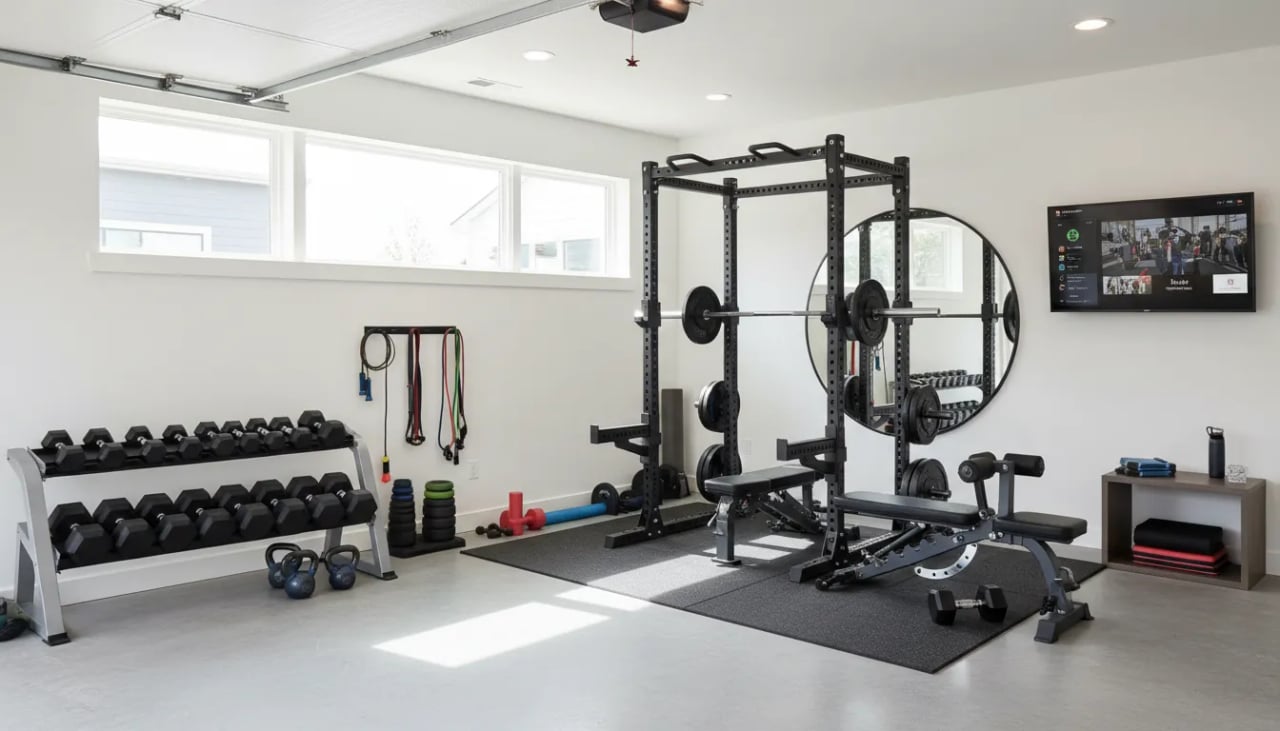
When my workouts moved past “get a sweat in” and into real strength goals, I hit a clear limit with light home workout equipment. If you’re like me and you want one station for squats, pull-ups, and bench work, that’s the signal it’s time to look at Power Racks. They take more room, but they also bring the biggest jump in capability and safety.
Signals It’s Time for a Rack (and Why Modularity Wins)
If you’re stacking heavier sets, training alone, or following a plan that needs consistent barbell work, a rack stops feeling “extra” and starts feeling necessary. A modular, Commercial Grade option like the REP Fitness PR5000 is the kind of upgrade that grows with you—add safeties, a lat attachment, storage, or different pull-up bars as your training changes. That long-term value is why racks are a smart buy for dedicated lifters, not just a big piece of metal.
Liam O'Connor, Gym Designer: "A power rack is an investment — buy once, upgrade your programming for years."
Space-wise, I plan for about 6ft x 6ft so I can move well and keep setup stress-free.
Why the Rogue Ohio Bar and Quality Weight Plates Matter
Once you own a rack, the bar and Weight Plates become the daily touchpoints. A durable bar like the Rogue Ohio Bar holds up to repeated loading, feels consistent in the hands, and supports better movement quality—especially when I’m focused on clean reps instead of fighting rough spin or poor knurling. Good plates matter too: they fit the sleeve well, load evenly, and reduce wobble, which helps with comfort and safety over time.
Multi-Functional Machines vs. Free Weights in Small Spaces
I like functional trainers and multi modal machines for variety and personalization, and they can be great when you want cable work without a full rack setup. The trade-off is that free weights with a rack usually win for heavy strength progress, while machines often win for quick exercise changes. In a small home gym, I choose based on one question: do I need maximum strength capability, or maximum exercise variety?
For me, upgrading to a rack, a reliable bar, and solid plates turned my small space into a serious training zone—durable, safe, and ready for years of progress.