


(Discover many other contents on: NOWO.ONE and NOWO Publishing)
I still remember the first time I watched a spiral mixer work: a gentle, hypnotic rotation that turned flour and water into a glossy, elastic mass without beating the life out of it. As someone who once overworked dozens of Neapolitan doughs by hand (yes, I learned the hard way), I started hunting for a machine that gave me consistent gluten development, handled high hydration, and didn’t sound like a jet taking off. This post is my honest, slightly opinionated guide on professional spiral mixers—what they do best, where they falter, and how I use one in my small test kitchen.
Why I Fell for the Spiral Mixer (and why you might too)
My Neapolitan wake-up call: the day my planetary mixer overheated my Pizza Dough
I used to mix Neapolitan dough in a planetary mixer because it was what I had. It worked… until I started pushing High Hydration Dough. The bowl would warm up fast, the dough would get sticky, and the texture felt tight instead of elastic. I’d finish mixing and already feel like I’d “spent” the dough before fermentation even began.
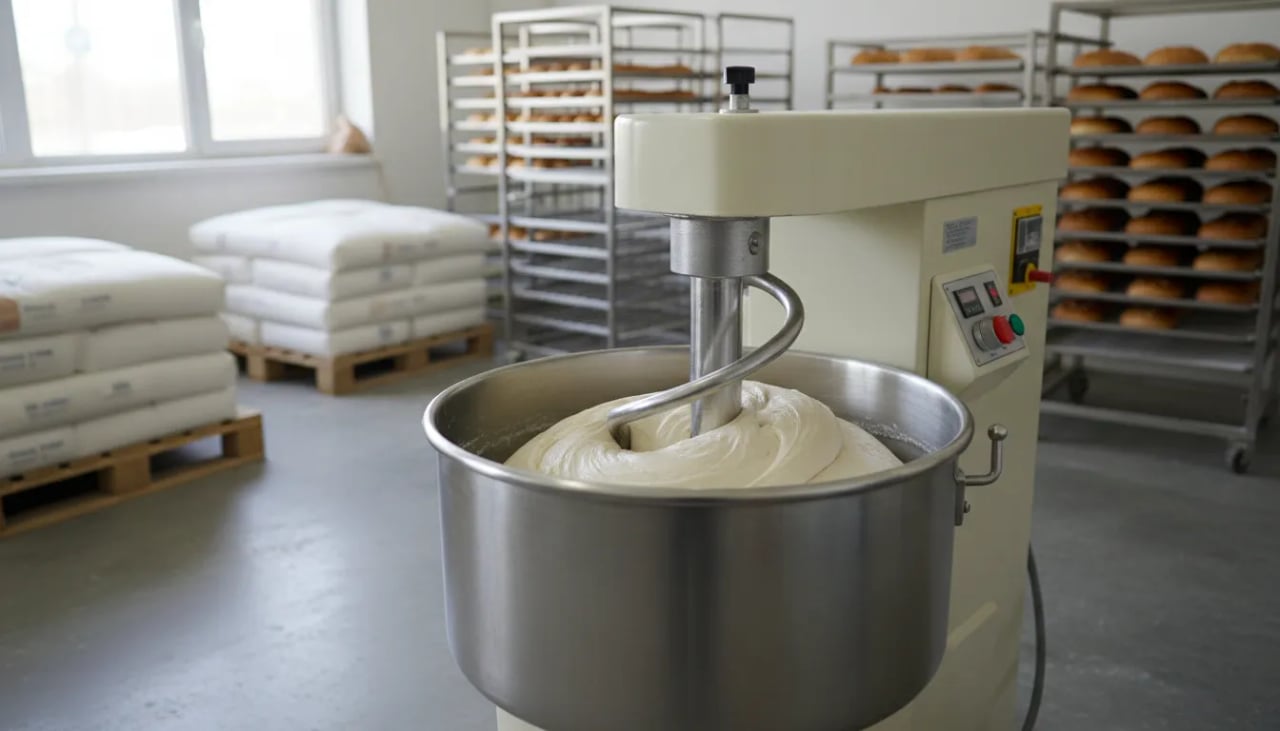
Switching to a Spiral Mixer changed that in the first week. The rotating bowl and the stationary spiral create a steady, even knead that doesn’t whip heat into the dough. My dough came out cooler, smoother, and noticeably more relaxed—exactly what I want before a long ferment.
Gentle mixing that still nails Gluten Development
What I love most is how a spiral mixer works the dough gently yet effectively. The stainless steel spiral pulls and folds instead of slapping the dough around. That means better Gluten Development without the “overworked” feel, and the dough stays well-oxygenated and homogeneous.
Marco Rossi, Pizzaiolo: "A true spiral mixer respects the dough's texture—it's like giving the dough a gentle workout, not a boxing match."
The real-life edge: it handles 55–100% hydration and keeps going
If you bake often, consistency matters more than hype. A good spiral mixer is built for repeat batches: sturdy structure, durable transmission, and a powerful (but quiet) motor that doesn’t complain when you’re mixing back-to-back.
Hydration range: I’ve seen models like the Sunmix EVO20 handle roughly 55–100% hydration, which covers everything from firmer dough to ultra-soft pizza styles.
Capacity example: Sunmix EVO20 is rated around 20 kg max dough with a 26 qt bowl.
Common commercial sizes: many spiral mixers land in the 20–80 qt bowl range, so you can scale up without changing your process.
Stainless steel, safety, and easy cleanup
The stainless steel bowl, spiral, and safety guard feel like small details—until you’re cleaning flour paste off equipment at midnight. Stainless steel is durable, hygienic, and simple to wipe down, which makes daily use realistic, not annoying.
Under the Hood: Specs, motor, and speed talk
What I look for on the spec sheet: Power Rating, Variable Speed, and transmission
When I’m choosing a spiral mixer, I start with the Power Rating. In commercial machines, the common range is about 1.5KW to 3.2KW, often paired with bowl sizes from 20 qt to 80 qt. I don’t chase the biggest number—I want enough power to handle high-hydration pizza dough without bogging down or heating up.
Next, I check for Variable Speed (and if available, reverse rotation). Variable speeds let me start slow to hydrate flour, then ramp up to build strength. Some variable models report wide ranges like 16–156 RPM, which is useful when I switch between Neapolitan-style dough and tighter bread dough.
Finally, I read about the transmission. A durable and resistant transmission system is what keeps a mixer reliable under intensive use—especially when I’m mixing back-to-back batches.
Bowl Speed vs. Hook Speed: why spiral mixing stays cool
What I trust most about a spiral mixer is the way it mixes: a rotating bowl paired with a spiral hook that works the dough gently but effectively. The balance between Bowl Speed and Hook Speed is what creates that smooth, elastic dough without beating it up.
Because the dough is constantly moving and folding, I get consistent gluten development and better oxygenation, but with less friction heat. That matters a lot for pizza dough, where temperature control can make or break fermentation.
Quiet motor, Stainless Steel build, and easy upkeep
In a busy kitchen, a powerful and quiet motor isn’t a luxury—it’s sanity. Noise often signals strain, and strain shortens a mixer’s life. As Elena García, Bakery Engineer, puts it:
Elena García, Bakery Engineer: "Motor torque and transmission design determine whether a mixer thrives in a rush-hour bakery or quietly struggles."
I also prefer Stainless Steel for the bowl, spiral, and safety guard. It’s tough, resists corrosion, and cleans fast. Add a safety guard plus digital timers or programmable cycles, and the workflow feels controlled instead of chaotic.
In the kitchen: real tests, recipes, and use cases
My go-to recipes (and why tuned speeds matter)
I trust my spiral Bakery Mixer because it gives me the same feel every batch: smooth, elastic Pizza Dough without heating it up. The stainless steel bowl and spiral move gently, so the dough stays well-oxygenated and the gluten builds without tearing—especially important for High Hydration mixes.
These are the three doughs I run weekly, each with a different speed plan (inspired by variable-speed ranges like 16–156 RPM on some Hakka-style mixers):
Neapolitan pizza (high hydration): slow to combine, then a short faster finish for strength.
Loose focaccia: mostly slow mixing to keep air and avoid overworking.
Tight baguette: a bit more development at medium speed for a cleaner, stronger dough.
How I dial hydration: 60% vs 80% (temperature + elasticity)
When I mix a 60% dough, it tightens quickly and clears the bowl fast. At 80% hydration, it’s a different world: the dough looks shaggy longer, then suddenly turns glossy and stretchy once the gluten “clicks.” The spiral action helps here because it’s effective but not aggressive, so I keep more gas pockets for better oven spring.
I also watch dough temp. Higher hydration warms up faster if I push speed too long, so I rely on short bursts and, when available, tools like a digital timer and reverse rotation to prevent overworking.
Bowl Volume and Commercial Use: scaling up or down
Bowl Volume decides how consistent your dough feels. I’ve used compact and larger machines, and the principle stays the same: don’t max out capacity if you want the cleanest gluten.
Example mixer | Dough capacity | Notes |
|---|---|---|
2–11 lb | 58 speed levels for fine control | |
17.6 lb | Integrated breaker bar | |
44–396 lb | Two-speed, built for Commercial Use |
Cross-application: pizza today, bread tomorrow
A spiral mixer that nails pizza also makes my bread and even enriched doughs more consistent. The durable transmission and quiet motor matter when I’m running back-to-back batches, and cleanup is simple with stainless steel parts.
Luca Bianchi, Artisan Baker: "I switched to a spiral for high hydration—my focaccias developed better holes and more complex flavor, no contest."
Buying & maintenance: my checklist (and mistakes I made)
My buying checklist (Dough Capacity, Flour Capacity, Power Rating)
When I bought my spiral mixer, I thought “a mixer is a mixer.” Wrong. What made me trust it for pizza was choosing specs that fit my real workload—especially Dough Capacity, Flour Capacity, and Power Rating. Commercial spiral mixers vary a lot, so I now start with throughput: how many dough balls I need per day, and how fast I need them.
Stainless Steel bowl, spiral, and safety guard (less rust, less smell, faster wipe-down)
Power Rating that matches my busiest day (roughly 1.5KW–3.2KW for heavier commercial use)
Dough Capacity that leaves headroom (don’t run it maxed out every batch)
Flour Capacity that fits my standard recipe without math gymnastics
Variable speed (gentle start, stronger finish for gluten without overheating)
Safety guard + timer (programmable timers keep workflow steady and safer)
Easy-clean design (smooth surfaces, simple guard removal)
Capacity reality check (Commercial Mixer sizing)
Size | Typical range | Best for |
|---|---|---|
Small | ~2–11 lb | Home tests, tiny prep |
Mid | 17.6–44 lb | Busy pop-ups, small shops |
Large | 44–396 lb | High-volume production |
Most professional spiral models handle 55–100% hydration, which is why mine shines on high-hydration Neapolitan-style dough.
Maintenance routine I swear by (and what I ignored at first)
Daily: rinse and wipe the bowl and spiral; dry the Stainless Steel guard
Weekly: quick gear/belt area inspection (listen for new clicks or squeaks)
Occasionally: transmission lubrication per the manual (this reduces downtime)
Monthly: check breaker bars and fasteners for looseness
Mistakes I made (don’t copy me)
I first bought too small and hit the limit fast—bad for consistency and motor life. I also underestimated torque: high-hydration dough still needs strength, especially at scale. And I once chose a noisy motor that drove everyone nuts during prep.
Sophie Miller, Restaurant Owner: "Spend a little more on torque and a solid transmission—the machine will outwork cheaper units and keep your service smooth."
Wild cards, tangents, and a slightly geeky analogy
Rotating Bowl + spiral: my ballroom-dancer mental model
I think of my spiral mixer like a ballroom dancer. The Rotating Bowl is the floor that keeps moving, and the spiral is the lead that guides the dough through the same smooth steps again and again. That’s why the dough comes out homogeneous and elastic without feeling “beaten up.” The stainless steel spiral works gently but effectively, so Gluten Development happens with less heat and less drama—especially when I’m chasing that soft, high-hydration Neapolitan feel.
Low Oxidation: the quiet flavor win
Here’s the slightly geeky part: spiral mixing tends to favor Low Oxidation. In long-ferment doughs, that matters. Less oxidation can mean the dough keeps more of its subtle wheat and fermentation notes instead of tasting flat. It’s not magic; it’s just a design that develops structure without whipping in a ton of air or overheating the mix.
My accidental hydration jump (60% to 80%) and why Reverse Rotation matters
One day I added extra water mid-cycle—turning a comfortable 60% dough into something closer to 80%. The dough went from “tidy” to “slippery” fast. That mistake taught me two things. First, speed control is not a luxury. Compact mixers can offer lots of speed levels and still handle small-batch artisan needs (the Ooni Halo Pro, for example, has 58 speed levels), and that kind of granularity helps you slow down and let the dough catch up. Second, Reverse Rotation can be a lifesaver on some models, especially when paired with breaker bars: it can prevent overworking and sometimes even rescue a dough that’s getting overhydrated or tangled.
Paolo Verdi, Dough Scientist: "A mixer is a tool; the operator’s choices—speed, time, and hydration—decide whether you get a good dough or a masterpiece."
Wild card: non-wheat doughs
I’ve also wondered what happens with non-wheat doughs. Gluten Development behaves differently (or barely exists), but the same gentle control still helps: steady mixing, cooler dough, and fewer torn-up textures.
And yes—unexpected perks count. A powerful quiet motor is kinder in a small open kitchen, and stainless steel looks clean and confident when the mixer sits in front-of-house. In the end, I trust my spiral mixer because it’s reliable under real use, easy to clean, and it rewards good technique—not just good specs.