


(Discover many other contents on: NOWO.ONE and NOWO Publishing)
I remember the summer I tried a daily ‘sun minute’ habit — just a short walk at noon for a few minutes — and how quickly my sleep and energy shifted. That small, sunny ritual made me curious about what exactly sunlight does inside our bodies. In this short post I’ll share the science-backed perks of sunlight, why vitamin D matters to your bones and mood, and how I balance the benefits with sensible sun safety.
1) Vitamin D production: the biochemical sun handshake
How UVB light starts vitamin D production in my skin
I like to call vitamin D the sunshine vitamin because, for most of us, it begins with a simple “handshake” between sunlight and skin. According to the Cleveland Clinic and UCLA, over 90% of our vitamin D comes from sunlight—specifically UVB light.
Here’s the simple science: UVB photons hit my skin and convert a cholesterol-like molecule (7-dehydrocholesterol) into vitamin D3. That first conversion is the kickoff of vitamin D production. It’s fast, but it depends on things like season, time of day, and how much skin is exposed.
My rule of thumb: short, regular sun exposure beats “marathon” sunbathing
I aim for small, consistent doses. Better Health Victoria’s guidance lines up with what I’ve found practical: a little sun often is better than rare, long sessions that raise burn risk.
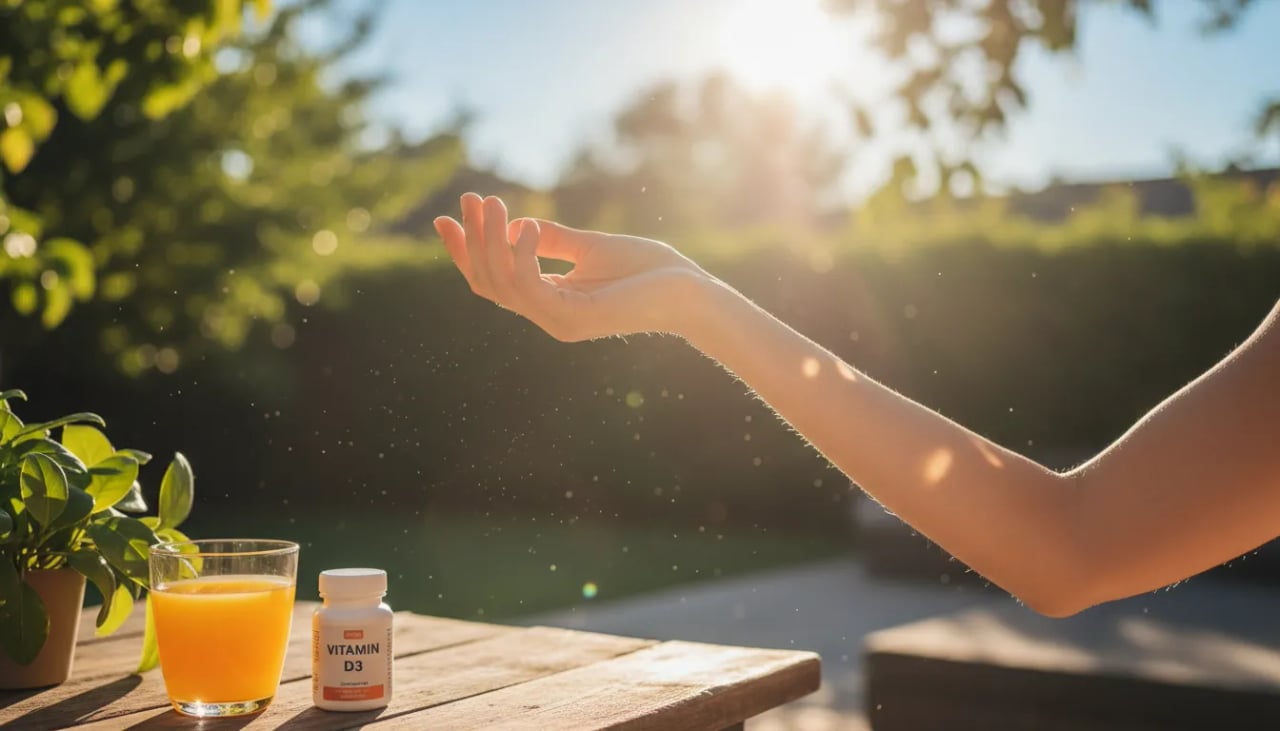
Spring/Summer: about 8–10 minutes of midday sun on roughly 25% of my body (like arms and legs) can help reach recommended vitamin D levels.
Winter: it can take close to 2 hours of sun on only 10% of the body to get enough—because UVB is weaker and the sun sits lower.
Daily jumpstart: even 5–10 minutes a day can help keep the vitamin D production process moving.
Dr. Emily Carter, Endocrinologist: "Sunlight is the most efficient way most people get vitamin D; small, consistent exposure beats irregular long sessions."
Where vitamin D goes next: liver, kidneys, and an active form for calcium absorption
After my skin makes vitamin D3, it doesn’t stay in that form. It travels to the liver, which converts it into a storage form, and then to the kidneys, which turn it into an active form my body can use.
This active vitamin D is a key helper for calcium absorption, which directly supports bone health—keeping bones and teeth strong and helping my body use calcium efficiently.
2) Mood, sleep and the gentle nudge of sunlight
Mood regulation: sunlight, serotonin levels, and a calmer mind
When I’m consistent with sun exposure, my mood feels steadier. There’s a real biology behind that: daylight helps the brain make neurotransmitters, including serotonin. I think of serotonin as nature’s mild antidepressant—when my serotonin levels are supported, I’m less edgy, less anxious, and more motivated to do normal life things.
Research notes that sunlight can activate pathways involving the pineal gland, which plays a role in how our brain handles serotonin and other signals tied to mood and alertness. Vitamin D matters here too. Moderate sunlight supports vitamin D production, and vitamin D is linked with mood regulation and a lower risk of depressive symptoms.
If you want a quick, trustworthy overview, Cleveland Clinic has a clear explainer on how light affects mood and sleep: Cleveland Clinic.
Dr. Raj Patel, Psychiatrist: "Regular exposure to daylight is a low-cost, high-impact tool for mood regulation and sleep hygiene."
Sleep cycle support: morning light and the pineal gland
The biggest change for my sleep cycle happened when I swapped late-night scrolling for a short sunrise walk. Nothing intense—just 10–20 minutes outside. Morning light is like a gentle “reset” button for my circadian rhythm. It helps my body understand when to be alert now, so it can feel sleepy later.
This is where the pineal gland comes back in: it helps coordinate daily timing signals (including melatonin at night). Getting bright light earlier in the day can improve sleep quality by aligning that internal clock.
Simple habits (and seasonal variation) that actually help
Aim for morning sun exposure most days, especially after waking.
Pair light with light activity: an easy walk, stretching, or coffee on the porch.
Plan for seasonal variation: in winter, shorter days can mean lower vitamin D and a higher risk of seasonal depression—so I prioritize daylight breaks whenever I can.
Be smart about safety: avoid peak midday heat, and use sunscreen to prevent burns and long-term skin damage.
3) Immune support and inflammation — the quieter benefits
When I think about sun exposure, I don’t just think “bones” or “mood.” I think about the behind-the-scenes work it does for my immune system and for inflammation reduction. Moderate sunlight helps my skin make vitamin D3, which my body then turns into an active vitamin form that acts more like a messenger than a simple nutrient.
How vitamin D levels support immune function
Vitamin D is essential for immune function because it helps guide how immune cells respond—supporting defense when needed, while also helping prevent the immune system from overreacting. That matters because chronic, low-grade inflammation can quietly drag down energy and overall health. I like how Dr. Ana Martinez, Immunologist, puts it:
“Vitamin D is a small molecule with outsized effects on immune regulation — sunlight is a natural way to keep levels optimal for many people.”
In simple terms: better vitamin D levels can help the immune response stay balanced, and that balance is closely tied to inflammation markers in the body.
Why sunlight can beat supplements at the population level
I still use supplements at times, but public-health findings suggest that communities tend to reach higher, more consistent vitamin D concentrations with regular sunlight than with supplements alone. That doesn’t mean supplements are useless—it just shows how powerful everyday outdoor light can be when it’s safe and routine.
My practical “immune support” sun hacks
Short, frequent sun breaks: I aim for brief exposure on arms/legs when possible, then I cover up or add sunscreen.
Pair sunlight with food: I combine a quick outdoor walk with vitamin D-rich foods like salmon, sardines, egg yolks, or fortified milk.
Track patterns, not perfection: If I’m indoors all week, I’m more intentional about getting outside.
Quick caution: balance matters
Sunscreen can reduce vitamin D3 formation, but I don’t treat that as a reason to skip it. Too much sun can increase inflammation in the skin (hello, sunburn) and raises skin cancer risk. My rule is simple: get a little sun, then protect my skin—especially during the hottest hours.
4) Sun safety: sensible rules I actually follow
1) I respect peak UV rays (10am–4pm)
My basic sun safety rule is simple: I avoid long, direct skin exposure during the hottest UV hours—roughly 10am to 4pm. That’s when I’m most likely to burn, and unprotected UV radiation is a major driver of skin cancer risk (per Cancer Society guidance). If I need sunlight for vitamin D, I’ll take a short midday window—then I cover up or use sunscreen. For longer walks, errands, or outdoor workouts, I aim for morning or late afternoon when the sun is less intense.
2) My “short exposure, then sunscreen” strategy
I’ve learned that sunscreen use can reduce vitamin D3 formation, but it’s still non-negotiable for preventing sunburn and long-term skin damage. Overexposure doesn’t keep boosting vitamin D anyway—it mainly increases risk. So I do this: a brief, regular dose of sun on small areas (like forearms), then I apply SPF before I’m out longer.
When I use sunscreen, I follow the basics recommended by Cancer Society guidelines and common sunscreen education (including Coppertone sun facts): I apply it to all exposed skin, and I reapply after swimming, sweating, or after a couple of hours outdoors.
Dr. Laura Kim, Dermatologist: "Sensible sun exposure — brief, regular, and protected — gives you the best of vitamin D without needless skin risk."
3) My practical checklist (what I actually do)
Clothing first: lightweight long sleeves when I’ll be outside a while.
Hat + sunglasses: I protect my face and eyes whenever the light feels sharp.
Shade breaks: I step under trees/awnings to cut cumulative UV rays.
SPF in my bag: I keep a hat and sunscreen with me even on cloudy days—because UV rays still get through and I never want to be caught off guard.
Know my risk: I pay extra attention if I’m fair-skinned, burn easily, have lots of moles, or a family history of skin cancer.
5) Wild cards: personal rituals, counterintuitive tips and a tiny experiment
My two-week “five minutes” test (midday vs. morning)
I ran a simple, imperfect experiment for two weeks: five minutes of sun around midday one day, then five minutes in the morning the next. Same idea each time—short walk, face and forearms uncovered for a bit of body exposure, then I covered up and went on with my day. I did it because UCLA and Cleveland Clinic articles kept repeating a theme I needed to hear: 5–10 minutes daily can jumpstart vitamin D production, but the body absorbs only a limited amount per session.
What felt different? Midday sun gave me a faster “switch-on” in energy, like my brain got the memo to wake up. Morning sun didn’t feel as punchy, but it helped my sleep more—I got sleepy earlier and woke up less. It wasn’t scientific, but it nudged me toward an optimal exposure mindset: small, repeatable doses beat long, random sessions.
Dr. Michael Anders, Public Health Researcher: "Think of sun exposure as dosing — there's a threshold where benefit plateaus but risk keeps rising."
The counterintuitive tip: stop chasing “more”
Here’s the weird part: staying out longer doesn’t keep boosting vitamin D3 forever. Once you hit that session limit, extra time mainly adds skin damage and raises skin cancer risk without much extra vitamin D benefit. So my ritual now is “get in, get out”: brief sun, then shade, clothing, or sunscreen—especially if I’m doing outdoor physical activity.
If it’s winter where you live: a realistic plan
Seasonal variation is real. In winter, you often need significantly more time to get the same vitamin D response, and sometimes the sun angle just doesn’t cooperate. If I lived in a low-sun winter zone, I’d combine safe sun-seeking (midday walks when possible, no burning), vitamin D-rich foods, and a vitamin D3 supplement if my clinician agreed—then re-check levels instead of guessing.
Sunlight as a slow drip feed (my closing thought)
I picture sunlight like a slow drip filling a tank: short, measured sessions keep me topped up without overflow. That’s the habit I’m keeping—tiny doses, consistent timing, and protection—so I can enjoy the mood lift, steadier sleep, and the outdoors without paying for it later.