



(Discover many other contents on: NOWO.ONE and NOWO Publishing)
I'll confess: my first wok attempt was more smoke alarm than stir-fry. But once I learned to love the hot sizzle, the wok became my go-to pan. In this small guide I’ll share why the round, high-sided pan works (hint: heat distribution), how to tame high temperatures, and a handful of recipes that make the wok worth owning.
1) Why the Wok Still Matters (Shape, Speed, and Surprise)
Shape: the heat “engine” in my hands
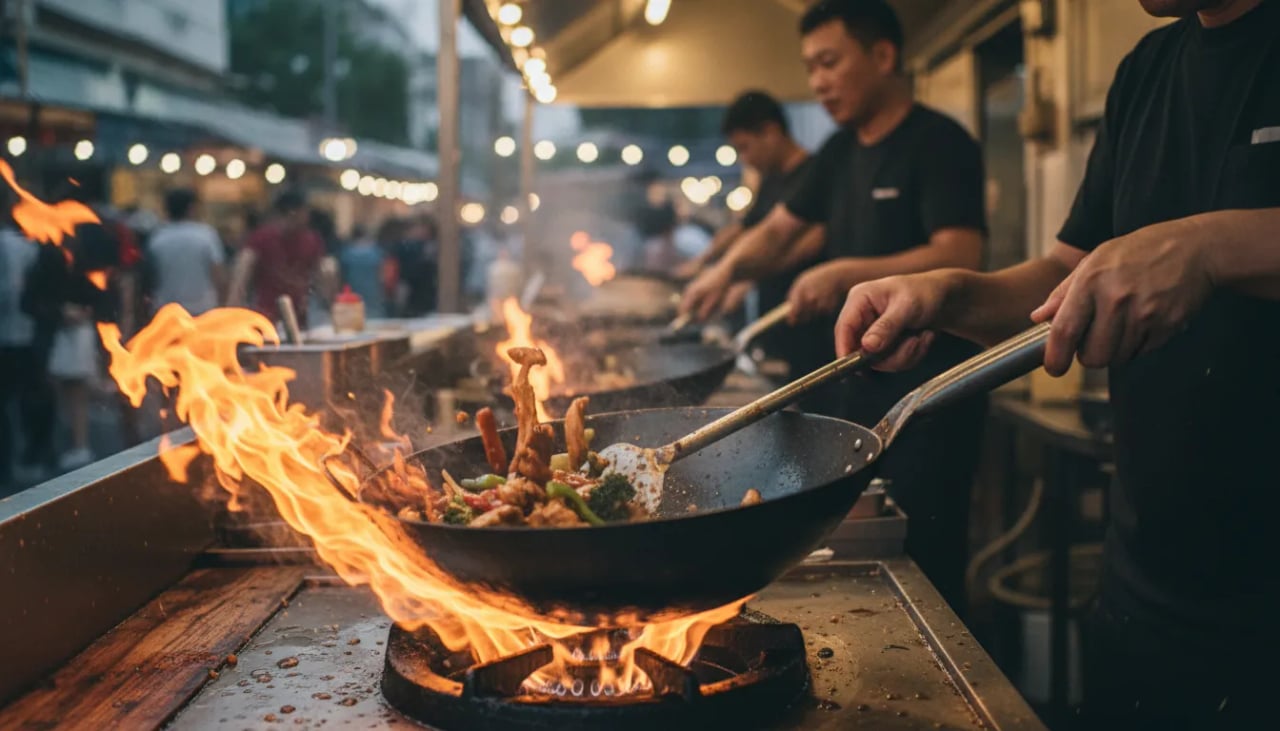
The wok is a deep pan from Asian cuisine (especially China), and its round bowl with high, sloping sides is not just tradition—it’s smart design. When I do Wok Cooking, that curve concentrates heat at the bottom for fast searing, while the sides act like a cooler zone where food can rest without overcooking. It also makes tossing easy: I can push noodles up the wall, flip vegetables back down, and keep everything moving with one spatula.
That geometry is why a wok handles more than stir-fry. It supports stir-frying, deep-frying, steaming, boiling, and even smoking—all in one pan, often with less oil than a wide skillet.
Speed: high heat, quick results
Most of my favorite Wok Recipes rely on high heat and short cook times—fried rice, crispy vegetables, and quick-seared meat or fish. The wok’s shape helps heat spread evenly, so ingredients cook fast and stay bright. As Andrew Zimmern puts it:
"A properly seasoned wok rewards you with flavor and speed—it's a simple tool that transforms how you cook."
Materials: what I’ve learned from my own kitchen
Material | What I notice |
|---|---|
Light, heats fast, seasons well; best for that classic “wok” flavor. | |
Holds heat like a champ, great for searing; heavier and slower to respond. | |
Stainless steel | Low maintenance and clean; doesn’t build seasoning as easily, so less smoky depth. |
Surprise: my wok does more than stir-fry
Steaming: a Flat Bottomed wok sits steady on modern electric/induction cooktops and works great with a rack and lid.
Deep-frying: the deep bowl uses less oil and helps contain splatter.
Stewing/boiling: the tall sides reduce spillovers when simmering.
Quick smoking: I line the bottom with foil, add tea or rice, and trap smoke under a lid for fast flavor.
If you cook on gas with a round-bottom wok, a Wok Ring keeps it stable and centered over the flame.
2) Mastering High Heat & Stir Fry Techniques (Wok Hei, Mise en Place)
When I want real Stir Fry flavor, I treat High Heat as non-negotiable. A wok’s round shape and high, sloping sides spread heat fast and evenly, so food sears instead of slowly cooking. That quick, hard sear is what gets you close to Wok Hei—that lightly charred, smoky edge that makes simple noodles, fried rice, and crisp vegetables taste like takeout (but fresher).
Controlled High Heat = Hard Sear (Not Steaming)
High Heat doesn’t mean chaos—it means control. I preheat my wok until it just starts to smoke, then add oil. If the wok isn’t hot enough, ingredients release water and you end up steaming. If it’s hot and crowded, you still steam—so I never overfill the wok and I work in batches to keep High Heat steady.
Mise En Place: Prep First, Cook Fast
Because High Heat cooking moves in minutes, Mise En Place is everything. I slice, measure, and set sauces next to the stove before I turn on the burner. Once the wok is hot, there’s no time to hunt for soy sauce or chop onions.
Cut protein thin for quick searing
Keep vegetables in similar sizes for even cooking
Mix sauce in a bowl so it hits the wok in one pour
My Go-To Stir Fry Sequence (Garlic Ginger → Protein → Vegetables)
I start with aromatics to perfume the oil, then build layers fast:
Garlic Ginger: 3–4 cloves garlic + 1–2 inch fresh ginger, minced
Protein: spread it out for a hard sear, then toss
Vegetables: add from firm to tender, keep everything moving
I keep the spatula working the whole time—constant motion helps maintain High Heat contact and protects the aromatics from burning.
Oil & Heat: Choose the Right Fuel
For High Heat, I use oils with a high smoke point like peanut oil (my favorite) or grapeseed oil. They handle the heat needed for Wok Hei without turning bitter.
Marion: "Start hot, move fast — the wok rewards decisive action in the kitchen."
3) Top Wok Recipes I Cook Every Week
My wok is my weeknight shortcut to big flavor. Its deep, sloped sides heat fast and evenly, so I can stir-fry, steam, or even shallow-fry with very little oil. The key is simple: I prep everything first, then cook in order—garlic and ginger, then protein for a good sear, then vegetables for crunch, and I finish with sauce to coat, not drown.
All-Clad Chef Tips: "A hot pan and patience with prepped ingredients makes all the difference in a wok."
My Go-To Wok Recipes (with quick hooks)
Kung Pao Chicken: I cube chicken, mix a quick sauce (soy, sugar, vinegar), and keep dried chilies and roasted peanuts ready. I toast chilies in oil for a few seconds, sear chicken, then add sauce. I finish with peanuts and a pinch of ground Sichuan for that tingly note.
Fried Rice: Day-old rice is best. If I’m cooking fresh rice, I spread it on a tray to dry for 20 minutes. I scramble egg first, then stir-fry onion/scallion, add rice, and press it into the hot wok for crisp grains before tossing.
Beef Broccoli: Thin-sliced beef gets a quick sear first, then I pull it out. Broccoli goes in next with a splash of water to steam-crisp, then beef returns with a glossy soy-oyster style sauce.
Crispy Tofu: I pat tofu dry, cube it, and either pre-fry or do a quick twice-fry for extra crunch. Sauce goes in at the end so the coating stays crisp.
Shrimp with Bok Choy: Shrimp cooks in minutes, so I stir-fry bok choy stems first, add leaves, then shrimp, and finish with garlic, ginger, and a squeeze of lime.
Easy swaps + rescue tips
Swap ideas: chicken ↔ tofu ↔ shrimp; broccoli ↔ snap peas; bok choy ↔ cabbage.
Watery stir-fry? Push food up the sides and boil the sauce hard in the center to reduce, or add a tiny cornstarch slurry.
Overcooked? Brighten with rice vinegar or lime to bring it back to life.
4) Caring for Your Wok — Season, Clean, and Keep Cooking
How I Season Wok (Carbon Steel) in About 15 Minutes
A carbon steel wok is my go-to because it heats fast and builds a natural nonstick layer. Seasoning is what makes that happen, and it also prolongs the pan’s life. My first Season Wok session takes about 15 minutes, and I repeat it a few times during the first week of cooking.
Wash off factory oil with hot water (a tiny bit of soap is fine only this first time), then dry completely.
Heat the wok until it’s fully dry and lightly smoking.
Add 1–2 tsp high-smoke oil, wipe into a thin film with paper towels.
Keep heating and wiping as it darkens; rotate to cover the sides.
That dark, smooth patina is the goal. If food sticks early on, I just cook, rinse, dry, and add a whisper-thin oil coat again.
Lodge Cast Iron: "A well-seasoned wok is a workhorse — treat it kindly and it will reward you with flavor."
Cleaning: Seasoned Carbon Steel vs. Stainless Steel
Seasoned carbon steel: I avoid harsh detergent because it can strip the patina. After cooking, I rinse with hot water, use a soft brush, then dry over heat. If something is stuck, I simmer a little water for 30 seconds and scrape gently. After drying, I wipe on a drop of oil.
Stainless steel: Soap is fine. I soak if needed, then scrub. For rainbow stains, I use a splash of vinegar and rinse.
If I ever deep-clean carbon steel by mistake, I do a quick re-season: heat → thin oil → heat.
Storage, Setup, and Heat: Flat Bottomed, Gas Burners, and a Wok Ring
For control, I prefer Gas Burners—they respond fast, which matters for high-heat stir-frying. On induction or most modern electric cooktops, a Flat Bottomed wok is the practical choice because it sits stable and makes full contact.
Using a round-bottom wok on a stove? Add a Wok Ring to keep it steady and centered over the flame.
Store with the lid off (or a paper towel inside) so moisture doesn’t build up.
Avoid long soaks—water is the enemy of a seasoned surface.
5) Wild Cards: Tiny Experiments and a Closing Tangent
High Heat, Low Stakes: My “Smoke Coffee in a Wok” Test
I once wondered: what if I tried smoking coffee beans in a wok? I set my carbon steel wok over High Heat, tossed in a small handful of green beans, and covered it with a lid lined with foil (to catch oils). I kept the beans moving, like a stir-fry, and watched for the first hint of smoke. In about 6–8 minutes, the kitchen smelled like toasted nuts and cedar. I cooled the beans fast on a tray, then brewed them the next day. The cup was surprisingly smooth, with a light campfire note—proof that the wok’s round shape and high sides can trap and circulate heat in a way that’s perfect for quick experiments.
The Wok as a Tiny, Controlled Bonfire (Wok Tips Included)
That’s my favorite analogy: the wok is a small bonfire you can steer. You manage airflow with your burner, your tossing motion, and how crowded the pan is. One of my core Wok Tips—backed up by cooks at places like The Chopping Block and Marion’s Kitchen—is to never overfill the wok. When I keep food in small amounts, moisture escapes, the surface sears, and that smoky flavor shows up. It also keeps cooking fast, healthy, and flavorful with minimal oil, which is the whole point of this tool.
Wild Cards I Keep Coming Back To: Deep Frying, Wok Steaming, and Quick Braises
On busy nights, I lean into one-pan noodle dinners: aromatics first, noodles next, sauce last, and a quick toss to finish. When I want crunch, Deep Frying in a wok feels efficient because the shape lets me use less oil while still getting good depth. And for gentler meals, Wok Steaming is my quiet trick—water in the bottom, rack on top, lid tight, and dinner cooks while I clean.
Andrew Zimmern: "Treat the wok like an instrument—practice, patience and repetition yield the best sound (and flavor)."
Before every session, I read my tiny ritual like a mantra: Mise En Place (everything cut and ready), Preheat the wok until it’s hot, add a High Smoke Oil, then cook in Small Batches so nothing steams. I season my wok for about 15 minutes when it’s new, and after a deep clean I re-season lightly—then I’m back to chasing that fast, smoky magic.