

(Discover many other contents on: NOWO.ONE and NOWO Publishing)
I still remember the first time I used my grandmother's Moka Express: the hiss, the gleam of aluminum, the tiny island of crema on top. That morning taught me two things: coffee makers are tools, and they're also storytellers. In this short piece I wander through materials (stainless steel to ceramic), classic extraction methods (Moka, French Press), and the convenience of capsule machines. Along the way I drop brand notes, odd personal confessions, and practical tips so you can pick a machine that smells as good as it looks.
1) Materials & Form: Why Steel, Glass or Ceramic Matter (Coffee Makers)
When I shop for Coffee Makers, I’m not only choosing a brewing method—I’m choosing a material that will shape heat, flavor, and even my mood in the kitchen. As James Hoffmann puts it:
"The material of the brewer shapes how the coffee presents itself—it's not just aesthetics, it's taste."
How materials change heat, aroma, and body
Different materials hold and move heat in different ways, and that affects extraction. More stable heat often brings a fuller body and clearer intensity, while faster heat loss can soften the cup. That’s why the same beans can taste slightly different across Drip Coffee Makers, a French Press, or a Moka pot—especially when the brewer’s walls and parts are made from different materials.
Stainless steel: Holds heat well and feels solid. I like it when I want consistency and durability, especially for daily use.
Aluminum: Heats quickly. The Moka Express is historically made of aluminum, and that classic build is part of its identity—fast, punchy, and traditional.
Glass: Doesn’t hide anything. It loses heat faster than metal, but it gives me visual control, which matters in pour-over and many Drip Coffee Makers.
Ceramic: Gentle heat behavior and a “calm” feel. It often suits slower brewing and can highlight aroma in a softer way.
Form is part of the ritual (and the counter)
I’ve kept a chipped ceramic brewer for years. It’s not perfect, but on slow weekend mornings it changes my pace. I preheat it, pour carefully, and wait. That’s the point: Coffee Design isn’t only about looking good—it’s about how a shape invites you to brew.
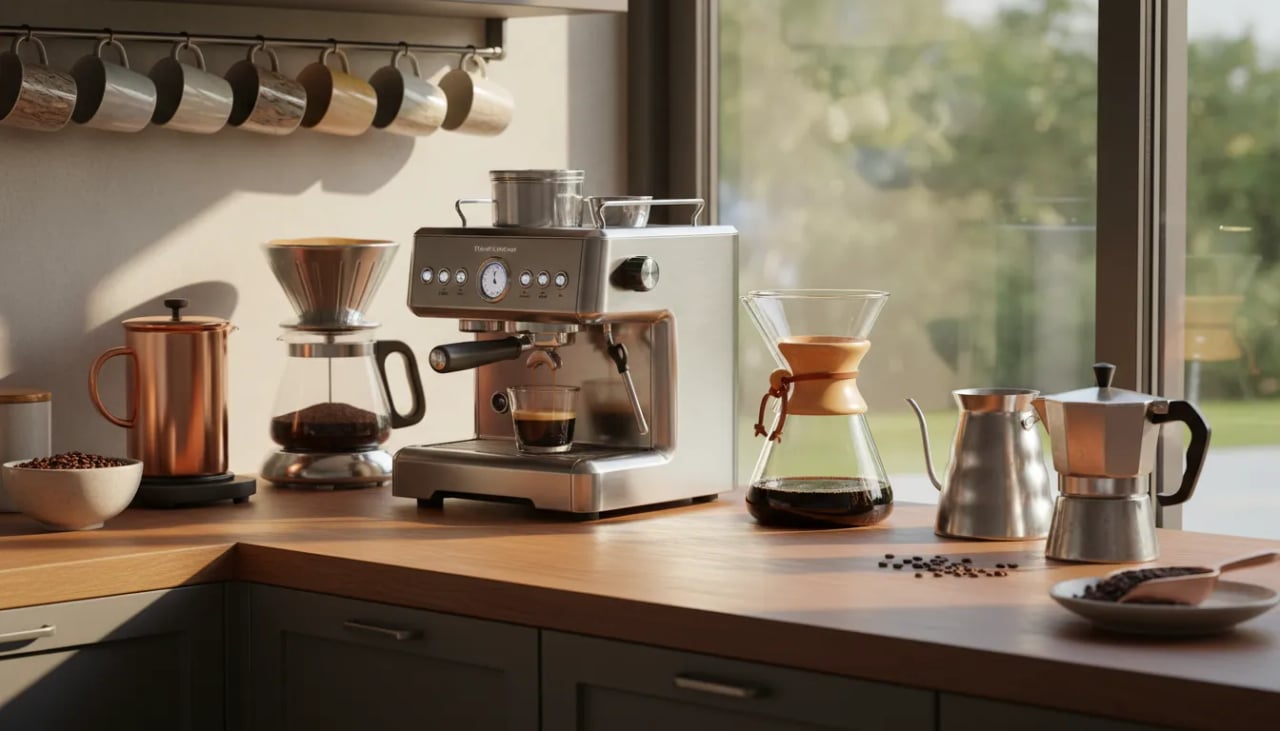
Some coffee makers become countertop showpieces: the iconic angles of a Moka pot, the clean cylinder of a French Press, or the compact shine of a capsule machine built for speed.
Quick pros & cons
Material | Why I choose it | Trade-off |
|---|---|---|
Stainless steel | Durable, steady heat | Less visual feedback |
Glass | Clarity, easy to watch brewing | Heat loss, breakable |
Aluminum (Moka) | Tradition, quick heating | Needs care to avoid off-flavors |
Ceramic | Slow, cozy ritual feel | Can chip, needs preheating |
2) Methods & Machines: Moka Express, French Press, Pods (Versatile Brewing)
When I think about Coffee Makers, I don’t just see tools—I see different ways to shape aroma, body, and intensity. Materials matter too: stainless steel, aluminum, glass, or ceramic can change how a brewer feels in my hands and how it fits into my routine. That’s why this mix of classics and modern options is my favorite example of Versatile Brewing.
Moka Express: Steam Pressure and a Little Italian Tradition
The Moka Express is a symbol of Italian tradition for a reason. It uses steam pressure: water heats in the bottom chamber, pressure builds, and that force pushes water up through the coffee grounds. In my college apartment, that first gurgle meant the kitchen was about to smell like Italy—bold, toasty, and loud in the best way.
I reach for it when I want intensity without pulling out a full espresso setup. It’s simple, sturdy (often aluminum or stainless steel), and it turns brewing into a small ritual.
French Press: Immersion Infusion for a Fuller Body
The French Press works through immersion infusion. Coffee and hot water sit together, steeping before I press the plunger down. That contact time gives me a fuller body and more texture—especially on slow weekend mornings when I’m not rushing anywhere.
Sonia Sanchez (Coffee Educator): "I reach for a French Press when I want texture; the Moka when I want nostalgia."
Pods and Single Serve Convenience (Capsule Extraction)
Pod machines are the modern shortcut I can’t pretend I never use. A Single Serve capsule system is built for speed: insert a pod, press a button, and coffee happens. Some models, like the Nespresso VertuoPlus, even use barcode reading to auto-adjust settings for the capsule—true one-button brewing.
Pros: fast, consistent, minimal cleanup
Trade-offs: flavor can feel less personal, and pod waste is a real concern
3) Features That Matter Today: Grind, Froth, WiFi and Presets (Brew Options)
I love classic coffee makers like the Moka Express and the French Press for their simple, hands-on feel. But when I look at what people actually buy in 2026, the “must-have” features are clear: fresher grinding, better milk, and smarter control—without losing the daily ritual.
Grind And Brew: fresh aroma on demand
Fresh ground beans change everything. A Grind And Brew machine keeps the aroma and body stronger because the coffee doesn’t sit around pre-ground. Reviews keep pointing to burr grinders and bean hoppers as the premium sweet spot, since they grind more evenly than blade grinders.
A good example is the Melitta Aroma Fresh Plus, which includes a conical burr grinder, a 7.5-ounce bean hopper, and three grind settings. That kind of setup lets me tweak flavor without adding extra tools to my counter.
Milk Frother + Temperature Settings: more drinks, same machine
A Milk Frother isn’t just for lattes—it’s how one coffee maker becomes a mini menu. Hot foam for cappuccinos, cold foam for iced drinks, and even simple steamed milk for a softer cup. Add a hot water dispenser and I can switch to tea or americanos fast.
Temperature Settings matter more than most people think. Different roasts and pods taste better at different heat levels, and adjustable temperature helps avoid bitter or flat results. The Keurig K-Café Smart, for example, pairs pod convenience with a hot/cold milk frother and six temperature settings, plus adjustable brew strength using K-Cup pods.
Marco Bellini (Product Designer): "Consumers want machines that bridge convenience and craft; features like a burr grinder or milk frother matter more than ever."
WiFi, presets, and Programmable Timers: coffee that fits my schedule
Smart features are less about showing off and more about removing friction. WiFi can save preferences, guide maintenance, or start brewing from another room. Presets also help me repeat a great cup without guessing.
Programmable Timers for wake-up coffee
Auto-shutoff for safety and energy savings
Preset brew modes like Breville Precision Brewer’s Gold, Strong, Iced Coffee, and Cold Brew
4) Brands, Timelines, and Oddities: From Nespresso to Jura (Best Coffee Makers)
When I look at the Best Coffee Makers, I don’t just see appliances—I see a timeline of how we brew: from the Moka Express and French Press (slow, hands-on, full of aroma) to today’s Pod Coffee Makers and bean-to-cup machines (fast, repeatable, and often surprisingly good). Materials shift too—stainless steel, aluminum, glass, ceramic—but the goal stays the same: better body, intensity, and smell in the cup.
Best Overall, Best Budget, Best Single Serve: what reviews keep saying
Recent review roundups are pretty consistent: Café Specialty often lands as Best Overall, Braun BrewSense shows up as the best budget pick, and Nespresso keeps winning for Single Serve convenience. In 2026 reviews, the big trends are grind-and-brew options, pod compatibility, and milk frothing.
Claire Thompson (Appliance Reviewer): "The market rewards versatility: machines that can do beans-to-cup and pods win hearts."
Brands to keep on your radar (and why they’re interesting)
Nespresso VertuoPlus: one-button brewing, with capsules that auto-adjust via barcode scanning for size and extraction tweaks.
Ninja DualBrew Pro: a true bridge between drip and pods—full pots or single cups, plus a separate hot water dispenser and a fold-out milk frother.
Breville Precision Brewer: built for people who like control (strength, timing, and repeatable results).
Smeg BCC13: hands-off bean hopper, water tank, and milk dispenser—more “push and walk away” than most.
Jura J8 Twin: does cold brew with pulsed high-pressure water to pull flavor without the harsh bitterness I expect from shortcuts.
Odd but useful data points
Feature | Why it matters |
|---|---|
Dual-function machines | Many can brew full pots in ~6 minutes, then switch to pods for speed. |
Capsule barcode scanning | Nespresso can change settings automatically—less guesswork, more consistency. |
5) Rituals, Mistakes, and a Weird Hypothetical (Iced Coffee and Cold Brew)
My worst coffee mistake (and why it changed my routine)
Confession: I once nuked a French Press in the microwave—glass, metal bits, the whole bad idea. Don’t do that. It didn’t just ruin a morning; it taught me that coffee makers aren’t “all the same.” Each method has its own rules: the French Press is about infusion and patience, while a Moka Express uses steam pressure to push water through grounds and build that bold, classic body. Even capsule machines, built for speed, still depend on good habits to keep aroma and intensity consistent.
Chilled drinks need real programs: Iced Coffee and Cold Brew
When I got serious about summer coffee, I learned that dumping hot coffee over ice isn’t always the same as a true Iced Coffee recipe. Premium brewers often include an Iced Coffee setting that adjusts strength so the drink doesn’t taste watery after the ice melts. Some also offer Cold Brew modes, which slow things down and aim for a smoother, less sharp cup. Machines like the Breville Precision Brewer are known for having both preset options, and once you use them, it’s hard to go back to guessing.
The boring feature that protects flavor: the Cleaning Indicator
I used to ignore maintenance until my coffee started tasting flat. Old oils and mineral buildup can mute aroma and make the cup feel heavy in the wrong way. Now I actually appreciate a Cleaning Indicator because it removes the “I’ll do it later” excuse. Pair that with auto shutoff, and the machine feels less like an appliance and more like a safe, reliable part of the ritual.
Luca Moretti (Barista Trainer): "The best machine is the one that fits your routine—whether that's a 30-second pod or a 10-minute pour-over."
A weird hypothetical: flavor notes printed on the cup
Here’s my wild card: imagine a coffee maker that prints tiny flavor notes on your mug—“cocoa, orange peel, toasted nuts.” Silly, yes. But personalization is already creeping in through capsule barcodes and user profiles that remember strength, temperature, and even Cold Brew preferences. In the end, that’s why coffee makers matter: they don’t just brew coffee—they shape the choices and little rituals that make the day feel like yours.